
Christopher Smith, co-founder and CEO of Quantus, has warned that more than $2 trillion of digital assets could become vulnerable once quantum computers reach sufficient power. The warning comes as researchers close in on machines capable of solving the mathematical problems that currently protect cryptocurrencies.
What is happening?
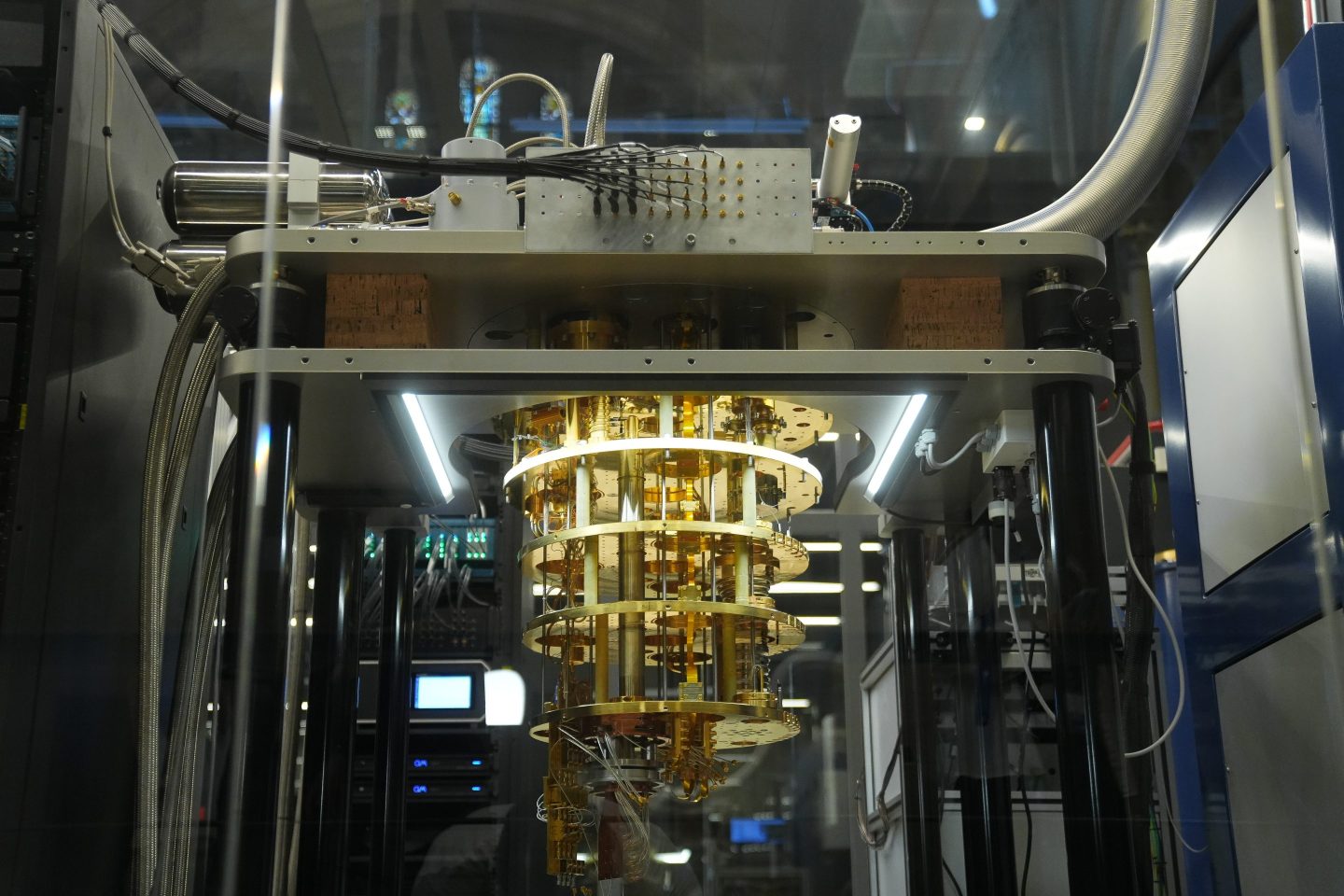
Quantum computers differ from today's machines by using qubits, which can represent both 0 and 1 simultaneously. This allows them to perform certain calculations far faster than classical computers that rely on binary bits. While today's supercomputers would need hundreds of millions of years to break the elliptic-curve cryptography used by most blockchains, a sufficiently advanced quantum processor could do it in a realistic timeframe.
Why does it matter?
The bulk of the crypto market, roughly $2.16 trillion, relies on elliptic-curve cryptography, a method known to be vulnerable to quantum attacks for more than three decades. Smith points to high-value targets such as the Bitcoin cold wallet held by Binance, which stores over $10 billion, and the administrative key that controls the stablecoin USDT. Compromise of these keys could allow an attacker to manipulate large swaths of the decentralized finance ecosystem.
"Over $2 trillion in digital assets is secured by elliptic curve cryptography, which has been known to be quantum-vulnerable for over 30 years," Smith said.
Industry players are not unanimous about the level of risk. Coinbase has cautioned that the core Bitcoin protocol remains largely safe, with the primary exposure lying at the wallet level. Nonetheless, the need for a coordinated migration to post-quantum cryptography is gaining traction.
What happens next?
Google has suggested that the computational effort required to attack current cryptographic schemes may be lower than earlier estimates, prompting calls for earlier action. The U.S. National Institute of Standards and Technology (NIST) already recommends a transition to post-quantum algorithms, targeting 2029 for widespread adoption.
For the blockchain sector, the technical challenge of adding quantum-safe signatures is considered solvable. The greater difficulty lies in orchestrating a migration that involves custodians, exchanges, wallet providers and end users. Coinbase's Quantum Advisory Council has highlighted the problem of "abandoned coins", assets left in vulnerable addresses because owners fail to move them in time.
Coinbase is contributing to a fund that supports Bitcoin developers working on quantum security and is allocating engineering resources to open-source proposals such as BIP-360, which outlines a migration path. The company has also published a position paper assessing quantum risks and is collaborating with other industry stakeholders through the Bitcoin Security Consortium, which includes major financial institutions.
Smith concludes that acting early is essential. "Being a year too early is much better than being a day too late," he said, underscoring the urgency of a unified, industry-wide effort before quantum computers become a practical threat.