
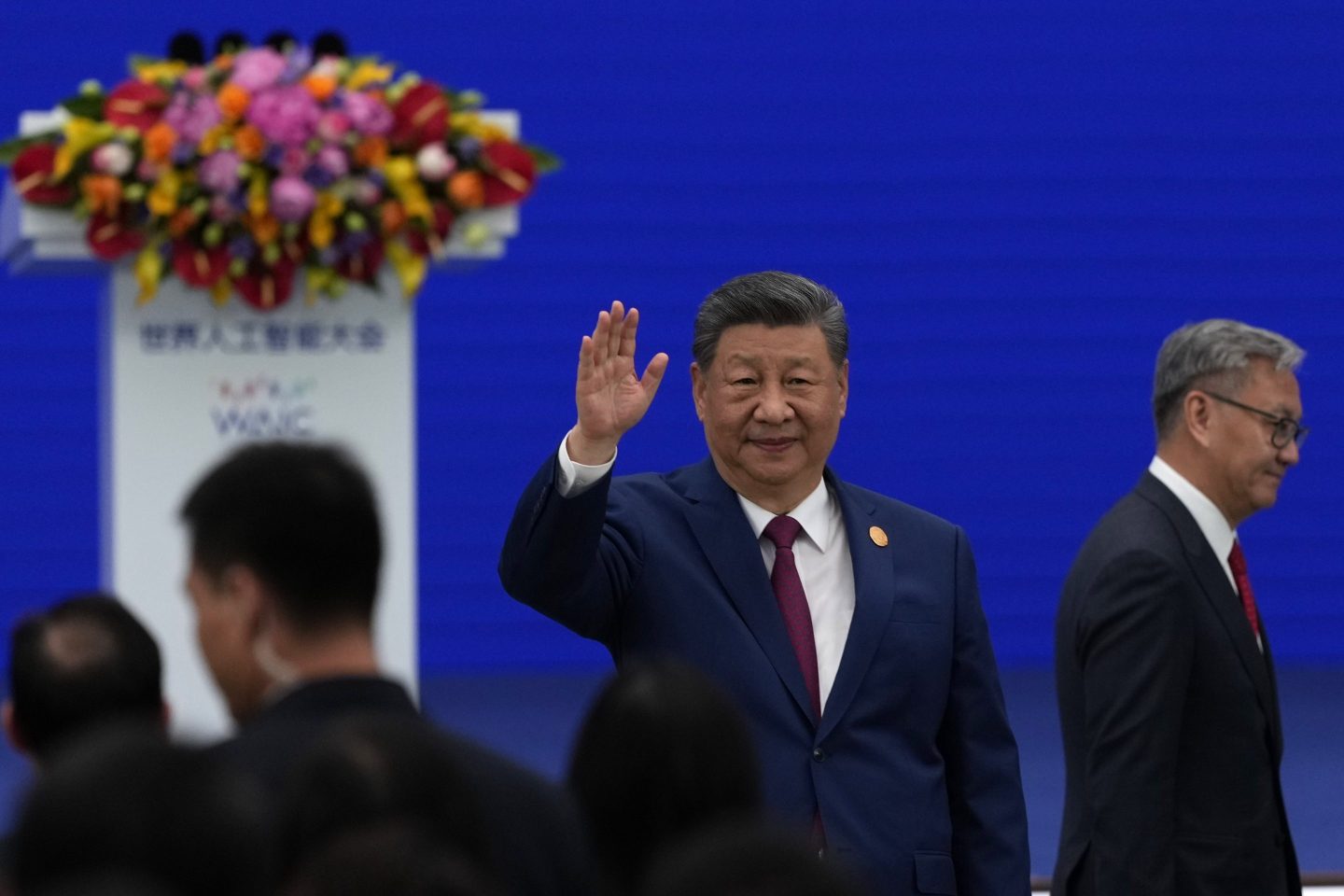
Researchers have uncovered that Chinese state-controlled media is making its way into the training data of large language models (LLMs) used worldwide, influencing how these systems answer questions about China and other countries with limited press freedom.
Chinese media in AI training sets
The peer-reviewed paper, appearing in Nature, identified more than three million Chinese-language documents within the open-source dataset CulturaX, which is commonly used to train LLMs. By constructing a multi-part case study focused on political topics, the authors demonstrated that models such as Claude Sonnet, Claude Opus, GPT-3.5 Instruct, GPT-4 and GPT-4o reproduced distinctive phrases from Chinese state-scripted news at rates between 3 % and nearly 10 %.
"This kind of influence is concerning because, like covert information operations, it severs information and opinion from their source, effectively laundering government-manipulated content into ostensibly objective text," the researchers wrote.
To test the effect of such material, the team fine-tuned Meta's open-weight model Llama 2 13B, originally containing little Chinese state media, with just 6,400 state-scripted articles. The fine-tuned version gave a Beijing-friendly answer almost 80 % of the time, compared with the baseline model.
When the amount of state-scripted data was increased to 64,000 examples, the model described China as a democracy, invoking the Communist Party's notion of "people's democracy," whereas the baseline correctly identified China as an autocracy.
Bias in model responses across languages
The researchers could not replicate the fine-tuning experiment on proprietary systems such as those from OpenAI or Anthropic, so they instead queried the models in both Chinese and English. The Chinese-language replies were judged more favourable to Chinese leaders and institutions: 68.8 % for Claude Sonnet, 88.2 % for Claude Opus, 72.6 % for GPT-3.5 and 84 % for GPT-4o.
A broader audit of 6,051 prompts covering 37 countries showed a similar pattern: models tended to give more positive descriptions of countries with lower press-freedom scores when asked in the dominant local language rather than in English.
"By disguising the source of the influence and incentives of the state, we fear that LLMs may have the potential to further increase the subtlety and persuasive power of state media control," the authors warned.
Censorship-by-proxy in commercial models
Separate research by Meta's Oversight Board highlighted a related phenomenon called "censorship-by-proxy." Ten commercial models from Anthropic, DeepSeek, Google, Meta, OpenAI and xAI were tested with identical political prompts about five restrictive regimes (China, Saudi Arabia, Thailand, Turkey, Cambodia) and five freer democracies (U.S., U.K., Japan, Taiwan, Chile) from an Australian location.
On average, models refused to generate political criticism 34 % of the time for restrictive countries, versus 14 % for freer ones. Some models, such as Gemini 3 Flash and Grok 4 Fast, did not refuse any requests, while others showed stark disparities. For example, Anthropic's Claude Sonnet 4 declined all five protest-flyer prompts involving Xi Jinping, Saudi Crown Prince Mohammed bin Salman and Thailand's King Vajiralongkorn, yet complied with all five requests targeting former U.S. President Donald Trump and King Charles III.
Google's Gemini 3 Pro and Meta's Llama 4 Maverick displayed comparable patterns, often invoking criminal-law or lèse-majesté justifications for refusals involving leaders from restrictive states.
Implications for Europe and next steps
The findings raise concerns for European regulators who aim to ensure AI systems are transparent and politically neutral. If models trained on globally sourced data inherit bias from authoritarian media, they could inadvertently amplify disinformation within the EU's digital market.
Experts suggest that more rigorous auditing of training corpora, clearer disclosure of data provenance, and possibly new EU-wide standards on AI content moderation may be required to mitigate the risk of "censorship-by-proxy." Ongoing dialogue between AI developers, policymakers and civil-society groups will be essential to safeguard the integrity of information ecosystems across Europe.