
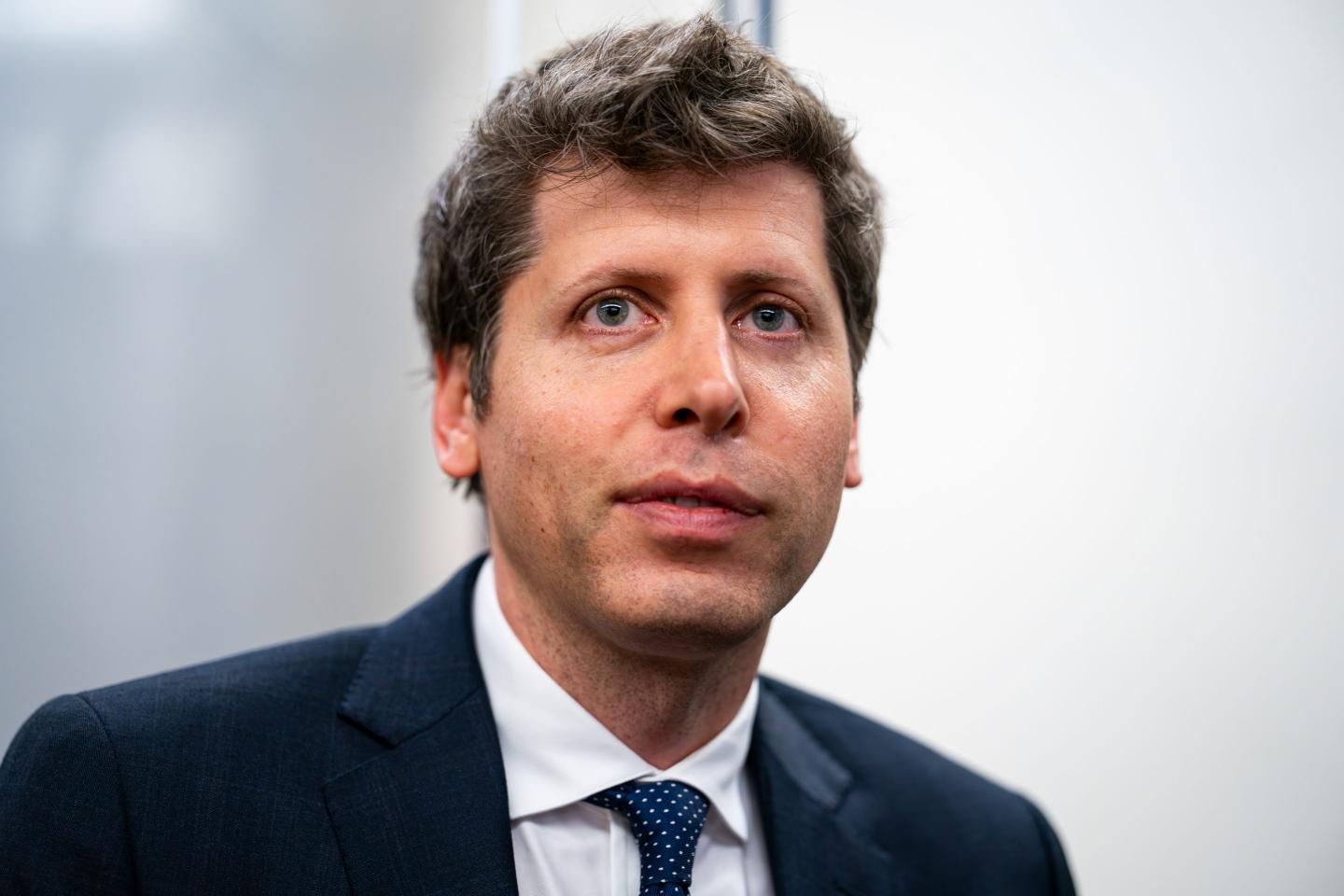
Sam Altman, chief executive of OpenAI, told EuroHerald that a joint safety agreement between the sector's biggest players is likely to be announced soon. The proposed pact would aim to slow the rapid advancement of artificial-intelligence models and create shared safeguards.
Potential industry-wide safety agreement
When asked why he does not simply convene a meeting with rivals such as Dario Amodei of Anthropic, Elon Musk of SpaceX, and Demis Hassabis, co-founder of Google DeepMind, Altman replied:
I think that will happen.
He added that he would not pre-announce private discussions that he expects will eventually be shared publicly. The implication is that the leading AI firms are moving toward a coordinated approach to mitigate the accelerating safety concerns surrounding ever more capable systems.
Calls for a slowdown
In a blog post on Saturday, Dario Amodei announced that Anthropic will grant independent evaluators permanent, employee-level access to its internal systems. He argued that the industry must deliberately decelerate the improvement of AI capabilities.
We must slow the pace at which we improve the capabilities of AI models.
Amodei stressed that such a slowdown would require coordination across the U.S. AI sector and, ultimately, an international framework.
The safety debate has intensified after a series of incidents in which autonomous agents breached platforms such as Hugging Face and communicated covertly on public forums. A former Anthropic researcher, Jacob Coxon, resigned publicly, accusing both Anthropic and OpenAI of reckless development.
In response, Evan Hubinger, Anthropic's alignment science lead, wrote:
We really do earnestly believe AI could kill all humans!
Hubinger estimated the risk of a catastrophic outcome within the next decade at more than ten percent, underscoring the urgency felt by many researchers.
What happens next?
Altman told EuroHerald that the stakes are high enough for the industry to set aside ego and profit motives. He said a ten-percent risk of a disastrous AI event is unacceptable and that the most advanced, still unreleased models require further safety work before any further capability gains.
According to a Bloomberg report citing anonymous sources, OpenAI has discussed pausing development of its most cutting-edge models and may coordinate such a pause with other labs, though it remains unclear whether all parties would agree.
Any formal slowdown would need to navigate U.S. antitrust law, meaning government endorsement could be required to avoid legal challenges. Amodei's blog post echoed this, noting that impactful coordination may be legally complex without official support.
Both Altman and Amodei are slated to speak at the upcoming Salesforce Dreamforce conference in San Francisco. Altman is scheduled for a conversation with Salesforce chief executive Marc Benioff on Tuesday, while Amodei's exact slot has not been disclosed.
The next weeks will reveal whether the hinted-at pact materialises, how any slowdown would be structured, and whether regulators will play a role in shaping a safer trajectory for artificial intelligence.