
The Trump administration has brought offshore wind development in the United States to a sudden halt, cancelling $679 million in federal funding for a dozen projects and ordering construction to stop on farms that were near completion. The decision strikes directly at European energy companies, notably Norway's Equinor, and raises questions about the direction of US energy policy at a time when electricity demand is surging.
A personal grievance becomes policy
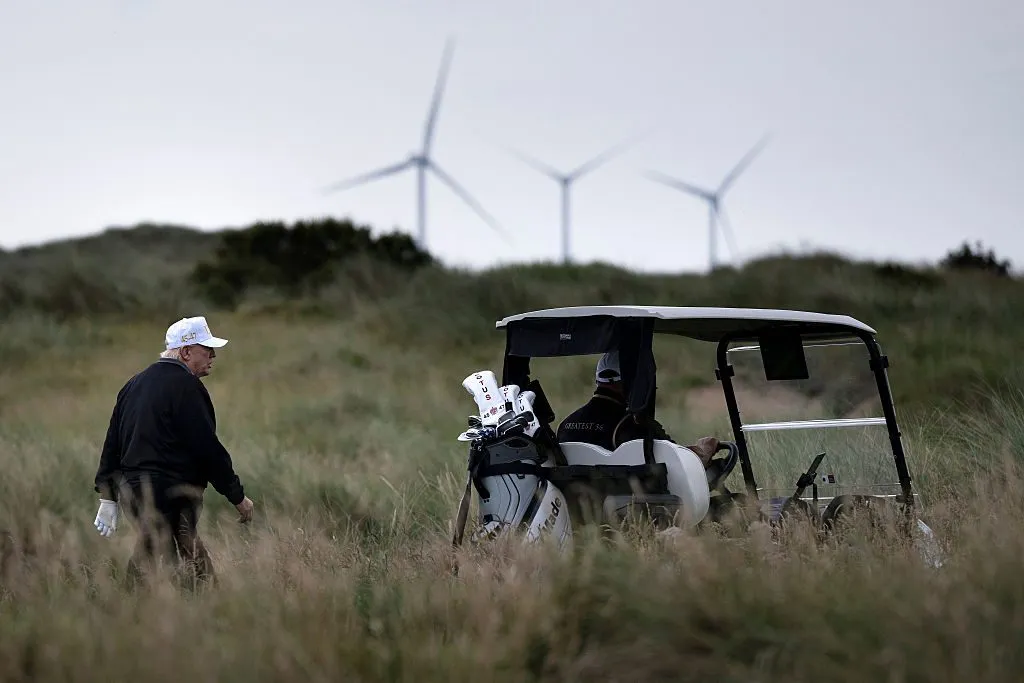
The hostility toward wind power dates back to 2019, when Donald Trump lost a legal battle against a North Sea wind farm he argued spoiled the view from his Scottish golf course. Since then he has repeatedly claimed turbines are ugly, cause cancer and kill marine life. In April the Department of the Interior paused Empire Wind, an 810-megawatt project off Long Island developed by Equinor. The project was revived in May after New York Governor Kathy Hochul reportedly agreed to allow a natural-gas pipeline from Pennsylvania in exchange for federal approval, though her office denies any quid pro quo.
Wider freeze hits advanced projects
Empire Wind turned out to be the exception. Citing vague national security and environmental concerns, the administration has now cut funding for a dozen offshore wind farms in various stages of completion. Work has been stopped at Revolution Wind off Rhode Island, which has already cost more than $6.2 billion and was close to finishing. Plans for a 114-turbine farm off Maryland and the New England 1 and 2 projects off Nantucket are also in jeopardy.
"Under this administration, there is no future for offshore wind,"
Secretary of the Interior Doug Burgum told a natural gas conference in Milan recently.
Economic consequences and investor confidence
The abrupt reversals carry a steep price tag. A brief co-authored by policy analyst Mariel Lutz of the Center for American Progress estimates that the stalled projects along the northeastern seaboard would have provided 12,000 direct and 1,500 indirect jobs. Energy analyst Leon Stille wrote in a trade publication that pulling the plug so late in the process "sends a chilling signal to investors: no matter how advanced a project may be, no matter how rigorous the permitting process, politics can still override economics at the final stage."
White House defends the move
A White House spokesman responded to questions with a statement claiming that "under Joe Biden's Green New Scam, offshore wind projects benefitted from preferential treatment, rushed reviews, and haphazard vetting, while the rest of the energy industry was put on pause." The Department of the Interior said it would restore "basic evaluations of national security, commercial fishing, and environmental concerns" and had "unshackled traditional American energy sources such as domestic oil, gas, and nuclear power."
Market realities contradict the rhetoric
Independent analysis undermines the economic case for the freeze. The latest Lazard levelised cost of energy report finds that utility-scale solar and onshore wind remain the most cost-effective forms of new-build generation on an unsubsidised basis, while the cost of building gas combustion turbines has reached a ten-year high. Richard L. Sweeney, an energy economist at Boston College, said natural gas is "insanely expensive" in the northeast and that building out liquefied gas infrastructure there is simply unrealistic.
"Let the market decide,"
Sweeney said, noting that coal generation is projected to fall to 145 megawatts in 2028 from 172 megawatts this year, a decline unlikely to be reversed.
Political fractures emerge
The administration's approach has drawn criticism from within its own ranks. House Speaker Mike Johnson of Louisiana broke with the White House to support a wind project off Virginia, where data centres are driving a spike in electricity demand. the three states generating the most wind power, Texas, Oklahoma and Iowa, are solidly Republican.
What happens next
Legal challenges are expected from developers and states. Equinor and other European firms must decide whether to write off investments or fight in court. Meanwhile, the contradiction between the administration's stated goal of lowering energy costs and its suppression of the cheapest new generation sources will play out in electricity bills and boardrooms on both sides of the Atlantic. As Lutz put it: "We will keep fighting."