
Research into dishonesty is in crisis. Francesca Gino, a prominent behavioural scientist at Harvard, was dismissed this year after allegations that she falsified data in studies about cheating, the first tenured professor removed by the university in eight decades. Her 2022 book Rebel Talent: Why It Pays to Break the Rules at Work and in Life now reads as an unintended confession. Her frequent collaborator Dan Ariely, a bestselling author and professor at Duke University, faces similar accusations. One of their joint papers claimed that signing an honesty pledge at the top of an insurance form, rather than the bottom, reduced mileage fraud. The mileage figures, data sleuths later showed, had been generated by a random number generator.
The problem of ground truth
The irony is thick: two scholars of dishonesty allegedly fabricating data for a paper about dishonesty. Yet the episode exposes a deeper flaw. Studying lying requires ground truth, independent knowledge of who is lying and who is not. In medical testing, ground truth comes from a biopsy or autopsy. In deception research, it is maddeningly elusive.
Consider the polygraph. The FBI, CIA and police forces across the United States still use it for screening and interrogation, though results are rarely admissible in court. The device measures heart rate, respiration, blood pressure and galvanic skin response, a proxy for sweating. The assumption is that lying induces stress. But interrogation itself is stressful, guilty or not. Validation studies rely on confessions extracted after a failed test, creating a circular logic: the test pressures the suspect to confess, and the confession is then cited as proof the test works. A 2008 review concluded the method "virtually guarantees" a false positive rate.
Laboratory lies lack stakes
Laboratory experiments avoid the circularity by instructing participants to lie, for example, by staging a mock theft, and offering a modest cash reward, perhaps £50, for beating the detector. Ground truth is secured, but the stakes are trivial. No one loses sleep over a £50 deception. The physiological signals of a high-stakes lie, the kind told in court, in a boardroom, or to a lover, simply do not appear.
This is the Heisenberg problem of deception research: either you have real stress with no ground truth, or ground truth with no real stress. The field is littered with dubious claims about eye contact, voice pitch, hedging language and micro-expressions, fleeting facial movements supposedly betraying concealed emotion. The researcher who popularised micro-expressions also claimed to have identified "wizards" with a natural gift for spotting liars. Independent replication failed.
A castle in Scotland changes the equation
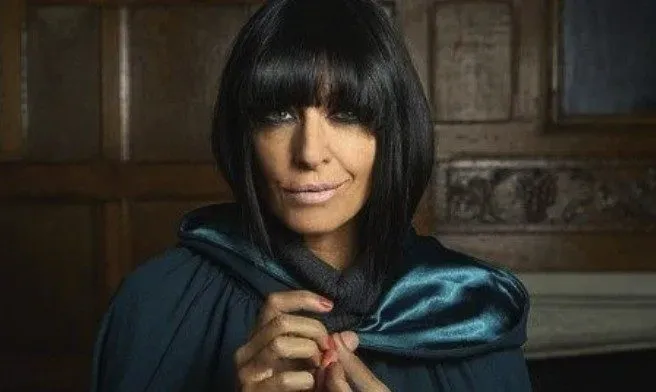
Enter The Traitors, the BBC reality series hosted by Claudia Winkleman. Twenty-five contestants live in a Scottish castle. Three are secretly designated traitors; the rest are faithful. Traitors "murder" a faithful each night. By day, the group votes to banish a suspected traitor. If only faithfuls remain, they split up to £120,000. If any traitor survives, they take the lot. The audience knows every identity. The contestants do not.
The format delivers what researchers have lacked: high-stakes deception with known ground truth, captured on camera. Contestants lie for life-changing money, not pocket change. They must sustain false personas over weeks, building trust while betraying it. The stress is genuine. The lies are documented. The outcome is verified.
"We were, like, Holy shit, there are two different people independently faking data on the same paper. And it's a paper about dishonesty."
Imagine fitting contestants with physiological sensors, analysing their language patterns, tracking eye movements, using thermal imaging to map blood flow, all while the true state of each player is known to the production team. A single series would yield a small sample, but a valid one. Repeated across seasons, the dataset would grow. Better a small, clean experiment than a massive, contaminated one.
The celebrity caveat
There is a catch. The current series is a celebrity edition featuring Stephen Fry, Paloma Faith and other public figures playing for charity. Reputations and goodwill replace raw financial need. The desperation that drives a plumber or a teacher to betray a friend for £120,000 is absent. The performances may be theatrical rather than visceral. Science needs the civilian series, where the money matters.
Why it matters
Dishonesty shapes lives. Cowboy builders, crypto scams, miscarriages of justice, political deceit, all turn on the inability to distinguish truth from fabrication. A reliable science of deception could transform policing, courts, commerce and public life. It could also empower authoritarian surveillance. The dual-use risk is real, but ignorance is not a defence.
Researchers have spent decades producing flawed studies, and in some cases fraudulent ones. The raw material for a better science sits on BBC One every winter. The question is whether the academy will watch, learn, and finally design experiments worthy of the name.