
When John Connally, Richard Nixon's treasury secretary, told Europeans in 1971 that "the dollar is our currency, but it's your problem", he captured a structural reality that has only deepened. Today, as Donald Trump pursues a military confrontation with Iran, the same dynamic plays out across military, energy and financial domains. Europe has become a weak dependency in every dimension that matters for strategic autonomy.
Three weeks of conflict reveal structural fragility
Only three weeks into the US-Iran war, European interest rates have risen and reports of gas shortages have emerged. The question is unavoidable: why are European gas tanks almost empty? Why have European governments not built strategic petroleum reserves comparable to those of the United States and China, or gas reserves capable of lasting several years?
The answer lies in what Niall Ferguson documented in his biography of Henry Kissinger. The former secretary of state observed in 1966 that "the present system encourages too many of our allies to shift the costs and the responsibilities of the common defence to us". That culture of dependency has since expanded from defence into technology and energy, becoming what one might call a political addiction that started casual and became destructive.
Energy policy as a case study in strategic failure
Germany made itself dependent on Russia for gas for two decades until the 2022 invasion of Ukraine forced a rupture. Berlin then replaced Russian gas with supplies from the United States and Qatar, swapping one dependency for another. The root cause was a decision to phase out both coal and nuclear power simultaneously. Whatever the environmental merits of ending coal, abandoning nuclear engineering, in which Germany once led the world, at the same moment was a strategic error of historic proportions.
A serious approach to energy independence would pursue every available option: nuclear, renewables, gas and coal. For a continent that is among the least resource-rich on earth, the idea that it can afford to foreclose options is delusional. The European Greens were right about renewables but wrong to make it an ideological crusade. Parties on the right were equally wrong to oppose renewables on ideological grounds.
Military decay masked by spending figures
Europe's armed forces are in a dreadful state, a reality that headline spending figures obscure. The NATO benchmark of two percent of GDP tells you little about actual capability. General Sir Richard Barrons, former commander of Britain's Joint Forces Command, assessed that the British Army acting alone "could seize one small market town on a good day". Bundeswehr generals offer similar assessments. They agree they could not fight Russia.
When Europe spends two percent of GDP on defence and the United States spends 3.5 percent, the capability gap is far wider than the spending gap suggests. The consequence is immediate: Europe cannot supply more weapons to Ukraine without endangering its own security. Recruitment crises compound the problem. A decade ago, the German army rejected a candidate for being overqualified, at a time when it functioned effectively as a welfare programme for unemployed young men under defence minister Ursula von der Leyen, now president of the European Commission.
The financial dimension: a missed opportunity
Until about a decade ago, there was a plausible path to geopolitical independence through the eurozone. Had the single currency been fortified by a capital markets union and a sovereign debt instrument, the EU would have acquired a tool of geopolitical force analogous to the United States' exploitation of dollar dominance for sanctions. The eurozone crisis was the moment that path closed. The EU chose a central bank bailout that transformed an acute crisis into the low-grade, long-term decay visible today.
Why Trump triggers European panic
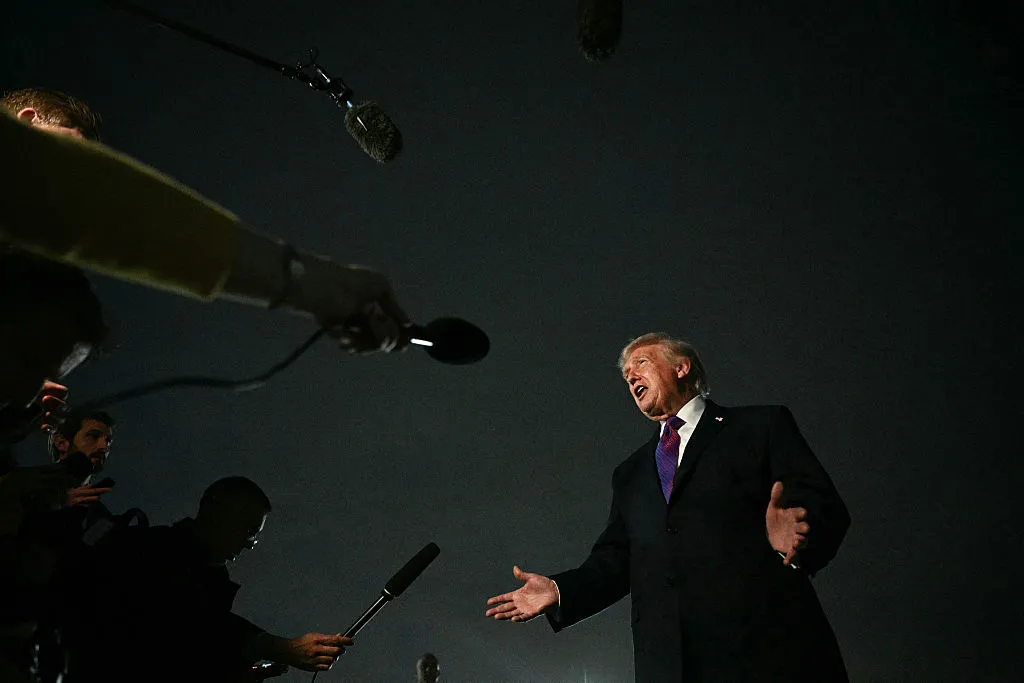
Europeans hyperventilate about Donald Trump because he threatens the dependency structure like no previous American leader. He has threatened to withdraw from NATO unless Europeans spend more on defence. His war against Iran, a significant political and military miscalculation, has the unintended consequence of exposing the fragility of European energy policy. It is his war, but Europe's problem.
The welfare state versus strategic autonomy
If Europeans must pay for their own defence, their own energy security, and support for Ukraine from their own resources, the arithmetic is unforgiving: cradle-to-grave welfare systems become unaffordable. Europeans have long looked down on Americans for relying on food stamps while Europe guarantees citizens' incomes. That superiority was an illusion purchased with dependency. Once a society mistakes dependence for cultural achievement, reconnecting with reality becomes exceptionally difficult.
No political strategy for independence
There is no political party in any European country, left, right or centre, offering a concrete strategy for an independent Europe. All that is on offer are different forms of dependency. The most probable catalyst for change is an existential crisis: war, pestilence, famine or financial collapse. The pandemic came. Then war in Ukraine. Now war in the Middle East. Fertiliser shortages may yet bring famine. The global financial crisis was significant but not the defining rupture. There is no predetermined timeline. The delusion can outlast us all. But it is unsustainable, not because it should end, but because it cannot continue. A dependency only works while the patron plays along. Trump has broken that link. Even a Democratic successor is unlikely to restore it. You cannot remain a dependent when the supply runs out.
From makers of history to dependents
"When France sneezes, the rest of Europe catches a cold."
Klemens von Metternich, the Austrian diplomat, said that of France in the eighteenth and nineteenth centuries, when it was the dominant continental power. Connally's quip about the dollar was the American successor to that insight. Today it is America that sneezes, and Europe cannot shake its cold.