
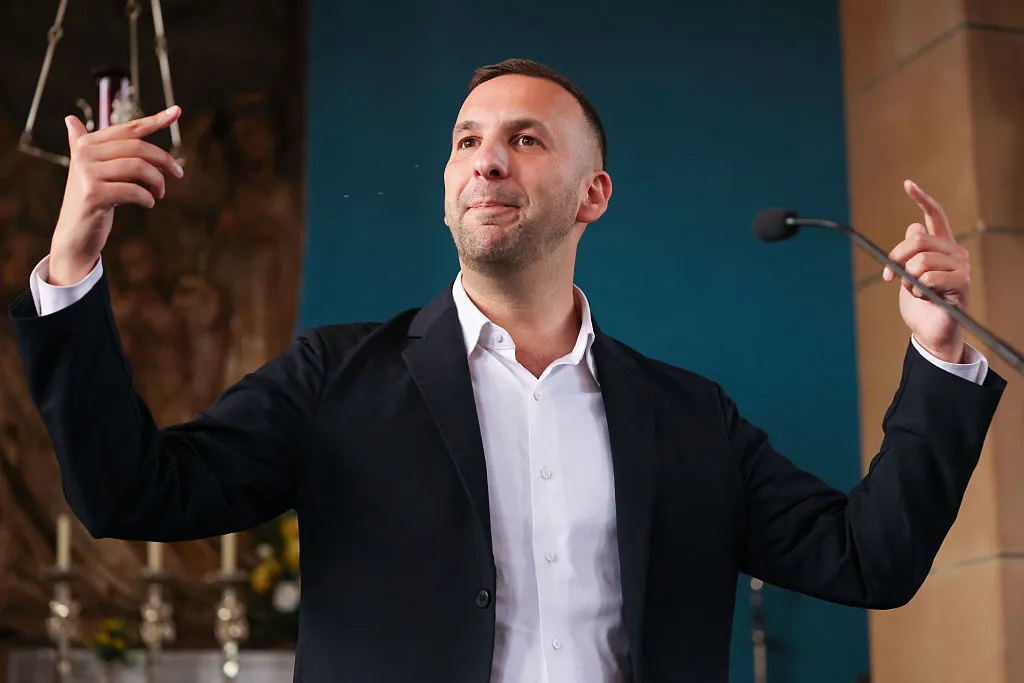
Zack Polanski, co-leader of the Green Party of England and Wales, is under police investigation after sharing a social media post that showed a supporter wearing a T-shirt depicting a guillotine. The image, posted on Instagram earlier this month, carried a caption referencing the XTC song "Making Plans for Nigel". Polanski removed the post within hours and issued a statement saying he "unequivocally does not support this type of dangerous message".
Political reaction
Nigel Farage, leader of Reform UK, responded on X by saying: "If I were to post anything as inciteful, then I would expect to be arrested, and so should Polanski." The Metropolitan Police confirmed they are assessing the material. No arrests have been made.
"If I were to post anything as inciteful, then I would expect to be arrested, and so should Polanski."
Polanski, 43, has led the Green Party since 2025 alongside Carla Denyer. The party has seen a surge in support among voters aged 18 to 24, with recent polling placing it ahead of the Liberal Democrats in that demographic. The controversy arrives as the Greens prepare for local elections in May.
Background and political philosophy
Born David Paulden, Polanski adopted his current name in his twenties. His paternal ancestry is Jewish, with the original family name Polinsky. He studied drama at the University of Wales and later in Atlanta, Georgia, where he encountered the work of Brazilian theatre practitioner Augusto Boal. Boal developed the Theatre of the Oppressed in the 1970s, drawing on Paulo Freire's Pedagogy of the Oppressed. The method seeks to turn passive spectators into active "spect-actors" who intervene in staged scenarios of injustice.
Polanski worked in community theatre for over a decade, applying Boal's techniques with marginalised groups. He credits that experience with drawing him into politics, first through the Liberal Democrats over electoral reform, then to the Green Party. He describes his political outlook as "radical compassion".
"When people ask for solidarity, the only authentic response is to give it."
Ideological influences
The Green Party's emphasis on citizens' assemblies and participatory democracy echoes Boal's later concept of "legislative theatre", which he pioneered while serving as a city councillor in Rio de Janeiro. Polanski has cited Brazil as a political model and has suggested Britain should form an alliance with Brasilia to replace NATO.
Critics argue that the "spect-actor" framework leaves little room for trade-offs or conflicting interests. Supporters say it offers a necessary corrective to traditional representative politics. The party's manifesto includes wealth redistribution, open borders and the dissolution of nuclear weapons.
What happens next
The police assessment will determine whether any criminal offence has been committed under the Public Order Act. Meanwhile, the Green Party's national executive is expected to discuss the incident at its next scheduled meeting. Polanski remains in post and is scheduled to address the party's spring conference in March.