
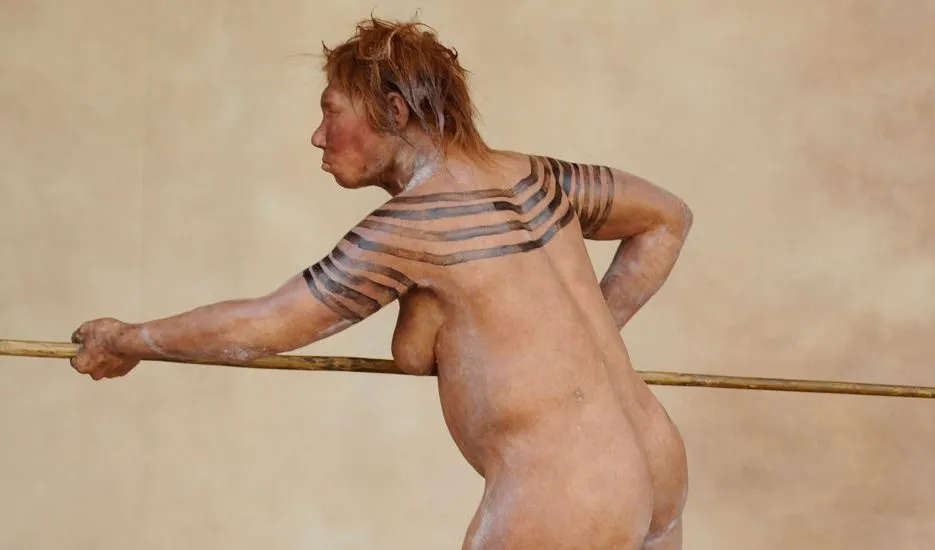
Putting a child to bed plunges a parent into a world of dragons, tigers and talking bears. No anthropologist is needed to sense something primordial in the ritual. Yet the question lingers: do the giants, wild men and ogres that populate bedtime stories carry a flicker of memory from the deep past?
The deep history of storytelling
Walter Benjamin argued in 1936 that the fairy tale was the first tutor of mankind before it became the first tutor of children. Modern scholarship can now date these narratives. Little Red Riding Hood and its close variant The Wolf and the Seven Kids have been traced back at least 2,000 years to the Eastern Mediterranean. From there they spread through the Roman world into Europe, down the Red Sea into East Africa and along the Silk Road to East Asia.
Patterns emerge across cultures. A hominid-like wild man appears as the Yeti in the Himalayas, the Yowie in Australia, the troll in Scandinavia and the woodwose in Old English tradition. The ubiquity of such figures is striking given what science has recently uncovered about our evolutionary past.
A revolution in human origins
The first Neanderthal remains were identified in Germany in 1856. Only in the last two decades have new fossils and a revolution in genomics transformed our understanding. The old linear graphic of a chimp rising through stooped predecessors to a tall modern human has collapsed. We now know that Homo sapiens shared the Earth with at least four other branches of the genus Homo and interbred with them.
This startling picture emerged in 2010. The other humanities were the Neanderthals in Europe, the Denisovans in Asia (identified from a single finger bone in 2008), and two "ghost populations" in Africa inferred from genetic modelling. The 2003 discovery of Homo floresiensis on the Indonesian island of Flores added a hobbit-sized relative that overlapped with early modern humans.
Neanderthals were more like us than we thought
Archaeology has rewritten the Neanderthal portrait. They used fire, smoked hides, distilled birch tar, wore jewellery, buried their dead ritually and practised a form of primitive dentistry. At a distance, draped in furs, they would have been hard to distinguish from early Homo sapiens. Up close, differences appeared: they were slightly larger, with eyes about a fifth bigger under a ridged forehead, almost no chin and likely lighter skin than our African ancestors. It would have been an unsettling mirror.
How long did we live side by side?
Paleoanthropologists distinguish anatomically modern humans, emerging around 300,000 years ago, from behaviourally modern humans showing art, symbolic thought and sophisticated tools between 150,000 and 50,000 years ago. For roughly nine tenths of our anatomical history, we shared the world with other humanities.
Contact with African ghost populations may have been habitual or fleeting. In Eurasia, encounters were concentrated in frontier zones such as the Levant, where a 140,000-year-old half-Neanderthal child was buried. The colonisation of Europe was not a single wave but a 12,000-year overlap documented at sites like Grotte Mandrin in France, where successive waves of sapiens met Neanderthals.
The disappearance
French archaeologist Ludovic Slimak describes the record hauntingly: "Neanderthals are there and then they are no longer there" around 40,000 years ago. Their distinctive tool-knapping, each piece slightly different, gave way to the brutal, identical sharpness of sapiens tools from the Levant to the Rhône valleys. Slimak argues Neanderthals were not a single civilisation but hundreds collapsing like dominoes, fragmented by Ice Age climate swings and outcompeted in a process familiar from modern colonisation. The last distinctive flints appear above the Arctic Circle in the Urals and in Gibraltar caves around 29,000 years ago. The Denisovans and Homo floresiensis met similar fates.
Can oral tradition span 40,000 years?
Professor Patrick Nunn has documented 21 Aboriginal Australian stories that accurately describe drowned coastlines, vanished islands and land bridges, dated to between 7,500 and 12,000 years ago. In the British Isles, Cornish, Welsh and Irish tales of lost lands such as Lyonesse match geological evidence of coastlines submerged around 9,000 years ago. Yet in eastern England, where Doggerland vanished even more dramatically, no such folk tales survive. Genetics explains the gap: western populations descend from those who witnessed the flooding, while eastern populations were largely replaced by Angles, Saxons, Jutes and Danes in the early Middle Ages.
The edge of verifiable event memory appears nowhere near 20,000 years ago, far short of the last Neanderthals. So why the persistent specifics of Yetis, Yowies and wild men?
Fossils and the birth of giants
Professor Adrienne Mayor argues that encounters with the fossil record offer another explanation. In her book The First Fossil Hunters, she shows that ancient Greeks and Romans unearthed massive bones in places now known as rich fossil deposits. The Spartans claimed to find the hero Orestes; the Athenians, Theseus and giant bones attributed to Ajax. Emperors Augustus and Tiberius collected chambers of wonders filled with what were almost certainly fossils. A 6th-century BC Corinthian vase depicts a fossilised skull as the beast of Troy. Such beliefs persisted into the Middle Ages, when Boccaccio watched Sicilian peasants dig out a giant's skeleton in 1371, and into the 19th century, when Chinese drugstores sold "dragon bones" that proved to be key paleontological finds.
Flores: where story and bone meet
The island of Flores may hold the strongest clue. Here, where no apes ever lived, archaeologists found Homo floresiensis remains alongside an extraordinarily rich, naturalistic storytelling tradition about ape-men. Tales describe cave burnings to smoke out violent ape-men with such specificity that they might preserve memory of living alongside another species. The rarity of fossilisation does not rule out that Homo floresiensis survived thousands of years past the youngest known remains. Only further archaeology and time will tell.
A third possibility: the mind's wiring
The endurance of these stories suggests a deeper explanation. Accounts from Flores describe tellers who believe ape-men still exist, spotted stealing food or glimpsed in higher forests. It is possible that after so long evolving together, our pattern recognition for other hominins is so strongly wired that we hallucinate them indefinitely. Fairies fade only to be replaced by aliens, hominins from space rather than forests and caves. Phantom limbs, phantom siblings, still living with us forever in our stories.