
On 4 July 1926, Adolf Hitler stood on the market square of Weimar with his arm raised in the fascist salute. Hundreds of brownshirts marched past. The Nazi leader said nothing. He was complying with a public speaking ban imposed by the town's mayor, Walter Felix Mueller, who feared the cradle of Germany's fragile democracy would become its grave. Three years earlier Hitler had tried to overthrow the government in the Munich Putsch. Now, silenced by law, he stood mute while his movement organised indoors.
The ban that changed nothing
Mueller's order failed even on its own terms. While Hitler remained silent on the square, the Hitler Youth received its name at the nearby Crossbow Society. Party publications adopted the standardised eagle-and-swastika emblem that would later represent the Nazi state. Hitler himself addressed a closed-door gathering at the German National Theatre, the very building where the republic had been proclaimed in 1919. The mayor's ban had done nothing to halt Nazi activity, not even for a single weekend.
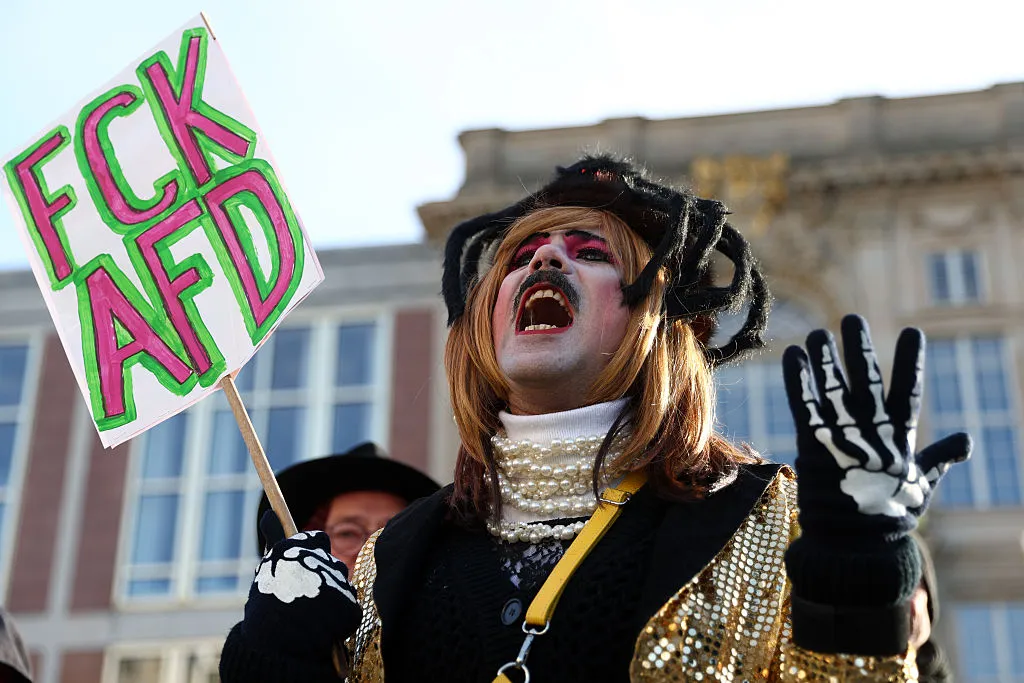
This episode, examined in detail by German-British historian Katja Hoyer in her forthcoming book Weimar: Life on the Edge of Catastrophe, carries an uncomfortable resonance for modern Germany. As the Alternative für Deutschland (AfD) surges in opinion polls, voices across the political spectrum are demanding legal prohibition. The far-left Die Linke party urges a ban. At their 2024 conference, the deeply divided Social Democrats (SPD) found rare unity in calling for proceedings. Even Federal President Frank-Walter Steinmeier, whose office stands above party politics, asked last year whether Germany had truly learned from history, warning that a party pursuing "aggressive anti-constitutionalism" must reckon with a ban.
Local bans, national consequences
At municipal level, the strategy mirrors Mueller's. Earlier this year two Bavarian towns issued speaking bans against Björn Höcke, the AfD's most radical figurehead, who planned campaign appearances. Courts struck down the bans. When Höcke eventually spoke, his audience included curious onlookers drawn by the controversy.
"We all have a responsibility to learn from our history,"
said a senior SPD figure, summarising the consensus that drives ban attempts. Yet Höcke's career suggests legal pressure may strengthen rather than weaken radical appeal. A former history teacher twice convicted for using Nazi slogans, he leads the AfD's most successful state branch in Thuringia, where the party won 2024 regional elections and now polls at 38 per cent.
Thuringia then and now
The historical parallels are precise. Thuringia was pivotal to the Nazi rise. Hitler visited Weimar more than forty times, finding favourable conditions despite temporary speaking bans. From 1922 several German states banned the Nazi Party; a nationwide ban followed the 1923 putsch. Nazi candidates simply ran as independents or under ersatz labels. In 1924 seven far-right deputies entered the Thuringian parliament, three of them card-carrying National Socialists.
Parliamentary arithmetic made those deputies kingmakers. They backed the governing coalition in exchange for re-legalisation of the local party. The ban lifted in March 1924, years before the national prohibition lapsed in 1925. Weimar became the seat of the first state government to include a Nazi minister, three years before Hitler became chancellor.
The AfD appears conscious of this lineage. Its 2026 federal conference is scheduled for 4 July in Erfurt, Thuringia's capital, exactly a century after the 1926 Weimar rally. Federal MP Matthias Moosdorf was recently charged with giving a Nazi salute to a party colleague in the Berlin parliament.
Critical differences
Hoyer stresses the AfD is not a Nazi reincarnation. It lacks a private paramilitary; Hitler's SA eventually numbered over four million. Even the disciplined 1926 rally sparked street battles that left a policeman shot outside the railway station. No comparable violence surrounds the AfD.
That distinction strengthens the case for addressing root causes. In 1928 the Nazis polled just 2.6 per cent. The Wall Street Crash then unleashed desperation no ban could contain. What Germans wanted after 1929 was not ideology but effective relief. Franklin D. Roosevelt demonstrated in the United States that democratic leadership could meet the same crisis with reform rather than ruin. Germany's tragedy was not inevitable.
Fixable grievances
Today's AfD surge stems from frustration with specific government choices on immigration, energy, economic reform and cultural policy, not from external economic collapse. These are problems centrist politicians can address. Surveys indicate the current government's stricter immigration stance has already reduced voter concern on the issue.
Suffocating dissent proves less effective than removing its fuel. The Weimar Republic remains the West's most chilling example of democratic collapse, but fear should not drive its successors into repeating the errors that hastened its end. The lessons are complex. They do not reduce to party bans as guarantors of survival.