
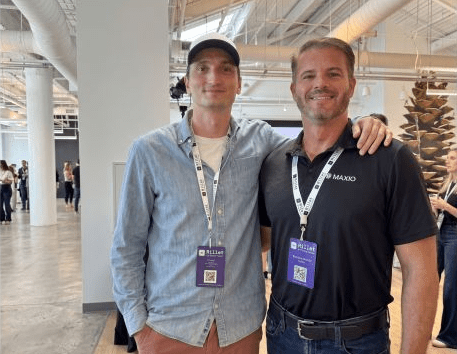
Branden Jenkins, chief executive of Maxio, was checking his phone at a restaurant when he saw that a weekend of coding with an AI assistant had automatically charged his card $1,000. The amount was deducted in $1,000 increments from a token wallet that refills without approval.
The $1,000 token surprise
Jenkins, who describes himself as a technical CEO that builds his own agents, uses the Claude model to write code from his phone. The auto-refill setting meant the bill appeared only after the session ended. He told EuroHerald, "A thousand is not that much, I would say, but for one weekend, it's pretty annoying."
He noted that his company's internal AI budget has no hard limits for most staff, a perk that can also become a liability. Without governors, employees can run up costs before anyone notices.
Why cost is not the chief concern
Jenkins says the real issue is not the occasional four-figure invoice but the sense of insecurity it creates among workers. He observed that many overruns stem from model selection and conversational drift, when an AI agent wanders down unintended paths and consumes tokens.
Industry data backs this up. Gartner estimates that agentic AI models can need five to thirty times more tokens per task than standard chatbots, and a WitnessAI survey found 68% of US firms experienced AI budget overruns last year. George Sivulka, chief executive of Hebbia, summed it up by saying using agents is like hiring a million bad employees.
Large tech firms have already felt the strain. Uber reportedly exhausted its 2026 AI coding budget in four months, while Amazon spent $500 million in a single month after opening access without caps.
Managing AI agents and employee anxiety
After the dinner incident, Jenkins experimented with cost-saving tactics he learned from online communities. He routes simple tasks to lighter models such as Claude's Haiku, reserves more expensive models for strategic work, and employs "orchestration layers", free tools from GitHub that compress AI output. One method he calls "Caveman mode" shortens replies and can cut token use by 70%.
He acknowledges that these tricks are "nerdy things" that most employees cannot easily adopt. The gap between power users and the wider workforce, he argues, fuels feelings of inequality and fear of being left behind.
Looking ahead
To address the cultural impact, Maxio's leadership team redesigned its organisational chart to list both human staff and the AI agents they manage. The company also expanded its DevOps function to govern employee-built tools that have become critical to operations.
Jenkins believes the shift in labour dynamics, fewer hires relative to revenue growth, is the clearest sign of AI's financial effect, rather than isolated token spikes. He expects the proportion of AI spend to rise, but sees the current "tax" of occasional overruns as a necessary cost on the path to greater efficiency.
"Token overspend is really not the problem, but it could easily be the excuse," Jenkins said.
He concludes that while the surprise bill was a reminder of hidden costs, the larger challenge is ensuring employees feel secure and included as AI tools become integral to daily work.