
Ormat Technologies announced the start of two Enhanced Geothermal Systems (EGS) pilot projects in Nevada, partnering with geothermal start-up Sage Geosystems and the oil-field services giant SLB. The pilots are designed to deliver reliable, low-carbon power for the surging demand from artificial-intelligence data centres across the western United States.
What the pilots involve
The first pilot, run with Sage, will be installed at Ormat's Blue Mountain plant, while the second, with SLB, will be at the Desert Peak facility. Both sites are in Nevada, a state rich in geothermal resources. Ormat expects drilling to begin soon and aims to have the plants operating by late 2027.
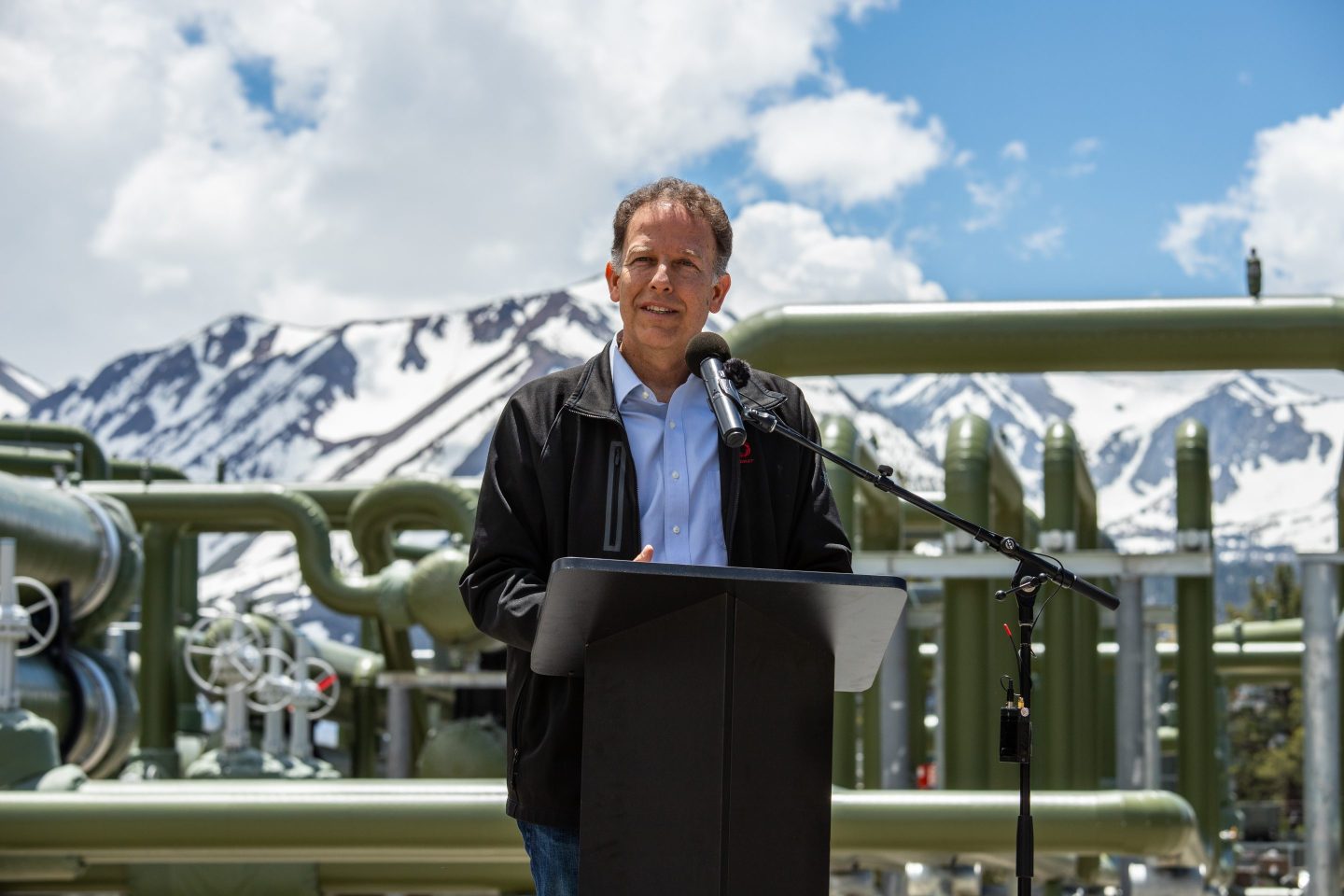
"We are in a very rare situation where all the stars are aligned exactly on time," Doron Blachar told EuroHerald. "We have the hyperscalers and the AI demand. This basically puts us in a situation where we see endless demand for our product. The more electricity we can generate, the more we sell, and we have been doing a lot of exploration in the U.S. over the last few years."
Why the move matters
AI models require massive computing power, and data-centre operators are scrambling for clean, continuous electricity. Geothermal energy provides baseload generation that does not depend on weather, making it attractive to both Democratic and Republican policymakers in the United States. The bipartisan appeal gives Ormat a strategic advantage over wind and solar, which face more political scrutiny.
Ormat already operates 1.85 gigawatts of geothermal capacity worldwide, enough for roughly 1.4 million U.S. homes, and plans to reach 2.8 gigawatts by 2028 through traditional plants and battery storage. EGS could dramatically increase that figure because it can tap deeper, hotter reservoirs, potentially delivering 500 megawatts per project, far larger than the company's current annual addition of about 100 megawatts.
Financial backdrop and market positioning
In the first half of 2026, Ormat reported revenue of $662.7 million, up 43 % year on year, and a net profit of $71.2 million, a modest 4 % increase. The company's market capitalisation sits around $6.75 billion after a 20 % share-price rise over the past year. By contrast, pure-play EGS start-up Fervo, which went public earlier this year, saw its valuation fall from $10 billion to about $5 billion after early setbacks.
How the pilots will be built
Ormat's new Ormega100 power-plant design simplifies equipment and reduces moving parts, a move intended to make EGS projects more cost-effective at scale. The company leverages its long-standing expertise in land acquisition, permitting and grid interconnection, assets it says give it an edge over rivals.
Both pilots will use drilling techniques borrowed from the oil and gas sector, where wells can extend five miles horizontally to reach deep heat sources. This technology, unavailable two decades ago, now makes EGS economically viable.
What comes next
Once the Nevada pilots are operational, Ormat plans to replicate the model at sites it has recently acquired in New Mexico, Oregon and Idaho, and it remains bullish on Texas as a future market. Successful pilots could unlock multiple 500-megawatt projects, accelerating the company's contribution to the United States' clean-energy goals and providing a steady power supply for AI giants such as Google and data-centre developer Switch, both of which are already engaged with Ormat.
In the longer term, the company hopes to combine its geothermal and battery-storage businesses to offer integrated, low-carbon energy solutions for a range of customers, from utilities to hyperscale cloud providers.