
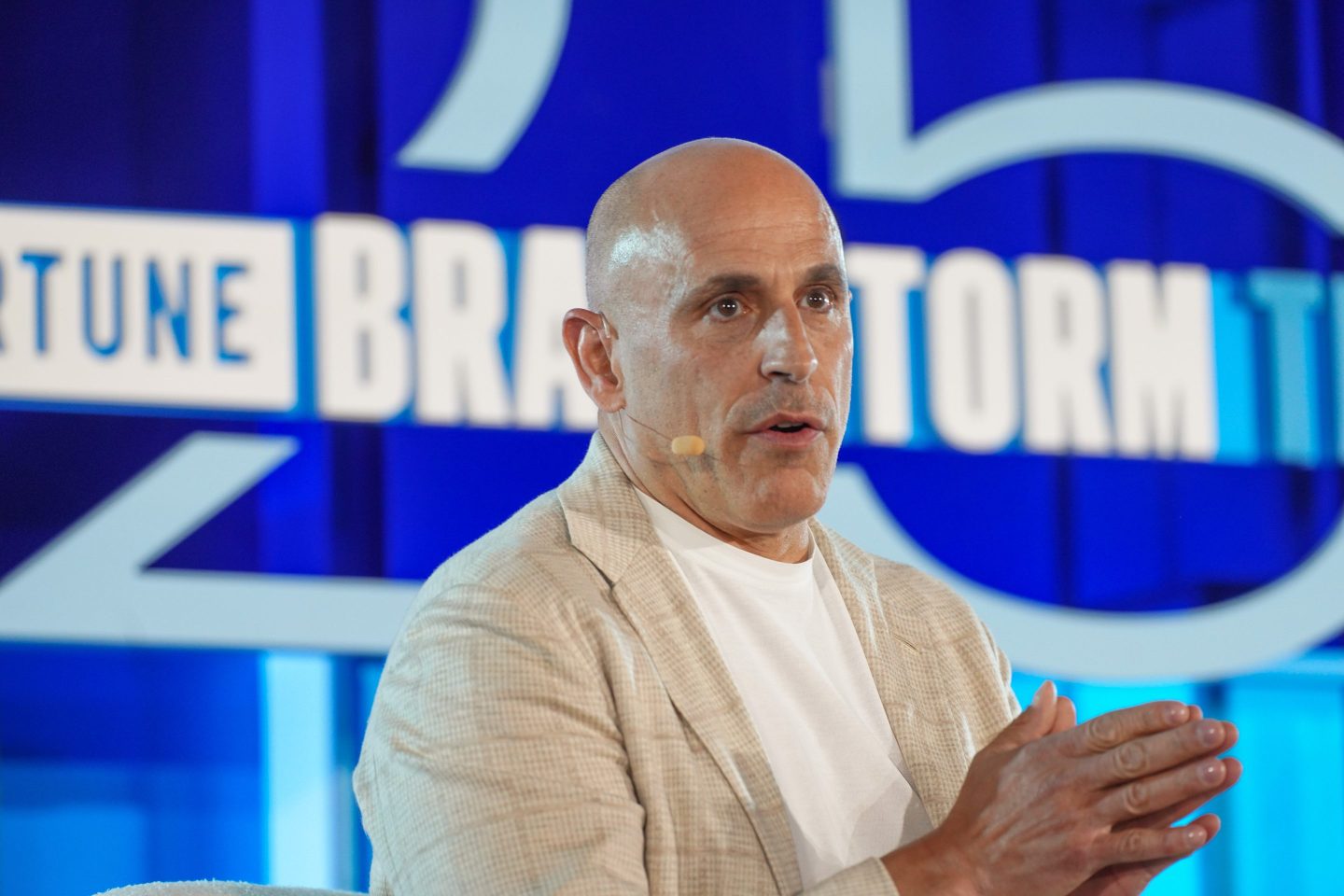
Marc Lore has built his reputation on letting numbers guide business decisions. At his food-tech company Wonder, that approach now extends to deciding which staff members move up the hierarchy, using an artificial intelligence (AI) algorithm.
AI-driven promotion process
According to a recent interview on the Term Sheet podcast, Wonder asks at least a dozen colleagues to evaluate an employee every six months on performance, behaviour and leadership. Those scores, together with written feedback, are fed into an AI model that produces a performance report.
Metrics and the VAR score
The company also calculates a metric called "value above replacement" (VAR), which estimates how difficult it would be to replace the employee with someone at the same level. Lore explained that the AI combines the VAR figure with the performance score to determine whether a promotion is justified.
Between your VAR score and your performance management score, AI basically calculates whether or not you should be promoted, Lore said.
The system also suggests how long a person should stay in a role before advancing. Human managers can over-rule the recommendation if they present a convincing argument, but Lore says such exceptions are becoming rarer as the model improves.
Implications for fairness
Lore argues that standardising promotion decisions reduces personal bias and may curb discrimination against women and minority staff. By making the criteria transparent, employees can see how their scores translate into career progression.
Scaling up and future plans
Wonder, founded in 2018, now runs 135 food halls across ten East Coast states and has raised more than $650 million at a $9 billion valuation, bringing total funding to roughly $3 billion. Lore told the outlet that the company is preparing for an initial public offering early next year.
Automation is also extending to Wonder's kitchens. An AI-controlled bowl-making system can produce up to 500 bowls an hour, compared with a maximum of 45 bowls made by a human worker.
As AI tools become more embedded in workplace management, Wonder's experiment may provide a case study for European firms grappling with the balance between efficiency, fairness and regulatory oversight.