
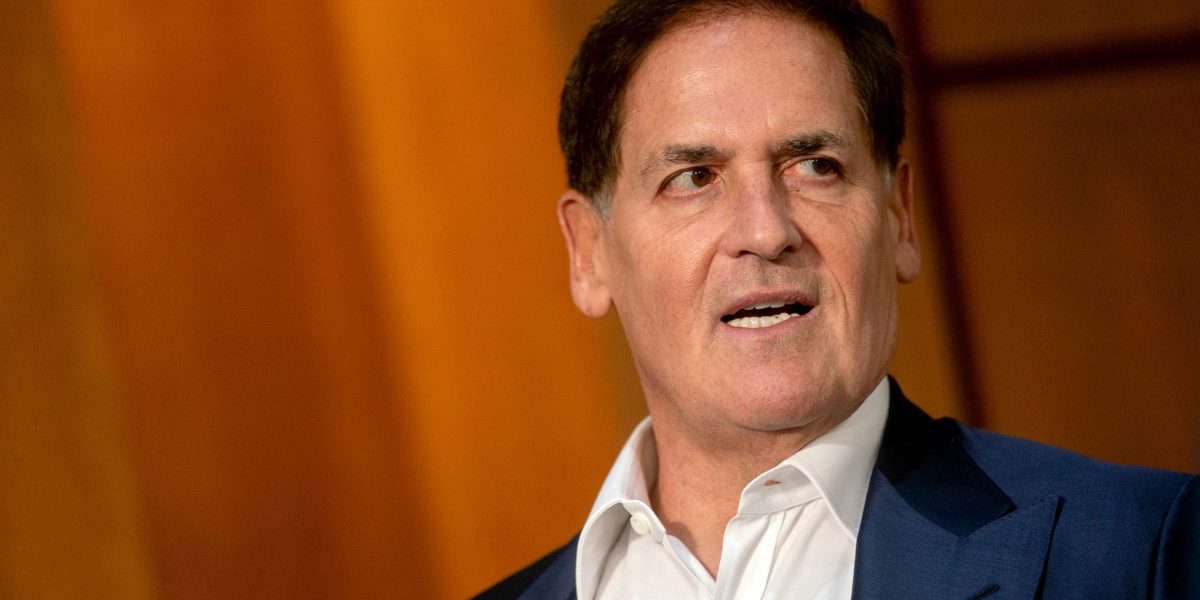
Mark Cuban used his X account this week to propose a bold solution to America's widening wealth gap: companies should choose between paying higher corporate taxes or granting every employee a share of company stock. The billionaire Shark Tank investor wrote that the approach mirrors what he has done in the businesses he founded, noting that most wealthy people become rich by selling their firms or taking them public.
Why equity for all matters
The idea taps into a long-standing policy tool, Employee Stock Ownership Plans, or ESOPs. In 2023 there were roughly 6,600 ESOPs covering about 15 million workers in the United States. The model dates back to the 1970s, when tax incentives were introduced to create retirement assets for ordinary Americans during a period of stagflation. Both former President Ronald Reagan and Senator Bernie Sanders have praised employee ownership as a way to broaden wealth.
Research shows that firms with ESOPs enjoy voluntary quit rates about one-third lower than the national average, and participants retire with savings more than double those of comparable non-ESOP workers. Yet the system remains complex and costly to administer, limiting its spread.
Current gaps in employee equity
Many companies already offer equity-related benefits such as restricted stock units, profit-sharing and stock options. Cuban argues that these mechanisms tend to enrich top-earning staff, widening the gap between CEOs and rank-and-file employees. He points to the emergence of "Trump Accounts", tax-deferred savings accounts seeded with $1,000 of federal money for each child born during the second term of the Trump administration. More than 7 million children have reportedly opened such accounts since their launch last month, with CEOs encouraging participation and philanthropists like Michael Dell and Ray Dalio contributing to help lower-income families fund the accounts.
When children have accounts like this, their outlook on life just changes.
Dell made the comment while announcing a $6.25 billion donation with his wife Susan to support the programme.
Obstacles and next steps
Implementing Cuban's proposal would require Congress to pass legislation that raises corporate tax rates for firms that do not provide equity to all staff. Given the current political climate and the fact that the president earned $2.2 billion last year, such a law appears unlikely in the near term. Nonetheless, the discussion highlights growing interest in expanding employee ownership as a tool for wealth redistribution.
Even without a federal mandate, companies may be nudged by pay-transparency rules and talent shortages to adopt more inclusive equity programmes. Observers note that gender pay gaps persist, women earn about 82 cents for every dollar earned by men, and overall affordability for lower-income households continues to decline.
What could happen next?
Legislators may revisit the two Senate bills passed last year that encourage ESOP formation, potentially strengthening tax incentives or simplifying compliance. Meanwhile, corporate leaders who wish to avoid higher taxes could voluntarily broaden equity distribution, using the public debate sparked by Cuban's suggestion as a catalyst.
For now, the proposal remains a conversation starter, illustrating how a high-profile entrepreneur can bring attention to long-standing policy tools that could, if expanded, give more workers a stake in the companies that employ them.