
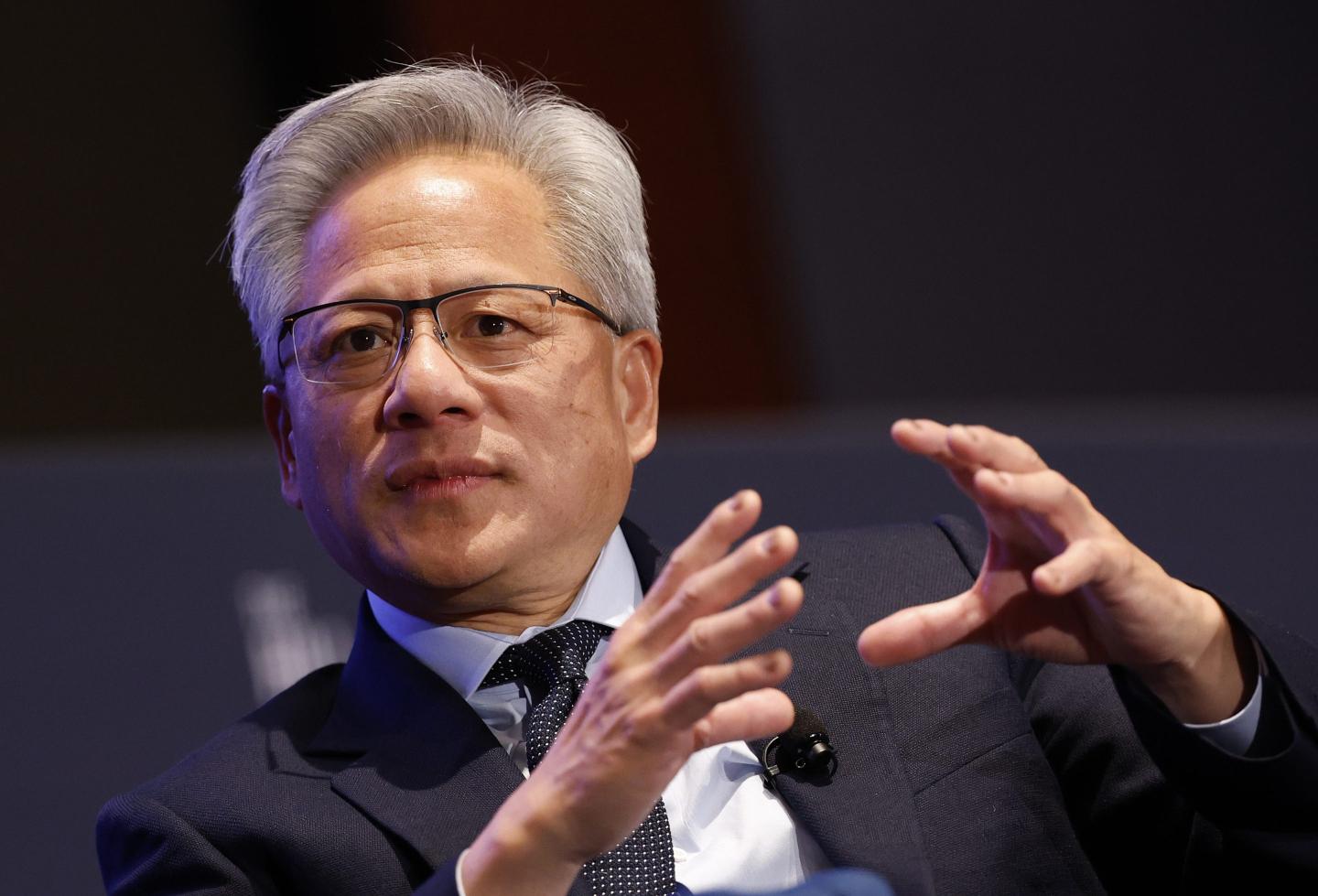
Jensen Huang took to X on Sunday to proclaim that OpenAI's latest model, Astra, marks the arrival of artificial general intelligence (AGI). He noted that the system was trained on 100,000 Grace Blackwell chips, a figure he later corrected from an earlier 300,000 claim.
Announcement and immediate reaction
The statement sparked a flurry of commentary. Financial commentator Jim Cramer hailed the move as a win for Nvidia, while crypto entrepreneur Hunter Horsely called Huang "the most credible referee". AI critic Gary Marcus questioned whether Huang's financial ties to Nvidia biased his declaration.
Market response after the long weekend
When markets opened on Tuesday, the reaction was mixed. Shares of CoreWeave, a cloud-computing firm under scrutiny for its debt load, jumped 15 percent. SoftBank added a modest 2 percent gain. In contrast, Nvidia slipped 2 percent, echoing a similar dip after Huang's earlier AGI claim on Lex Fridman's podcast in March.
"If you look in a slightly different place, you'll see that the market is responding.", Gil Luria, head of technology research at D.A. Davidson
According to D.A. Davidson's Gil Luria, the companies most exposed to OpenAI's technology are the ones seeing stock lifts, while Nvidia's sheer size makes further growth hard to convince investors of.
Analyst perspectives
Luria added that Astra restores OpenAI's position as the leading model after a year of lagging behind rivals. He also pointed out that Nvidia's recent quarterly revenue of $96 billion, a 106 percent year-on-year rise, set a record for corporate profitability, yet many traders treat the stock more as a cash source than a news-driven asset.
"They're so good that nobody believes it can continue.", Gil Luria
Economist Basil Halperin of the University of Virginia warned that, by the strict definition of AGI, an AI matching the cognitive versatility of a well-educated adult, the claim falls short. He cited a 10-point benchmark that includes writing an Oscar-level screenplay or mastering a new video game within hours.
"We just absolutely have not achieved AGI, even though the models are astounding.", Basil Halperin
Halperin's own test of a GPT-5.6 model showed it could transfer music playlists but required three hours of supervision, underscoring the gap between hype and practical capability.
Why the market may stay indifferent
Halperin argued that stock movements reflect a blend of factors beyond a single model launch. Potential risks such as existential or cybersecurity threats could push investors toward safe assets like Treasury bonds. Moreover, competition between OpenAI and Anthropic resembles the ride-hailing duopoly of Uber and Lyft, profitable but not as lucrative as tech giants.
He suggested that any genuine AGI impact would first appear in real interest rates. Higher growth driven by AI would lift rates, reducing the present value of future earnings and possibly weighing on Nvidia's valuation.
Looking ahead
While Astra's debut may boost demand for compute hardware, analysts expect only modest macro effects in the near term. A recent MIT study noted that Treasury yields tend to dip after major model releases, hinting at market disappointment. Halperin's forecast envisions a rapid but still incremental AI-driven expansion, likening the next five years to a faster, stronger dot-com boom rather than a singularity.
Investors will likely watch how OpenAI monetises Astra and whether any venture can turn the model into a billion-dollar enterprise, the benchmark Huang once used to define AGI.