
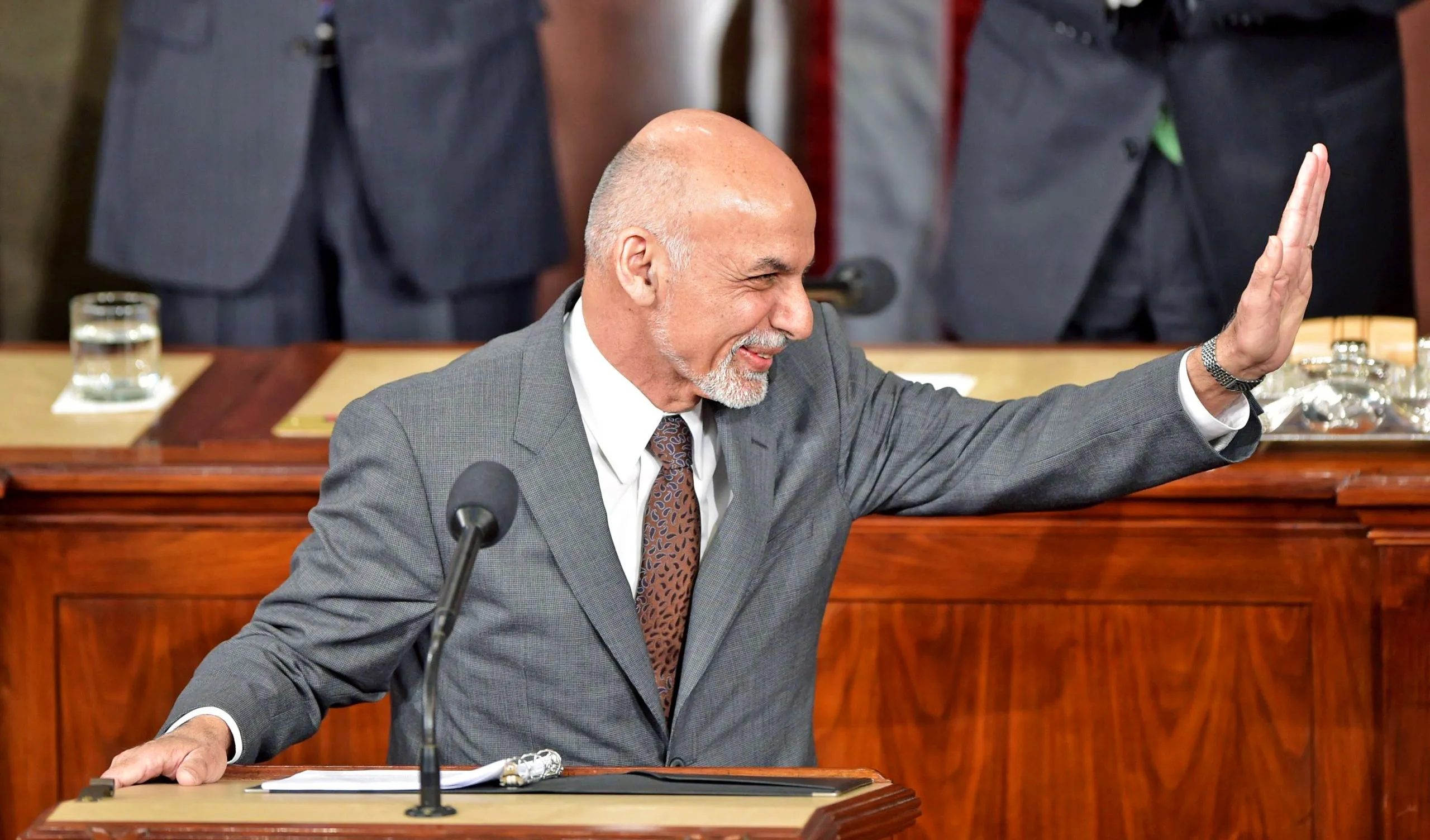
When Ashraf Ghani boarded a helicopter in Kabul on 15 August 2021, he closed a chapter that began with the Taliban's first removal from power two decades earlier. The departure of Afghanistan's last Western-backed president was swift, chaotic and, for many Afghans, a final betrayal by a leader who had promised to govern differently.
A family shaped by exile and return
The Ghani family embodied the trajectory of modern Afghanistan. Ashraf Ghani, a trained anthropologist with a career spanning American academia, the World Bank and Washington think tanks, returned to Kabul in 2002 after the Taliban's initial fall. His wife Rula Ghani, a Lebanese Christian who studied in Paris during 1968, became an advocate for women's rights. Their daughter Mariam Ghani built an artistic career in New York, exhibiting at the Tate Modern, the Guggenheim and MOMA. Their son Tarek Ghani followed his father into academia and philanthropy.
The family's first exile came in 1977, as communists seized power. They returned only after the US-led invasion toppled the Taliban in 2001. Ghani served as finance minister under Hamid Karzai, lost a presidential bid in 2009, then won a disputed election in 2014.
The intellectual president
Ghani brought a scholar's toolkit to the Arg, the 19th-century fortress-palace in central Kabul. He restored the royal library, filled his office with 7,000 books, and rose before dawn to read under a chinar tree. With British human rights lawyer Claire Lockhart, he co-authored Fixing Failed States (2008), arguing that "novel strategies" could stabilise states contaminating a "fully globalised world" with anarchy. His 2007 TED talk proposed a UN "sovereignty index" and a "citizens-based approach" to state-building.
In theory, Afghanistan was a blank slate. Opium farmers would make t-shirts. Kandahar embroiderers would partner with Versace. Afghan daughters would study in America, make jam in Brooklyn, exhibit in Berlin. "The people," Ghani said in 2005, "are internationalist by temperament, they're much more sophisticated than rural Americans with college degrees and the bulk of Europeans."
Micromanagement and isolation
Reality proved resistant. Ghani micromanaged ministries, took anger management classes, and retreated behind the Arg's blast walls and barbed wire. Journalists described his office buried in open books, pencil-annotated. Like Montaigne during the French wars of religion, he sought answers in his library, but Montaigne only advised kings; Ghani was supposed to be one.
Corruption allegations dogged his inner circle. His brother Hashmat Ghani held shares in a US company awarded mineral rights in Kunar province, a deal Ghani signed off. One American procurement expert called it a red flag "redder than red." His nephew Sultan Ghani styled himself president of "The Ghani Group" and posted Instagram photos approaching a Learjet 75 Liberty as the Taliban advanced.
The collapse
By August 2021, Ghani's government controlled little beyond Kabul. Half the population lived in poverty. A third faced emergency food insecurity. GDP stagnated. The trade deficit yawned. The army he had promised would hold "forever" dissolved.
Ghani fled. Russian media reported he left with $169 million in cash, a claim widely dismissed but impossible to fully disprove. Mariam Ghani posted on Instagram from New York: "I'm pretty burned out." Rula Ghani and Tarek Ghani remained silent.
The future will be determined by the people of Afghanistan, not by somebody sitting behind the desk, dreaming.
Ghani spoke those words to the BBC in February 2021. He was describing himself.
What remains
The Taliban now control every provincial capital, every border crossing, every government ministry. Mariam Ghani's latest film, What We Left Unfinished, premiered in US theatres days before her father's flight. The title fits. Ghani's intellectual project, rational governance, globalised development, bookish statecraft, lies unfinished in the dust of the Arg.
He surfaced days later in the UAE, telling reporters he had been "in a condition where I couldn't even put on my shoes." Whether he left with his library or with millions, the result is the same: a country of 40 million people faces winter under a movement the West spent two decades fighting, while the family that promised to fix Afghanistan has returned to the comfortable exile from which it came.