
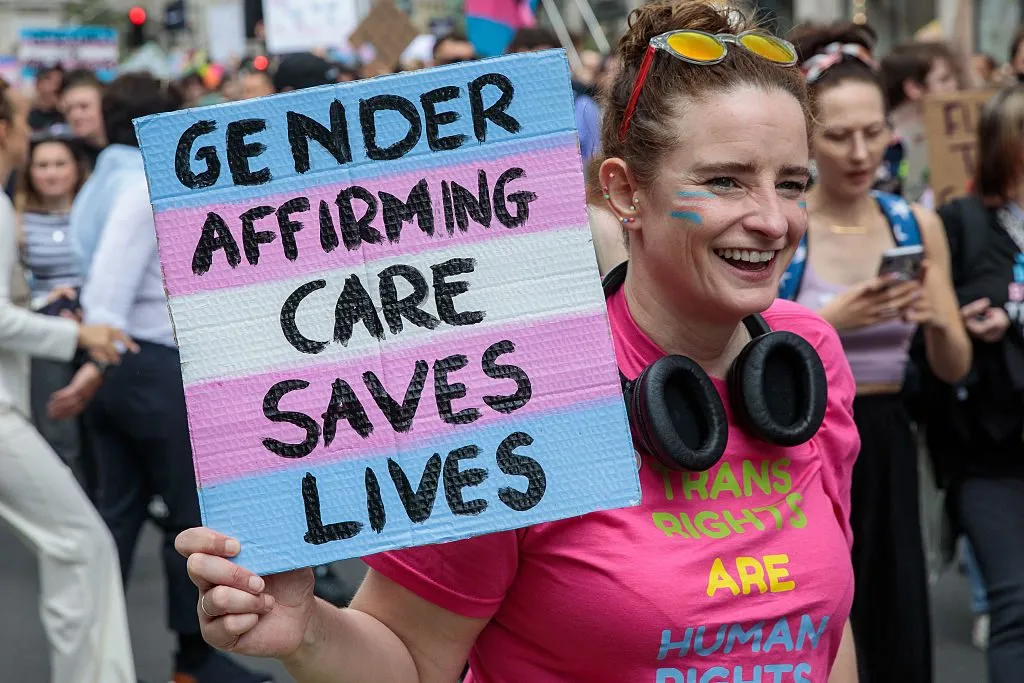
Dr Gordon Guyatt, a professor at McMaster University in Canada and co-founder of the field of evidence-based medicine, has disavowed his research team's own systematic reviews on gender-transition treatments for young people after sustained pressure from transgender activists. The episode has raised serious questions about academic freedom and the independence of evidence-based medicine.
Systematic reviews found weak evidence
In 2021, the Society of Evidence-Based Gender Medicine (SEGM), a US-based nonprofit founded in 2019 to scrutinise the scientific evidence behind gender-transition interventions for youths, commissioned a series of systematic reviews from Guyatt's team at McMaster. The project was headed by Dr Romina Brignardello-Peterson, an associate professor of health-research methods.
This year, the team published the first three of five planned reviews, covering puberty blockers, cross-sex hormones, and gender-transition mastectomies. All three concluded that the evidence base was weak and uncertain. The mastectomy review was the first of its kind. Similar findings from researchers in Europe have prompted health authorities in several European nations to restrict minors' access to gender-transition treatments. In Britain, the Cass Review commissioned a 2024 systematic review which determined that the field lacks guidelines meeting evidence-based standards.
Activist campaign and SPLC designation
In December 2023, the Southern Poverty Law Center (SPLC) released a report describing a "pseudoscientific" network of anti-LGBTQ groups, including SEGM. The report alleged ties between SEGM and conservative anti-LGBT organisations through generic donor-advised funds that also channel millions to the SPLC itself. In June 2024, the SPLC officially designated SEGM a hate group, catalysing an activist campaign against Guyatt's team.
An anonymous Instagram account targeted the researchers and their ties to SEGM, demanding retractions of the review papers. Posts featured videos of activists confronting Guyatt and Brignardello-Peterson, and claimed SEGM "shares funding streams with US white-nationalist organizations and lobbies for discrimination against, and ultimately extermination of, trans people." The pressure extended to McMaster administrators and trans advocates within the university.
Team disavows funder and contradicts findings
On 14 August, Guyatt and four colleagues published a statement on McMaster's website disavowing SEGM. "When the agreement started in 2021, the organization appeared to be legitimately evidence-based," they wrote, offering no evidence for the claim. The statement lamented how the team's work was being "misused to harm trans youth," calling it "unconscionable to forbid clinicians" to provide such interventions.
I don't necessarily agree that he has the authority to dictate how his work is used. To be so prescriptive waters down the notion of why we do these systematic reviews, and the notion of evidence-based medicine. There should be some level of detachment.
Dr Steven Montante, a plastic surgeon in Richmond, Virginia, and co-author of the review papers, refused to sign the statement. He said Guyatt's stance undermines the purpose of systematic reviews.
Dr Paul Garner, emeritus professor of evidence synthesis in global health at the Liverpool School of Tropical Medicine, called it an institutional failure. "Why didn't the institution defend the science? This is obviously a toxic ideological area."
Conflict of interest concerns
Experts speaking anonymously for fear of reputational harm said Guyatt's capitulation calls into question his capacity for dispassionate analysis. They also criticised the team's announcement of a donation to Egale Canada, which describes gender-transition treatment as "life-saving", a claim the team's own reviews found unsupported by evidence. The statement used activist rhetoric, characterising gender-transition treatment as "medically necessary" despite the reviews concluding efficacy remains essentially unknown.
In 2023, at a SEGM conference in New York, Guyatt had taken a different position. Asked whether it was acceptable to call pediatric gender medicine "life-saving" and "medically necessary" when backed only by low-quality evidence, he said: "Of course not." The rational approach, he said, would be "not to say it's medically necessary, it's to say we are putting an extremely high value on autonomy."
Pressure from funding bodies
According to an inside source, McMaster administrators told Guyatt's team that failure to distance themselves from SEGM risked being branded unfriendly to LGBTQ interests, potentially jeopardising funding from the Canadian Institutes of Health Research. On a 30 July call, Guyatt reportedly expressed unhappiness that the team's papers had been cited in a US Department of Health and Human Services report concluding that the known and potential harms of these interventions were so concerning that providing them was unethical.
Pending reviews abandoned
Emails from February show Brignardello-Peterson and Guyatt proposed adding a paragraph to all reviews emphasising patient autonomy and denouncing policies restricting medical interventions. When Montante objected that such post-hoc edits "may undermine the research," they instead proposed a letter to journal editors, which Montante and three others declined to sign.
More recently, the McMaster team has sought to remove their names from two reviews nearing publication, one on social transitions (changing names, pronouns, dress) and another on binding and "tucking." Montante, a co-author of the latter, said the team wants a wholesale abandonment of authorship, leaving only him and one independent researcher. Such disavowal of nearly published scholarship is extremely unusual.
Wider pattern of pressure on researchers
The episode follows a pattern of campaigns against academics whose work challenges trans activists' positions on pediatric gender medicine. In 2023, Michael Bailey, a psychology professor at Northwestern University, saw his paper on "rapid-onset gender dysphoria" retracted after an activist campaign. Bailey, who republished the paper elsewhere, said: "I have some regrets in life, but my unwillingness to buckle under ideological pressure like Dr Guyatt did isn't one of them. Indeed, it's one of the things I'm proudest of."
In a statement, SEGM co-founder Zhenya Abbruzzese said the nonprofit's collaboration with Guyatt's team had been "grounded in mutual respect" and expressed disappointment that the academics had yielded to activist pressure. "Young people experiencing gender dysphoria deserve evidence-based care," she said.
Montante insists the outstanding systematic reviews should be published. "Let the work stand for itself," he said. Of his dealings with SEGM, he added: "I've never gotten any kind of vibe or any kind of perception that this was some kind of anti-trans group."