
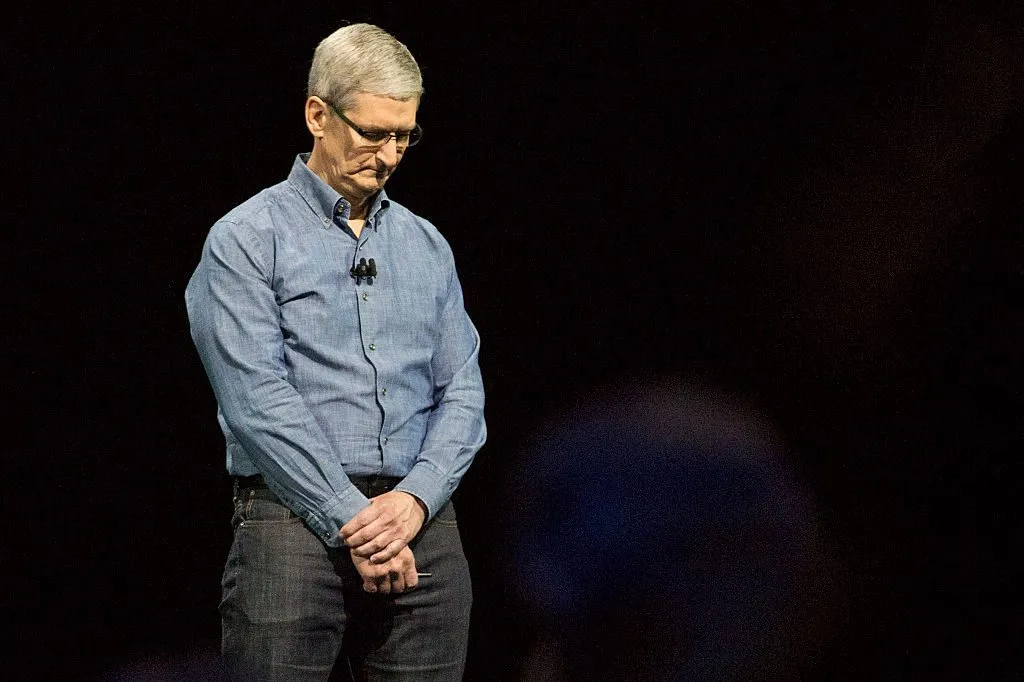
Tim Cook has now led Apple for 5,090 days, matching the tenure of founder Steve Jobs. The milestone, reached this week, would once have been cause for celebration. Instead it has become a focal point for investors and analysts who argue the company is falling behind in the defining technology shift of the decade.
A milestone that invites scrutiny
When Jobs reached this point in his leadership, nobody was calling for change beyond concerns about his health. Today, questions about Cook's suitability are moving from internet forums into investment bank notes and prime-time segments on CNBC and Bloomberg TV. The criticism centres on a simple charge: Cook is an operator, not a product visionary. His mandate was to scale what Jobs built, and by that measure he succeeded. Profits have risen 3.7 times and shareholder returns have increased twentyfold since he took over in 2011.
But the landscape has shifted. The bear in the metaphor once used by former software chief Avie Tevanian now has a name: artificial intelligence. And it is catching up fast.
The growth gap widens
Annual revenue growth over the past three fiscal years has averaged just 2.3 per cent at Apple. By comparison, Alphabet, Amazon, Meta and Microsoft have grown between 11 and 14 per cent, Tesla at 24 per cent and Nvidia at 80 per cent. Apple's market valuation remains enormous at $3.1 trillion, yet it has inched up less than 5 per cent in three and a half years. Microsoft, once mocked in Apple's "Get a Mac" ads, now leads in valuation, profitability and product vision. Nvidia, the chipmaker powering the AI boom, is worth $1.2 trillion more than Apple.
Product innovation stalls
The iPhone's design has barely evolved since 2019, when Jony Ive departed as design chief, a role that remains vacant. Apple killed its decade-long electric car project just as Chinese rivals Huawei and Xiaomi expanded their own. The only significant new product this decade is the Vision Pro, a $3,500 mixed-reality headset released in early 2024 to underwhelming demand. Its technical capabilities are impressive, but the near absence of content reflects what analysts describe as a lack of leadership and strategic vision.
The AI promise unfulfilled
Apple's AI missteps are the most glaring. Siri, once a pioneer among voice assistants, now feels "as dumb as a rock", to quote Microsoft chief executive Satya Nadella. When Cook finally unveiled "Apple Intelligence" in June 2024, the promise was an assistant that could mine texts and emails to deliver personalised answers by processing data on the device rather than in the cloud, something ChatGPT cannot do on the iPhone because apps are sandboxed. Apple, which controls the operating system, chips and hardware, can grant Siri that access.
If Apple can make it work, it could offer 1.5 billion iPhone users a compelling reason to upgrade their device every 24 months, as on-device chipsets improve to keep up with data processing on cloud servers.
That logic, explained by Craig Moffett, partner at MoffettNathanson, underpins the bull case for Apple's valuation. But fifteen months after the announcement, a personalised Siri still does not exist, the advertisements promoting it have been pulled, and Apple has acknowledged it does not know when the features might be ready. Moffett warns that "that whole logic disappears if Apple ends up capitulating to a cloud-based model".
China strategy backfires
Cook's heavy bet on China is also looking like a liability. Long heralded as the operative who "fixed" Apple's supply chain, he oversaw hundreds of billions of dollars invested in Chinese manufacturing. In the process, the company helped elevate the same local firms that now threaten its dominance. In the June quarter, Apple's market share in China fell to fifth place, behind Huawei, Vivo, Oppo and Xiaomi, according to Canalys.
Efforts to shift production to India have been slow and superficial, centred on final assembly rather than replicating the depth of China's industrial clusters. Beijing has used its leverage, blocking exports of sophisticated machinery for Indian production lines and restricting visas for Chinese engineers who could help get them running.
Diplomatic capital spent
Even Cook's once-vaunted diplomacy appears diminished. Known as the "Trump Whisperer" during Donald Trump's first term, he secured tariff exemptions and avoided backlash from Beijing after Washington attacked Huawei. But Trump trade adviser Peter Navarro said this month: "Tim Cook has continually asked for more time in order to move his factories out of China. It's the longest-running soap opera in Silicon Valley."
Contrast that with Jensen Huang, Nvidia's chief executive. Huang publicly lobbied against an export ban on AI chips to China and persuaded Trump to reverse course. He also joined the president on a diplomatic trip to the Middle East. "Tim Cook isn't here," Trump quipped in Riyadh, eyeing Huang at an investment forum, "but you are."
What comes next
Analysts often note that the iPod, iPhone and iPad were all late to their categories. True, but each example belongs to the Jobs era. It is harder to believe Cook has a secret plan to dominate the AI wars as top minds defect to better-paying roles at Meta.
Is it too early to call for Cook's resignation? Apple remains immensely profitable with a fortress balance sheet. But too early is less risky than too late. And what good is a war chest if you do not use it? As AI transforms tech, Apple looks like a complacent observer. Even in its greatest moat, hardware, Chinese groups are out-innovating with better designed and even more expensive smartphones. The future does not slow down for anyone. And a few months before Apple turns 50, the bear is catching up.