
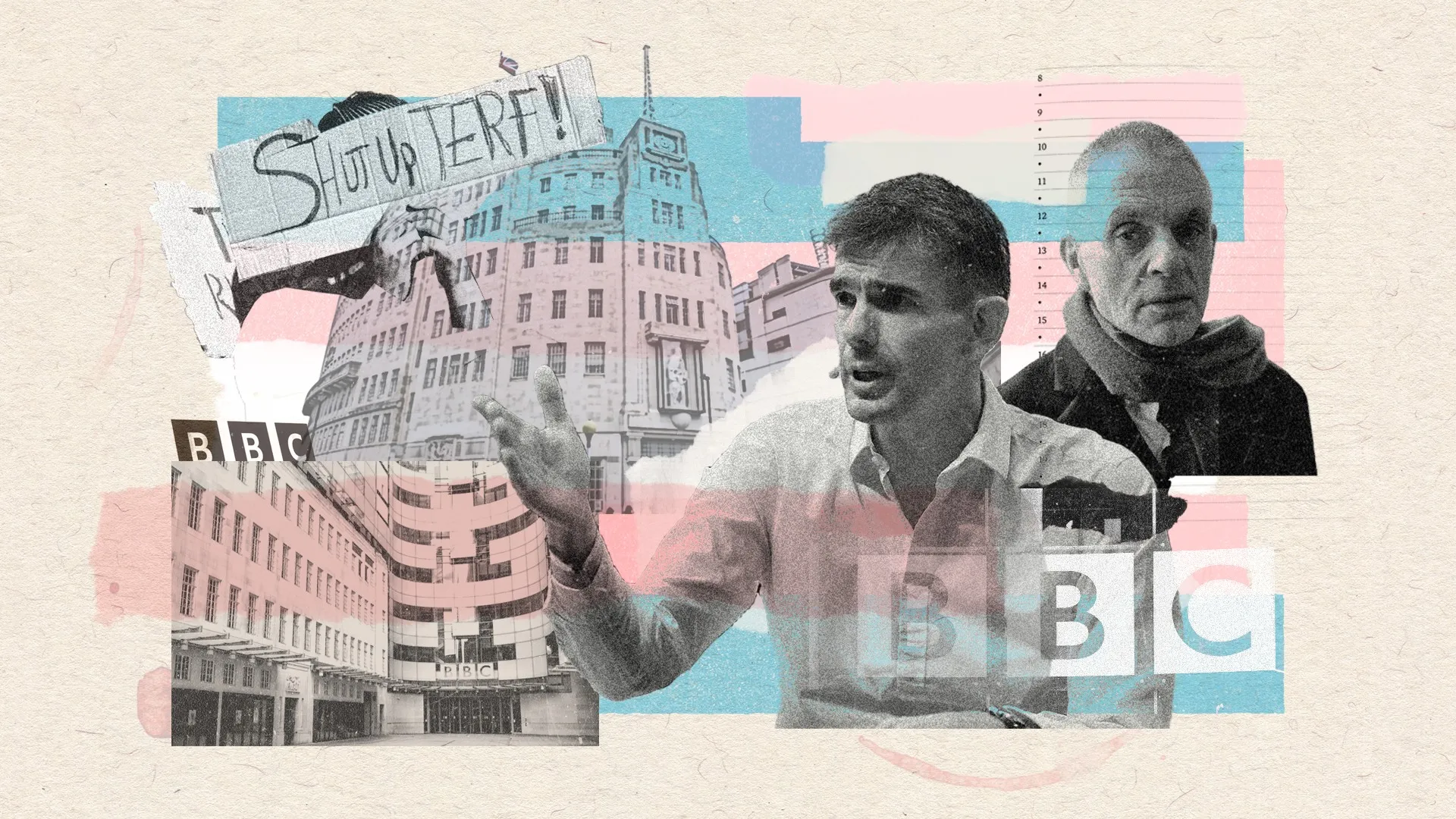
When Matt Brittin walks through the doors of Broadcasting House as the BBC's new director general, he inherits an institution at war with itself. The former Google executive takes charge of a broadcaster that has spent a decade drifting from its founding promise of impartiality, captured by a worldview that treated debate on transgender rights as hate speech. His predecessor Tim Davie resigned in November after a leaked memo exposed editorial failures. The crisis runs deeper than one memo. It is the story of how the BBC took a side in the culture wars and lost the trust of the licence-fee payers who fund it.
The Newsnight moment that revealed a new activism
The shift began in 2014 on a Newsnight shift when boxing promoter Frank Maloney announced she was now Kellie Maloney. Then-senior editor Rob Burley commissioned a discussion with three transgender guests: Paris Lees, Freddy McConnell and Miranda Yardley. Yardley, a transgender woman who shared gender-critical feminist concerns about single-sex spaces, was the "grit in the oyster" Burley wanted.
Within hours, Lees and McConnell withdrew. Lees tweeted she would not enter a "fabricated debate about trans people's right to exist". McConnell called it a "TERF-filled trap". The panel collapsed. Burley writes: "An alternative trans viewpoint was a threat. A discussion was unthinkable. And so the mighty Newsnight was forced to drop a sane and serious discussion."
The transactivist tactics, Twitter storms, name-calling, disingenuous accusations and the insistence on "no debate", have become all too familiar in the years since.
This pattern, activists closing down debate by labelling dissent as transphobic, would repeat across the corporation.
Stonewall, the Style Guide and the drift to advocacy
In 2011, the lobby group Trans Media Action (later All About Trans) secured £20,000 from the BBC and Channel 4. It ran workshops for senior staff with activists from Mermaids. By 2013, representatives met BBC executives including the head of BBC News Online and a Complaints Unit adviser. Their message: use "assigned male/female at birth" not "born a man/woman".
When the BBC Style Guide was updated in November 2013, it had adopted the transactivist position. If you said you were a woman, that was what you were. It also defined homosexual attraction by gender not sex, a contested claim.
In 2015, Stonewall pivoted to transgender rights after delivering marriage equality. The BBC was already a paying member of Stonewall's Diversity Champions programme and registered on its Workplace Equality Index. The higher the BBC scored, the more it reflected Stonewall's approach. As senior manager Gavin Allen recalls: "Stonewall was a credible organisation. If they said 'X, Y, Z,' we thought, 'Oh, Stonewall, oh God, maybe they're right.' Then you realise, 'Wait a minute. This is horseshit.' But unfortunately, that was way too late."
A 2018 internal report, "LGBT Culture and Progression", designed by Stonewall and signed off by the Executive Board, contained a striking admission: "News & Current Affairs output often presents balanced debates on LGBT issues, which were at odds with the BBC's corporate stance on LGBT inclusion." Head of workplace diversity Andrew Young told LGBT allies in 2019: "I'm not going to get into impartiality... Hopefully that kind of thing might change over time."
How DEI changed the culture
When Theresa May announced plans to "demedicalise" gender recognition in 2017, the BBC's Diversity and Inclusion machinery accelerated. Content leaned toward propagandising. Coverage of opposition to Self-ID was near-zero. The BBC's first LGBT correspondent, Ben Hunte, started in 2018 with a remit to report on "stories, issues and debates surrounding sexuality and gender", but was openly sympathetic to one side.
Meanwhile, journalists who questioned the orthodoxy faced ostracism. Chief writer Cath Leng refused to use female pronouns for Chelsea Manning in 2017, citing her duty to accuracy. She was overruled, ostracised, and ultimately left in 2023 after 25 years. "It's the only area of our professional life where we're told you have to say things that aren't true," a long-serving presenter told Burley.
A disastrous reorganisation
Tim Davie arrived as director general in September 2020. He pushed through a reorganisation drawn up by Director of News Fran Unsworth that centralised decision-making and culled experienced staff. Junior staff were rapidly promoted; freelancers filled gaps. One veteran called the new foot soldiers "very, very young and very different." Another recalled open hostility toward BBC board member Sir Robbie Gibb from young producers who "had no concept of impartiality."
Davie tied promotion to diversity targets. "Hardly a manifesto to deal with the problem of groupthink," Burley writes. A veteran journalist who knows Davie well said: "He understands intellectually what's going on, but can't do anything about it because he feels himself cornered."
The Nolan podcast and the Stonewall reckoning
In 2021, Stephen Nolan's Radio Ulster podcast Nolan Investigates: Stonewall exposed the close relationship between Stonewall and public institutions including the BBC. Producer David Thompson faced unprecedented pushback from London executives. One senior manager demanded to know who he was to question gender identity. Fran Unsworth intervened: "This is a really important piece of journalism, and we will back it."
The podcast ran despite sabotage, BBC Online stripped back the accompanying article. But listening numbers forced the corporation to reluctantly leave Stonewall's Diversity Champions Scheme in November 2021, "not because there was undue influence... but because it might look that way." Internal attitudes did not shift.
The battle for BBC Online
Online was where capture was most acute. A 2021 confidential memo warned trans-related content on the homepage was "disproportionate, always affirmative and dangerous". Journalist Caroline Lowbridge spent months fighting to publish a 2021 feature on lesbians pressured to have sex with transgender women, the so-called "cotton ceiling". Stonewall chief executive Nancy Kelley complained to editorial director Kamal Ahmed that the piece "neatly intersected with the component of transphobia that is representing trans women as sexual predators".
The story passed through 18 people. Fran Unsworth again intervened to publish. Lowbridge's byline remained, exposing her to protests in Nottingham and outside New Broadcasting House. One online staffer said: "I thought, Wow! Finally, we're actually covering it." How many stories were quietly abandoned remains unknown.
The Tavistock Files
Deborah Cohen and Hannah Barnes of Newsnight spent two years investigating the Gender Identity Development Service (GIDS) at the Tavistock Clinic. Backed by independent editor Esme Wren, they revealed puberty blockers prescribed without evidence of benefit, an affirmative culture discouraging dissent, and staff afraid to raise doubts. Their work triggered an official investigation and contributed to the service's closure.
The Cass Report in April 2024 delivered a damning verdict. Yet the first voice on Newsnight was a transgender woman with a positive GIDS experience, the instinct to "soften" the verdict persisted. Barnes said: "Where have large swathes of the media been? And sadly, I include the BBC in that." The BBC's health team had ignored the scandal for years. One senior staffer attributed it to fear.
Exclusive: Fran Unsworth on "progressive madness"
In her first interview since leaving, Fran Unsworth describes 2018-2022 as "progressive madness". "The world went mad, and the BBC, because it is part of the world, went a bit mad with it. This was going on in every institution in society; there was a kind of national bullying going on."
She acknowledges the BBC "could have done a lot more" but defends her record: the Nolan podcast, Lowbridge's article, impartiality training. Her core defence rests on "due impartiality", the concept that equal treatment is inappropriate when evidence overwhelmingly favours one side (flat earth vs round earth). She argues that until the Supreme Court ruling in April 2025 clarified that a woman under the Equality Act means a biological woman, producers had no factual basis to challenge "trans women are women". "Until the Supreme Court ruling on it, Keir Starmer himself was saying trans women are women," she notes.
Asked if it is a fact that trans women are women, she pauses: "No. They're trans women." Asked if BBC staff were asked to tell a lie, she fires back: "If the BBC had decided to say, 'Do you know what? We're not having any truck with this,' that would have meant the BBC was on one side of the argument. At a time when certain things weren't determined."
Unsworth admits the reorganisation she drove created many current problems. She also feared being "cancelled by my own staff". "I would actually say it drove me out, just dealing with the progressive editorial issues and the bullying around them all. It was incredibly difficult."
Matt Brittin's challenge: can the BBC recover trust?
The Executive Complaints Unit (ECU) suggests lessons remain unlearned. In November 2025, it upheld complaints against newsreader Martine Croxall for rolling her eyes after correcting "pregnant people" to "women". The ECU ruled her expression "laid it open to the interpretation that it indicated a particular viewpoint". In August 2023, it upheld complaints against Justin Webb for saying "trans women, in other words, males" during a discussion on chess, a ruling the then-DG called a "foot fault". Deputy head of programme complaints Dominic Groves wrote that the belief sex is immutable was "vulnerable to the point that many trans advocates... say sex isn't biological and can be changed".
Public opinion has shifted dramatically. The British Social Attitudes survey showed 60% supported changing sex on birth certificates in 2016; by 2023, support collapsed to 24%. Half the country said equal opportunities for trans people had gone too far. After the Supreme Court ruling, nearly 60% agreed a transgender woman was not legally a woman.
Gavin Allen suggests the BBC follow its climate change model: declare the evidence settled, there are two sexes, people cannot change sex, and move the conversation to what the transgender community needs. Richard Burgess, director of news content, has admitted staff "hadn't got everything right". The style guide now allows mention of biological sex where it aids understanding.
Brittin must also decide where to find 10% cuts. Further salami-slicing of BBC News is not the answer. He should protect Newsnight, Politics Live and long-form political interviews, audit newsroom experience, and consider requiring every employee to uphold impartiality. As Burley concludes: "Its demise will be assured unless advocacy journalism for any cause, whenever it rears its head, is stamped out and, well, cancelled."
BBC News has taken a number of actions relating to our reporting of sex and gender including updating the news style guide and sharing new guidance, making our Social Affairs Editor responsible for this coverage, and where there have been concerns about particular stories, we have addressed them.
A BBC spokesperson said the corporation recognises strong feelings and aims to give "clear, accurate and duly impartial information to audiences and to reflect the different viewpoints on the issue."