
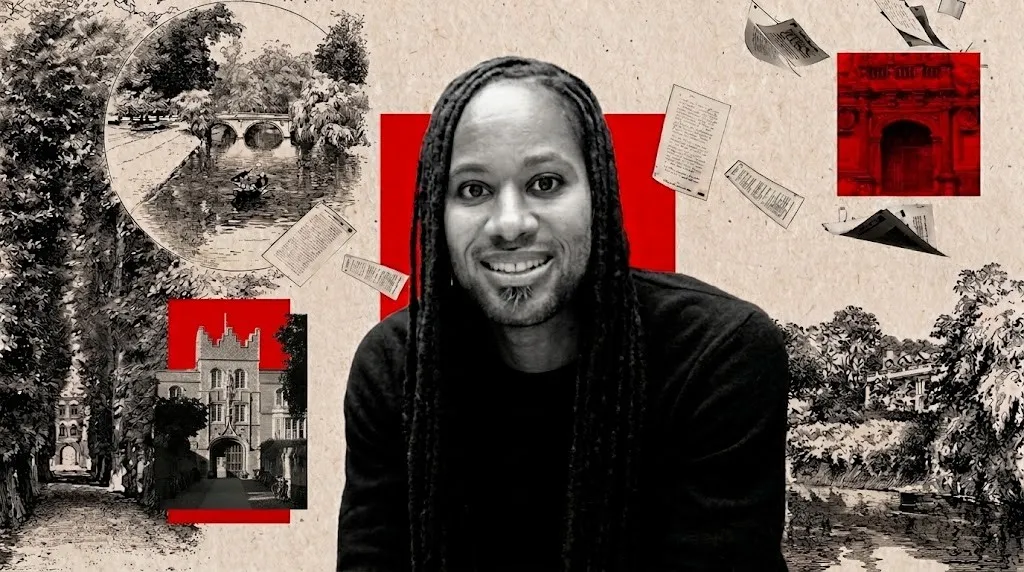
Cambridge University is facing mounting scrutiny over its defence of Jason Arday, the sociologist appointed as its youngest black professor in 2023, after allegations of plagiarism and longstanding concerns about the quality of his academic output were dismissed by university authorities.
A rapid rise built on a remarkable story
Arday's biography reads like a modern fable. Diagnosed with autism and non-verbal until the age of 11, he learned to read and write at 18. From a lectureship in physical education in 2016, he advanced to a Professorial Chair in Sociology at Cambridge in just seven years. Along the way he has advised the government on anti-racism strategy, contributed to the national curriculum, guest-edited BBC Radio 4's Today programme and been profiled on Good Morning America. His memoir is due for publication next month.
In interviews Arday has also claimed to have completed his PhD while living with a brain tumour, to have run 30 marathons in 35 days and 600 miles in six days, to have raised millions for charity, and to have played snooker and football at professional level. These claims have formed the backbone of a public narrative that celebrates triumph over adversity.
Plagiarism allegations and the university's response
The latest challenge comes from Nathan Cofnas, a philosopher at the University of Ghent, who published several allegations of plagiarism on his Substack. Cofnas is a controversial figure known for research on racially based IQ differences and for suing a Cambridge college over alleged discrimination against his "anti-woke" views. His involvement has allowed some commentators to frame the accusations as a politically motivated attack.
Cambridge responded swiftly. A university spokesperson stated that Arday had been cleared of "allegations of plagiarism regarding his thesis and journal publications" and described the claims as a "vile campaign to undermine his credibility". The statement did not detail the scope or method of the investigation.
Concerns predate the current controversy
Serious questions about Arday's scholarship have circulated for at least three years, raised by scholars with no connection to hereditarian research. In 2023 Professor Dave Harris, an emeritus sociologist, began documenting concerns about Arday's doctoral thesis and journal articles on his personal website. Alongside Professor Martyn Hammersley, Harris contacted journal editors, university authorities and Arday directly.
Correspondence seen by this publication shows Arday warned Harris that future contact would be treated as bullying and harassment. Cambridge's Head of Policy told Harris that because the alleged issues preceded Arday's appointment, they fell outside the university's remit, a position critics describe as remarkably relaxed given the seniority of the post.
Last year Times Higher Education reporter Jack Grove conducted an in-depth investigation drawing on evidence from Harris and Hammersley. The article was withdrawn after legal letters from the law firm Carter-Ruck.
Institutional investment in a symbolic appointment
When Arday was appointed, Cambridge issued a press release emphasising not only his ethnicity but also his "neurodiversity" and origins on a deprived council estate. The release argued that his story "epitomise[s] the significant barriers that neurodivergent individuals, those from lower socio-economic backgrounds, and Black, Asian and Minority Ethnic people face when trying to build careers in the sector".
Arday has consistently foregrounded his disabilities alongside his race. He has spoken of learning to eat independently at age seven, undergoing speech therapy six days a week from age three, and having a brain tumour surgically removed two weeks before his PhD viva. His 2024 book with Dr Chantelle Jessica Lewis, We See Things They'll Never See: Love, Hope, and Neurodiversity, published by Princeton University Press, blends academic theory with personal reflection in a style reviewers have described as unusual for a senior academic text.
Questions of quality beyond the plagiarism claims
Independent of the plagiarism dispute, multiple academics have privately expressed concern that Arday's published work would be judged harshly were it not for his personal narrative. His 2019 monograph Cool Britannia and Multi-Ethnic Britain: Uncorking the Champagne Supernova contains a rogue apostrophe in its title and has been criticised for garbled prose and sweeping assertions. The book was nevertheless nominated for a British Sociological Association prize in 2020.
Arday's public lectures have also drawn criticism. His 2024 British Academy lecture at the University of Bristol on cultural appropriation in Paul Simon's Graceland included digressions on the height difference between Simon and Art Garfunkel and the absence of Indigenous actors in Neighbours and Home and Away. In a podcast last year Arday said he sleeps "probably two hours a night" and fills the waking hours with those soap operas.
Accommodation versus rigour
The case has reignited debate over how universities balance disability accommodations with academic standards. Since the Equality Act 2010, institutions have been required to make reasonable adjustments for conditions including dyslexia, dyspraxia, autism and ADHD. Critics argue that in practice this has sometimes extended to excusing poor writing, incoherent structure and factual errors in work by both students and staff.
Correspondence between Harris and Dr Hilary Cremin, Head of the Cambridge Faculty of Education, illustrates the tension. When Cremin raised the plagiarism allegations with Arday, he reportedly "spoke movingly about his ongoing experiences of direct and indirect racism, and the conditions that he was living in whilst the… article was being prepared". Cremin added that her faculty remained "immensely proud of Prof Arday's achievements and scholarship".
Wider consequences
The fallout extends beyond Arday. Deserving candidates may have been overlooked for the professorship. Fee-paying students expect world-class teaching. Accomplished Black and minority ethnic researchers risk being tarred by association. And Cambridge's global reputation for rigour, its most valuable asset, suffers when the public perceives that standards have been relaxed for symbolic gain.
Arday himself may be the ultimate casualty. Elevated to a role for which his published work appears ill-suited, he now faces very public humiliation. The institutions that promoted him did so, critics argue, because his protected characteristics served their diversity metrics, not because his scholarship met the traditional bar for a Cambridge chair.
Whether the plagiarism allegations are upheld or dismissed, the episode has exposed a fault line in British higher education: the point at which compassion becomes condescension, and the celebration of diversity replaces the demand for excellence. Cambridge's next moves will signal which it values more.