
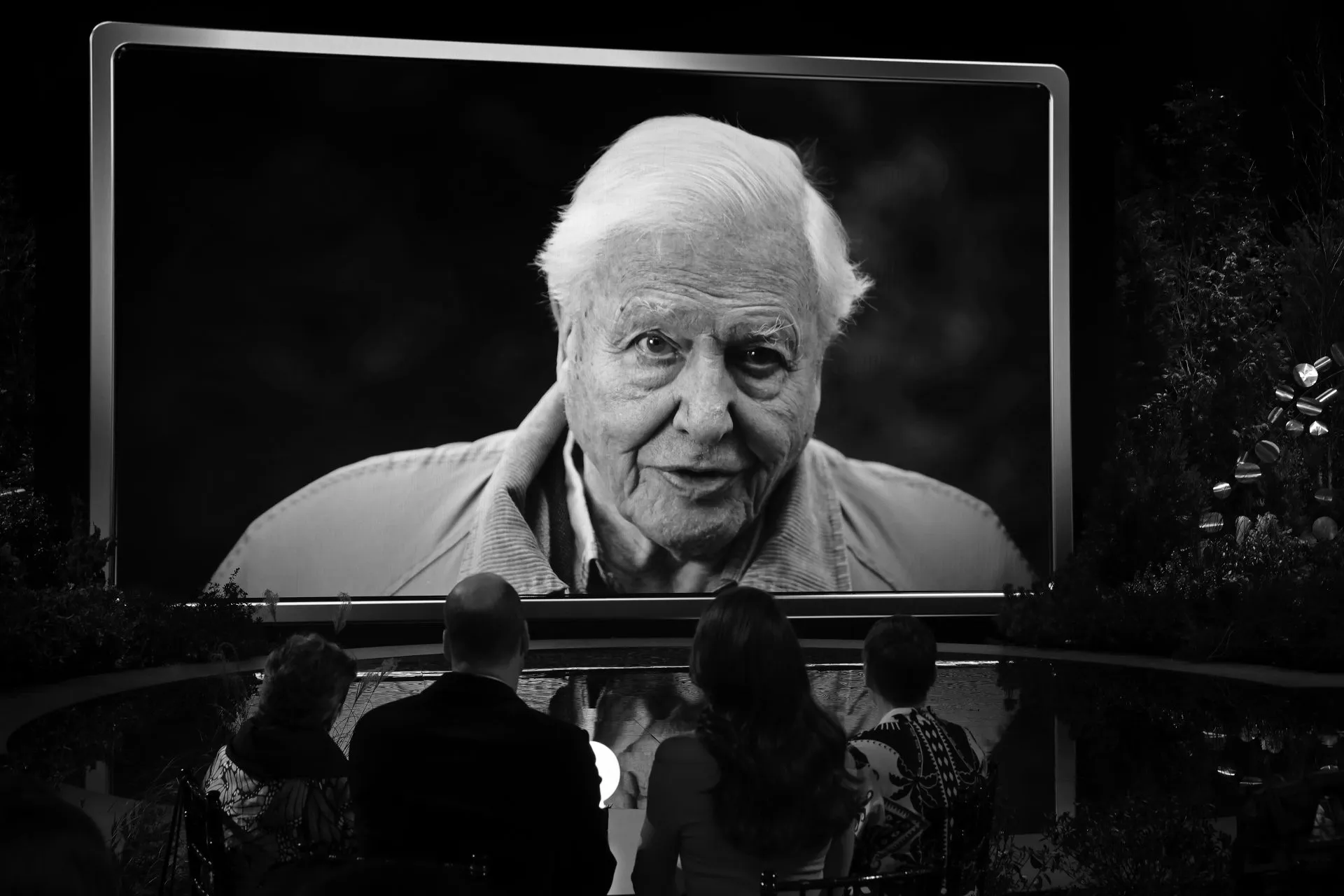
The British public was asked to name a polar research ship in 2016. The winning suggestion, Boaty McBoatface, captured the national mood with irreverent humour. The Natural Environment Research Council overruled the vote. The vessel became the RRS Sir David Attenborough, honouring a man who had received less than ten per cent of the public vote. The episode crystallised a modern British ritual: the coronation of a living national treasure.
From objects to people
The term "national treasure" once referred to state finances or artefacts such as Jane Austen's ring, items deemed too valuable to leave the country. By the 1980s the label had migrated to people. Lord McAlpine, a close ally of Margaret Thatcher, argued in a 1984 speech that Britain should follow Japan's example and designate living artists as national treasures during their lifetimes. He lamented that the British were "more timid about rushing to such judgements". That timidity has since evaporated.
"If we were in Japan, many of our artists would, even in their own lifetimes, be called living national treasures."
The 2000s and 2010s produced an entire pantheon. Dame Judi Dench brought gravitas to the Daniel Craig James Bond films. Mary Berry offered whimsical innuendo on The Great British Bake Off. The Harry Potter franchise turned veteran stage actors into global sages. During lockdown, Captain Sir Tom Moore was summoned from the memory of the nation's "Finest Hour" to raise millions for the NHS. Even Tony Benn, once labelled the "most dangerous man in Britain", could not escape the designation in his final years. He recognised the condescension inherent in the label. "If I'm a national treasure in the Telegraph," he said, "something's gone wrong."
"If I'm a national treasure in the Telegraph, something's gone wrong."
Attenborough at the apex
At the head of this pantheon sits David Attenborough, surpassing even the late Queen in the public imagination. As his 100th birthday approaches, tributes have flooded in. Parliament has discussed a permanent public monument. The first episode of the British Saturday Night Live placed him at a Last Supper of "history's greatest Britons". He is the default answer to dreary dinner-party questions and the public's preferred human candidate for the £5 note, ahead of Churchill.
Attenborough himself remains bemused. Asked on Desert Island Discs whether he feels pressure as a figure of "rare unimpeachable quality", he replied, "I'm very peachable, if people know how to peach". He has inherited the residual affection once reserved for the BBC, the institution he served for seven decades. The corporation's claim to represent a coherent national life rests increasingly on his shoulders.
"I'm very peachable, if people know how to peach."
A conservative figure from a mythical past
Attenborough evokes a Britain of khaki shorts, ammonite hunting and Scouting for Boys. His BBC was the Reithian BBC, before controversy and scandal. He stands at the end of a natural-history tradition stretching back to Darwin, the eccentric collector driven by childlike curiosity. Where the Queen was said to embody a chapter of British life, the claim has always been truer of him.
His trajectory mirrors that of the 20th-century intellectual middle classes. His mother was a suffragette who welcomed Jewish refugee children during the war. His father rose from a Cambridge don to lead University College, Leicester. David, the middle son, extended the project of democratising education into living rooms via television. As controller of BBC Two, he commissioned Monty Python's Flying Circus and Kenneth Clark's Civilisation. Even without his nature programmes, his cultural imprint would be profound.
The safe pair of hands
The BBC must be relieved that Attenborough largely avoids sensitive subjects. His most outspoken issue, the environment, aligns with a comforting national self-image: the British love of nature. When he strayed onto immigration in 2016, he did not always follow the expected line, yet his positions often mirrored public sentiment. In a seven-decade career he has had only one notable brush with controversy.
In a 2013 interview with the Telegraph, he questioned the logic of famine relief in Ethiopia. "What are all these famines in Ethiopia?" he asked. "They're about too many people for too little land." Sending flour was "barmy"; better to "let them starve, to let the Malthusian process take its course". He acknowledged the callousness but insisted overpopulation was the root of all global problems and vowed to "just keep on about it".
"What are all these famines in Ethiopia? They're about too many people for too little land."
"It was barmy for the UN to send bags of flour as humanitarian aid: better to let them starve, to let the Malthusian process take its course."
Malthusian roots and royal echoes
Attenborough's environmentalism follows the late Paul Ehrlich, author of The Population Bomb. The same strand runs through the Royal Family. Prince Philip once said he hoped to be reincarnated as a deadly virus "to contribute something to the problem of overpopulation". In 1970, the then Prince of Wales warned that population growth would outstrip resources and outlined two solutions: nature producing a "particularly virulent plague or virus", or humanity taking action to prevent overpopulation. Fifty years later, when the King revisited that speech on the official Royal Family YouTube channel, those passages were omitted.
"One is that nothing need be done about population because nature is bound to react by producing a particularly virulent plague or virus."
"The other is that something certainly needs to be done by man to prevent his overpopulation."
That Malthusian framework has fallen out of fashion. The predicted catastrophe did not materialise; living standards rose even as population soared. The West now faces depopulation and low fertility. Even in poorer regions, growth is expected to plateau. Yet Attenborough clings to the old doctrine, now expressed in circumspect terms. His series A Life on Our Planet opens each episode with statistics on carbon dioxide, wilderness loss and total human population, presented as indices of looming disaster. At the World Economic Forum in 2018 he declared the planet "can't cope" with overpopulation, warning that the "cure" would come through famine, disease or deliberate human intervention.
The passing of the baton
The BBC has worked to massage Attenborough's views, aligning them with contemporary green politics. The documentary A Year to Change the World staged a meeting between Attenborough and Greta Thunberg, framed as a Jedi passing the baton to a padawan. The corporation could then claim, like the Royal Family, to have been ahead of the curve on the environment. Whether Thunberg would endorse withholding aid to starving populations seems doubtful. The purpose was to position Attenborough as a national prophet at the centre of Britain's moral life.
That may be too much weight for any mortal. The BBC's own claim to centrality in national life, once unchallenged, now hangs by a thread as thin as a 100-year-old broadcaster. When Attenborough goes, the institution loses its last living link to the Reithian ideal and the coherent national audience it once served.