
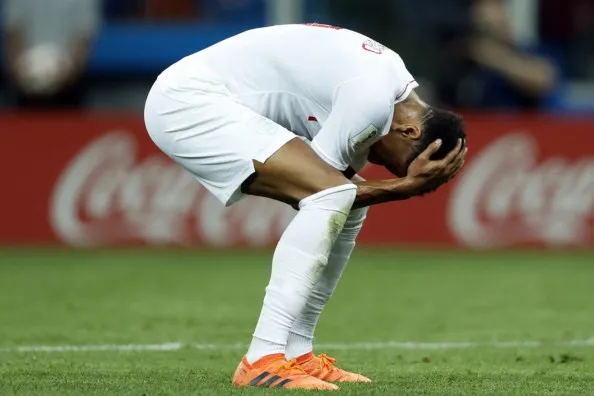
England arrived at the World Cup on the back of two convincing warm-up victories in Florida. A 1-0 win over New Zealand served as a leg-stretcher with 22 players each given a half, before Costa Rica were dismissed 3-0. Yet the optimism those results might kindle feels fragile when set against the friendlies of late March, where draws against Uruguay and Japan exposed a stodgy, unimaginative side that looked uncomfortably like the England teams of the pre-Gareth Southgate era.
Tuchel's appointment and the German distance
Bookmakers install England as third favourites to lift the trophy. Thomas Tuchel is an elite coach whose skillset suits international management: limited contact time demands rapid solutions and quick player buy-in, both hallmarks of his club career. The friction that has ended his previous roles, disputes with sporting directors and boards, is largely absent in a national-team setting. His nationality may also help. An Anglophile who loves London, Tuchel retains a detachment that allows clear-eyed, risk-tolerant decisions. He demonstrated this with a controversial squad selection that prioritised balance and specific roles over reputation. He can return to Germany whenever he chooses; his legacy will not hinge on a single substitution debated at a supermarket cheese counter for decades.
A generation of talent, but no system to harness it
The Football Association deserves credit for the pipeline now feeding the senior side. After the failure to qualify for Euro 2008, the Elite Player Performance Plan overhauled the academy system in 2012. Two years later, the England DNA project, launched by a group that included Southgate, set a possession-based, tactically flexible template. The results are visible: since 2018 the men have reached two European Championship finals, a World Cup semi-final and a quarter-final, while the women have won two Euros and reached a World Cup final and semi-final. Both programmes have achieved more in eight years than in their entire prior histories.
Tuchel's options are so deep he could omit Cole Palmer and Phil Foden. By contrast, Roy Hodgson's 2014 World Cup side was debilitatingly dependent on Raheem Sterling. Yet a surfeit of creators can be as damaging as a shortage. Southgate's first three tournaments, the 2018 and 2022 World Cups and Euro 2020, were built on a clear, if conservative, plan that delivered progress. Euro 2024 was different: England reached the final but never resolved basic tactical issues, reverting to big-name selection and improvisation.
The creator congestion and Kane's isolated brilliance
The central problem at Euro 2024 was a glut of playmakers crowding the same zone behind Harry Kane. One of Kane's greatest assets is his ability to drop deep, creating space for runners beyond him. At Bayern Munich, where he is enjoying a career-best season, five such runners compete for the three slots behind the striker. With England, there were none. Hampered by a back injury and starved of support, Kane was neutralised. Tuchel's response was to select Morgan Rogers, Anthony Gordon and Marcus Rashford, players who naturally make those penetrating runs, over out-of-form stars. The decision triggered a media and public backlash, echoing the furore when Jude Bellingham was left out in October. Tuchel judged the balance better without him; reports suggest Bellingham's large personality can grate on teammates. The hysteria reflects a 60-year yearning for a trophy, and it pressures managers toward the path of least resistance: picking the most famous names.
Premier League intensity and the fatigue factor
England is not unique in subjecting its national team to a tumult of opinion, but it hosts the world's most intense league. Of the 30 wealthiest clubs by revenue, 15 play in the Premier League, according to Deloitte. When Arsenal face Wolves, they meet the 29th-richest club on the planet; the gap between Barcelona or Real Madrid and their lower-table opponents, or Bayern Munich and theirs, is simply wider. Michel Platini, as UEFA president, once described English clubs as lions in winter and lambs in spring when fatigue sets in. Foreign players in the Premier League suffer too, yet only two of Tuchel's probable 26-man squad play abroad. England habitually arrive at major tournaments exhausted.
Heat, humidity and the limits of adaptation
Fatigue compounds a second issue: most major tournaments are played in hot weather. England were abysmal in the winter chill of South Africa in 2010, but their best recent tournament, Qatar 2022, was staged in December with temperatures in the low 20s. In football, climate shapes destiny, and England's traditional game relies on hard running that wilts in high heat and humidity. The United States will be hot and humid; Mexico City, a potential last-16 venue, sits at 2,240 metres above sea level. Tuchel's assistant Anthony Barry has spoken of developing a "heat-proof" game model, but national managers have limited power to override players' natural instincts.
Club identity versus national coherence
In time, academy reform and the England DNA project may foster greater stylistic homogeneity, as seen in Spain's rise over two decades. Individual club identity in England remains remarkably resilient, making it harder to replicate the coherence of Germany's Bayern core in 2014 or Spain's Barcelona spine in 2010. Yet Argentina in 2022 and France in 2018 overcame similar talent dispersion.
The psychological weight of 60 years
There is also a clear psychological dimension. The 60 years of hurt are real in the sense that persistent failure erodes confidence when the prize comes into view. In the Euro 2020 final, England led Italy 1-0 and were the better side, but tightened in the second half as the magnitude of impending success dawned. The "heavy shirt" syndrome will persist until a trophy is won; Spain went 44 years without success then won three tournaments in succession.
Verdict: a good squad, but the omens are poor
This could be a strong England squad. Player production is no longer the issue. Yet few of England's genuine game-winners are fit or in form, the overheated media and public environment is unhelpful, and English football still needs a light drizzle on a chill autumn afternoon to flourish, conditions that will be conspicuously absent in a North American summer. There is no compelling reason to believe the 60-year wait will end soon. Failure begets failure, and so does fatigue.