
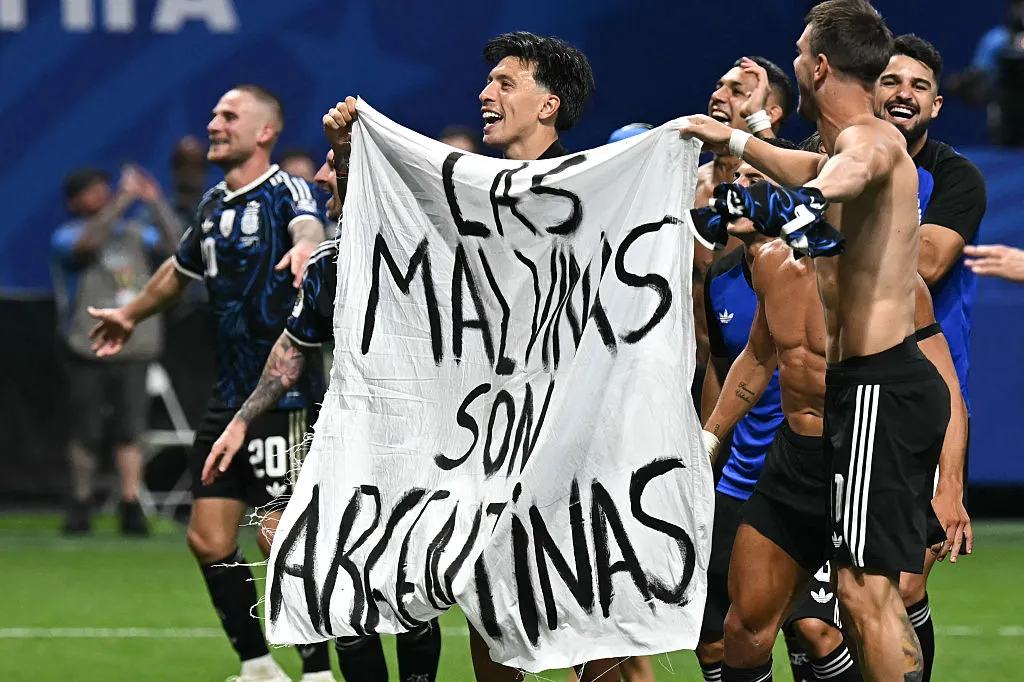
Argentina's comeback victory over England in Atlanta delivered the latest chapter in a World Cup campaign defined as much by politics as by football. A decisive late turnaround, sparked by Lionel Messi, silenced the "VARgentina" accusations that had followed the defending champions through the knockout stages. England's cautious approach, reminiscent of their defensive masterclass against Mexico in 1986, collapsed in the final minutes without any need for video intervention.
From darlings to villains
The contrast with four years ago is stark. In Qatar, Argentina's run to a third world title was a global romance. Messi's genius, the team's resilience and a nation battered by hyperinflation under President Alberto Fernández made for an easy narrative to embrace. Today, international media describe the Albiceleste as the tournament's surprise villains, with widespread hope among rival supporters for their elimination.
The Milei factor
What changed? The election of Javier Milei has reframed Argentina's image abroad. His libertarian "shock therapy" has deepened economic pain at home, while his foreign policy alignment with Donald Trump and Benjamin Netanyahu has drawn scrutiny. Long-standing Latin American irritation with Argentine claims of European exceptionalism has hardened into something sharper.
"One must suffer," fans like to say. "Without suffering, it's not worth it."
That suffering narrative, once a quirk of football culture, now reads differently overseas. On the pitch, Argentina offers little tactical innovation beyond Messi's brilliance. Yet the grit of players and supporters remains boundless. Some observers contrast this with Brazil's decline, speculating whether the rise of evangelical Protestantism there has diluted the footballing culture, while Argentina's secularised Catholic rituals, the Stations of the Cross reimagined as knockout progression, sustain a different kind of intensity.
Race and rhetoric
The darker edge of the shift emerged in 2022, when a Washington Post op-ed questioned the absence of Black players in the national squad. The social media account of Milei's party, then holding only three legislative seats, replied: "Because we are a country, not a Disney movie." At the time, the line was dismissed as provocative trolling. Today, with Milei in power, it carries a more sinister weight.
"It's such a drag to be black these days,"
wrote Santiago Caputo, a top presidential aide, after Brazil lost to Norway. The comment exposed a racial animosity toward Argentina's northern neighbour, home to a large population of African descent. Anti-Black racism, while far from universal, runs deep in Argentine society. The phrase negro de mierda serves as a common insult regardless of the target's race, while quilombo, originally a term for communities of escaped slaves in Brazil, is everyday slang for chaos.
A streaming channel aligned with Milei's movement attributed Germany's footballing decline to "population replacement." A provincial official from his party called France "the African team." Milei himself declared that Europe's migration policies had brought it "to the brink of extermination." The irony is lost on no one: a nation forged by the collision of Indigenous, Spanish, Italian, Lebanese, Jewish and countless other peoples is now held up as a model of ethnic homogeneity against a continent once defined by ethnostates.
Domestic unity holds
Remarkably, this international vilification has not fractured domestic support. In Brazil, Jair Bolsonaro turned the yellow jersey into a right-wing uniform for a decade, alienating left-leaning fans. In Colombia, president-elect Abelardo de la Espriella wore the national shirt at rallies until a judge barred him; he won anyway. Argentina has avoided that trap.
The national team keeps Milei at arm's length as he seeks to appropriate its success. Not everyone in Argentine football welcomes his proposed regulatory changes. Evangelical Christianity, a conduit for right-wing politics in Brazil and Colombia, remains weak in Argentina. the political left is dominated not by internationalist socialism but by nationalist Peronism. The Falkland Islands dispute, revived when players unfurled a "Las Malvinas" banner after the England match, is cherished more fiercely on the Peronist left than on Milei's right, where sympathy for Margaret Thatcher lingers.
Historical roots
This unity has deep roots. In the 19th century, socialism arrived in Argentina as an immigrant language, spoken by newcomers in an industrialising society. The native elite kept it from the mainstream. When popular movements finally broke through, they did so in a nationalist form shorn of international commitments. In many ways, Peronism became Latin America's answer to New Deal liberalism in the United States.
The result is a rare consensus. Right-wing officials and Peronist opposition figures compete to cheer the loudest. Ordinary Argentines who reject the rhetoric of Milei-aligned streamers see no reason to surrender their flag. They want a fourth star, to suffer and celebrate as one. To be loved by your own, it turns out, is to disdain what the rest of the world thinks.