
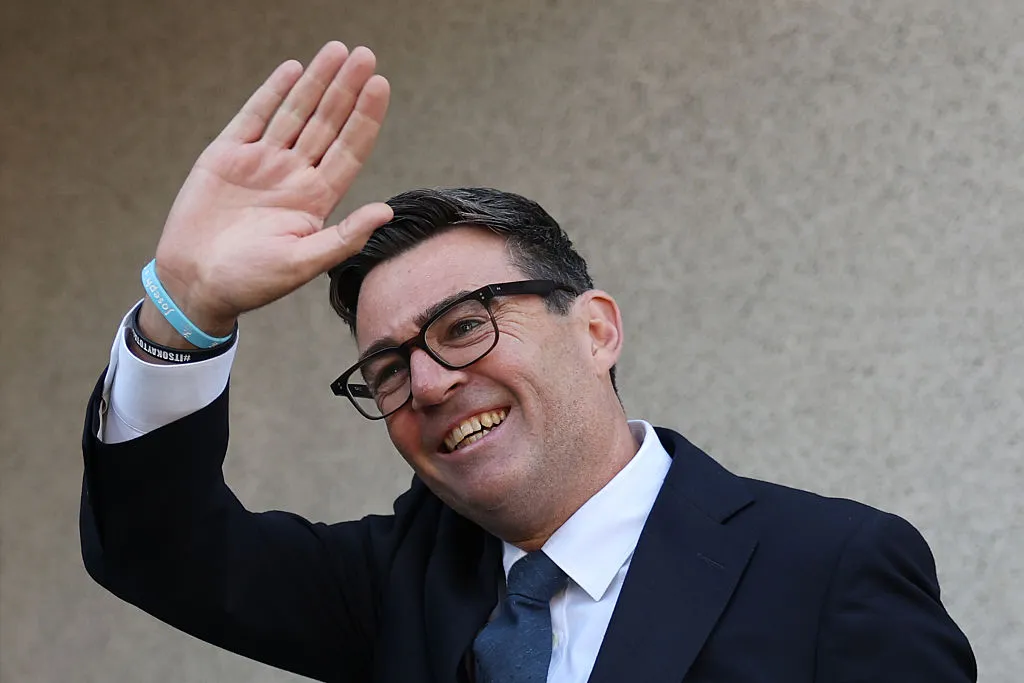
UK Prime Minister Andy Burnham used his first major economic statement last Monday to promise a new political and economic model that would put essential services under stronger public control and reindustrialise Britain through public procurement. The rhetoric was ambitious. The detail, however, remains elusive.
Early policy reversals cloud the picture
Within days the Prime Minister walked back speculation about replacing council tax and stamp duty with a flat property value tax, stating that nothing immediate was planned. He also reversed an earlier suggestion about raising personal income tax allowances. On Wednesday he announced a review of long-term social care financing, potentially involving tax increases, but offered no concrete mechanism.
Three camps compete for influence
Burnham's economic entourage can be grouped into three broad factions. The first, anchored in the Treasury tradition of former Prime Minister Gordon Brown, includes Chancellor John Healey and fiscal adviser Richard Hughes, former chair of the Office for Budget Responsibility. The second comprises economists Jim O'Neill and Andy Haldane, both long-standing critics of the fiscal framework the government has just reaffirmed. The third draws from progressive think tanks such as the New Economics Foundation, IPPR North and Common Wealth, and includes Energy Security and Net Zero Secretary Miatta Fahnbulleh.
Chancellor Healey and the Brownite orthodoxy
John Healey entered Parliament from the Trades Union Congress, co-wrote Labour's first regional economic policy paper with Ed Balls in 1998, and served five years as a Treasury minister under Brown. His resignation over predecessor Rachel Reeves' budget was not a rejection of orthodoxy but a complaint that the Treasury would not fund rearmament. In his first address to Treasury staff he declared that fiscal control must be the first duty of the office and promised to meet the rules in lockstep with the Prime Minister while maintaining a buffer for uncertainty.
Fiscal credibility is the bedrock of economic stability and national security.
His political team, drawn from his defence operation and led by Will Straw, another Brown Treasury alumnus, contains no dedicated economic adviser.
The intellectual backbone: Richard Hughes
Richard Hughes brings a career spanning the Treasury, the International Monetary Fund and the Resolution Foundation. He told the House of Lords in January that the UK's fiscal rules are among the loosest in history and that the British disease is how frequently governments abandon them. His inclusion signals a commitment to the existing framework rather than its reform.
Critics from inside and outside the establishment
Jim O'Neill, the former Goldman Sachs economist who coined the term BRICs, has called the fiscal rules petty and arbitrary. He wants council tax and stamp duty replaced outright and confirms that devolving income tax is being examined seriously. Andy Haldane, after 32 years at the Bank of England where he analysed the financial sector's productivity mirage and share buyback culture, chaired the Industrial Strategy Council and co-authored the Levelling Up white paper. He has attacked the fiscal straitjacket and blamed last autumn's tax speculation for flatlining growth.
Progressive advisers with a theory of public ownership
The third wing includes Miatta Fahnbulleh, former chief executive of the New Economics Foundation, who favours common ownership of public goods and essential infrastructure. Zoë Billingham of IPPR North leads the devolution and regional rebalancing agenda. Mathew Lawrence of Common Wealth co-authored a paper extending Manchester's economic model to British capitalism, advocating public intervention where investment has dried up and rents inflate the price of primary needs. This group argues that the current fiscal framework prices their programme as ruinous because rules that net off financial assets but not physical ones make renationalising a utility look like fiscal incontinence.
Incompatible priorities
The three camps' priorities militate against each other. Accepting that the UK's fiscal position necessitates enforcing the rules is ultimately not compatible with planning for industrial revival and renewed public control of key services. Those ambitions imply a decade of investment in plant, grids, housing and skills before any revenue returns. The current rules treat such outlays as identical to consumption, rationing precisely the spending on which future output depends. Reasserting public ownership compounds the problem: borrowing to acquire a controlling stake in a revenue-generating utility registers as pure fiscal deterioration because consolidation extinguishes the offsetting financial asset while the physical estate counts for nothing against the debt incurred.
Personnel signals continuity
Healey's appointment, with Hughes in the background, suggests the contradiction will be resolved in favour of the Brownite camp. The Chancellor's first speech indicated his quarrel with Reeves was specifically about defence spending, not doctrine. On the evidence of the government's first fortnight, O'Neill and Haldane, neither of whom hold confirmed posts, have already lost the argument.
Burnham is, however, distancing himself from the Whitehall model. Where Brown made the Treasury the strategic brain of government, Burnham's beefed-up Number 10 with a malleable Chancellor is built to do the opposite. The extent to which transformative ideas gain purchase will depend on whether this new model works as intended. it was Burnham, not Healey, who sought Hughes's counsel.
Missing context: the UK's international position
What is more conspicuous are the elements absent from Burnham's economic worldview. There is little suggestion that the new leader recognises how strange the UK is in macroeconomic terms. Despite Manchester's above-average employment and output growth, income growth remained weak because real wages have grown poorly everywhere, not just from cost-of-living pressures but because productivity growth has not budged, owing to consistently low investment. On these metrics the UK is an outlier among wealthy peers.
The reaction to the social care proposal was telling. Burnham accurately noted that care workers, often immigrants, live on poverty pay, while nearly two million elderly Britons need state aid and often face selling their homes. Many commentators responded that the UK cannot afford more social spending and that middle-class households are already overtaxed. The Resolution Foundation warned that Burnham's pledges had reduced fiscal headroom to as little as eight billion pounds.
Tax and spending below EU averages
International comparisons are missing from the debate. As of 2024, total tax revenue including social security contributions stood at 34.4 per cent of GDP, only just above the OECD average and well below the EU average of 39.3 per cent. The tax wedge on a full-time single worker on an average salary was 29.9 per cent, placing Britain last in a group that includes all EU countries and the United States. Even including average council taxes, the wedge remains well below the EU average of 44.1 per cent. Median income households in the UK are in fact less taxed than elsewhere.
Meanwhile, net social expenditure was 22.8 per cent of GDP, below both the EU and the United States. Gross old-age benefits amounted to just over 7.6 per cent of GDP in 2023, and OECD data suggests the UK's relative position would not change even if the triple-lock on state pensions persists until 2040.
What happens next
Whatever the reason the UK economy underperforms, it is hard to find fault in social programmes whose public spending footprint pales in comparison. There is little indication that the senior government and its advisers realise the country's economic policy discussions are profoundly insular. The biggest inference may be that Burnham lacks the ability to formulate a response to opponents of his economic vision, which would go a long way to explaining why he has invited some of them into his government.