
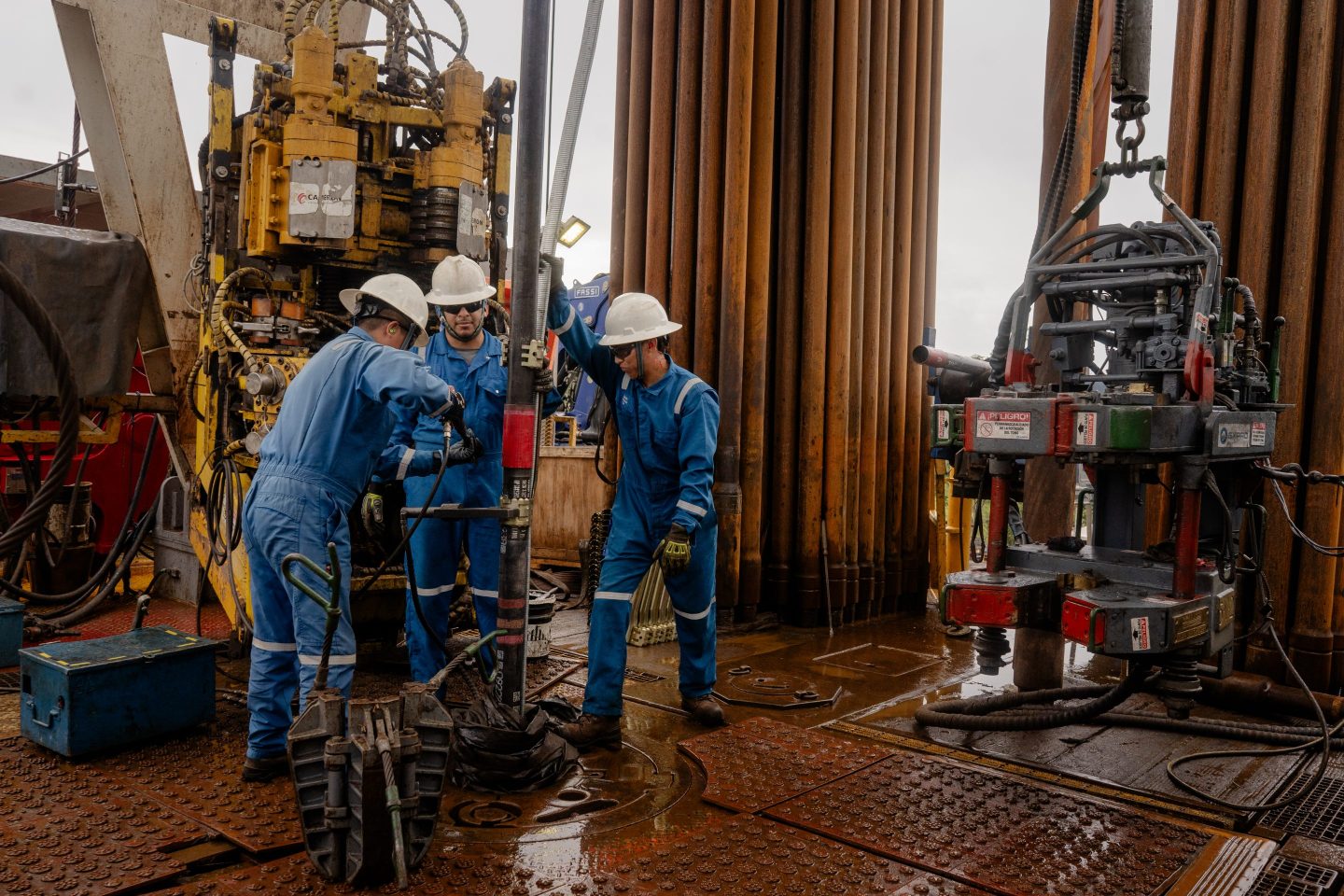
Olivier Le Peuch, the French chief executive of SLB, believes the company is uniquely positioned to benefit from a resurgence in oil production and a parallel surge in AI data‑centre demand. The firm, formerly known as Schlumberger, has evolved from a pioneer of electric well‑logging to the world's largest oilfield services and energy‑technology provider.
From electric probes to global oil services
The story began in 1912 when Conrad Schlumberger conducted conductivity tests on his family estate in Normandy, proving that electric instruments could map underground structures. Together with his brother Marcel, he founded the Société de Prospection Électrique in 1926, a company that later became Schlumberger and now SLU. By the late 1930s the firm had entered the Middle East, well before OPEC's formation, and expanded to more than 100 countries.
Why the current market matters for SLB
The closure of the Strait of Hormuz earlier this year cut roughly 20% of global oil and gas supplies, prompting governments to rebuild strategic reserves and accelerate domestic production. In that context, SLB's extensive footprint in Venezuela, Saudi Arabia, the United Arab Emirates and Kuwait makes it a key partner for state‑owned oil majors such as PDVSA, Saudi Aramco and ADNOC.
"The thing about SLB is they don't leave when there's a coup or a change in government or a conflict," said James West, head of energy and power at Melius Research.
West adds that every international market is effectively SLB's backyard, positioning the firm to capture the upside of the post‑Hormuz recovery. While oil prices have risen, SLB's market capitalisation remains below $75 billion, far smaller than the $600 billion of ExxonMobil, highlighting a potential valuation gap.
Strategic shift towards digital and AI
Beyond traditional drilling, SLB has invested heavily in digital solutions, from autonomous geosteering rigs to cloud‑based data platforms. The company's digital and data‑centre services now represent its fastest‑growing segment, helping hyperscale AI providers optimise power use and cooling in modular data‑centre builds.
Le Peuch notes that the firm's transformation from mainframe to desktop, then to cloud and AI, has been a continuous process. "We were the first at every step," he said, underscoring SLB's long‑standing focus on technology.
What lies ahead for SLB
Looking forward, SLB plans to deepen its involvement in renewable‑energy projects such as geothermal, carbon‑capture and lithium extraction, while expanding its AI‑driven data‑centre services. The company expects that the renewed demand for oil exploration, combined with the global push for AI infrastructure, will drive a new growth cycle.
Analysts caution that SLB's fortunes remain tied to oil‑price volatility; a prolonged downturn could compress revenues more sharply than for integrated oil majors. Nevertheless, the firm's ability to operate in geopolitically complex environments, as Le Peuch puts it, gives it a competitive edge that may translate into a market‑cap rebound.
In summary, SLB's blend of historic oilfield expertise and cutting‑edge digital capabilities positions it to capture both the immediate post‑Hormuz oil upturn and the longer‑term AI data‑centre expansion.