
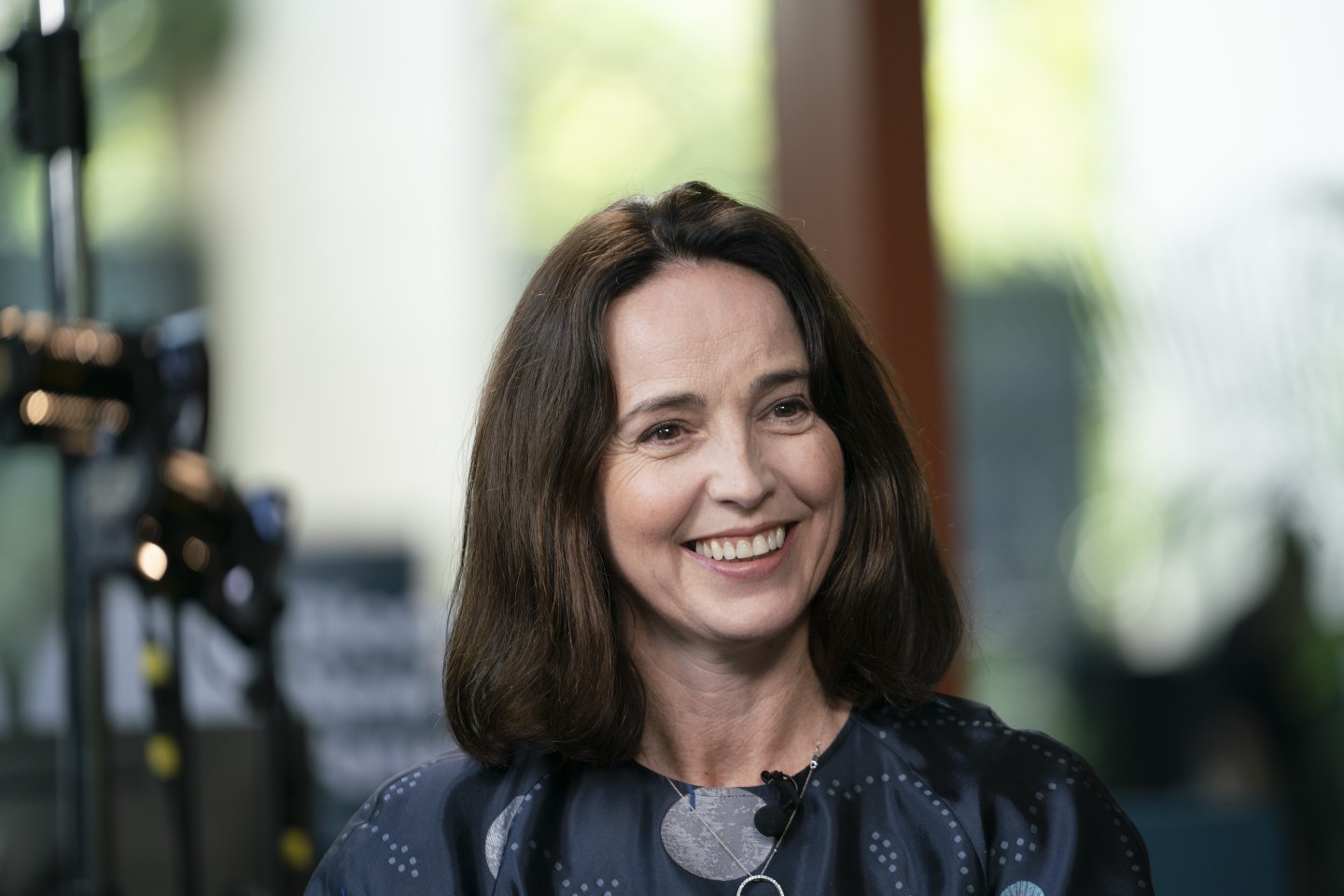
Sarah Friar, chief financial officer of OpenAI, has laid out a detailed case for embedding artificial intelligence into the heart of corporate finance while drawing a firm line between automated analysis and human decision-making. In a LinkedIn post on Sunday and a follow-up essay published on OpenAI's website, Friar described how the company's own finance team uses ChatGPT Work to accelerate routine tasks and free up capacity for strategic work.
AI as an accelerator, not a substitute
Friar wrote that ChatGPT Work lets finance teams "spend less time reconciling the past and more time planning the future." She emphasised that AI does not replace financial rigour or human judgment. Instead, it helps teams identify issues earlier, ask better questions and deliver insights while there is still time to act. "As we help other companies transform how they work with AI, it matters that we lead by example," she wrote.
The response on LinkedIn reinforced her point. Comments echoed the distinction between automating analysis and outsourcing judgment. One commenter noted that "the distinction between automating analysis and outsourcing judgment is an important one." Others described a broader industry shift in which AI turns finance from a reactive scramble during period-end close into a core strategic partner for the board.
Building an AI-native finance function
In her essay, Friar recounted joining OpenAI two years ago when the finance team was small and the company was growing at extraordinary speed. The team set two ambitious goals: a zero-day close and continuously updated forecasting. "The real promise of an AI-native finance function: a team that understands what is happening as it happens, helps leaders see the choices ahead, and gives the business more time to act while the outcome can still change," she wrote.
"Finance sits at the center of strategy, capital, data, risk, and performance. That gives CFOs a unique view of how the company works and a powerful mandate to lead its AI transformation."
Five lessons for CFOs
Friar offered five practical lessons for finance leaders looking to integrate AI:
- Give everyone access, then create a reason to use it.
- Redesign workflows around the decision, not the task.
- Let finance professionals become builders of AI tools.
- Pair speed with accountability and controls.
- Measure value per unit of intelligence.
She cited recent OpenAI research showing that 40 per cent of finance professionals' specialised AI use involves work outside traditional finance, while 22 per cent involves engineering-related tasks. The data underscores how the role of finance is expanding beyond its conventional boundaries.
Rethinking the purpose of finance
For CFOs, the takeaway may be less about adopting a specific AI tool than about rethinking what finance is supposed to do with the time that AI gives back. Friar's argument positions the finance function as a natural leader in organisational AI adoption, given its central view of strategy, capital allocation, data, risk and performance. The challenge, she suggests, is not technical but organisational: deciding how to deploy the capacity that automation creates.