
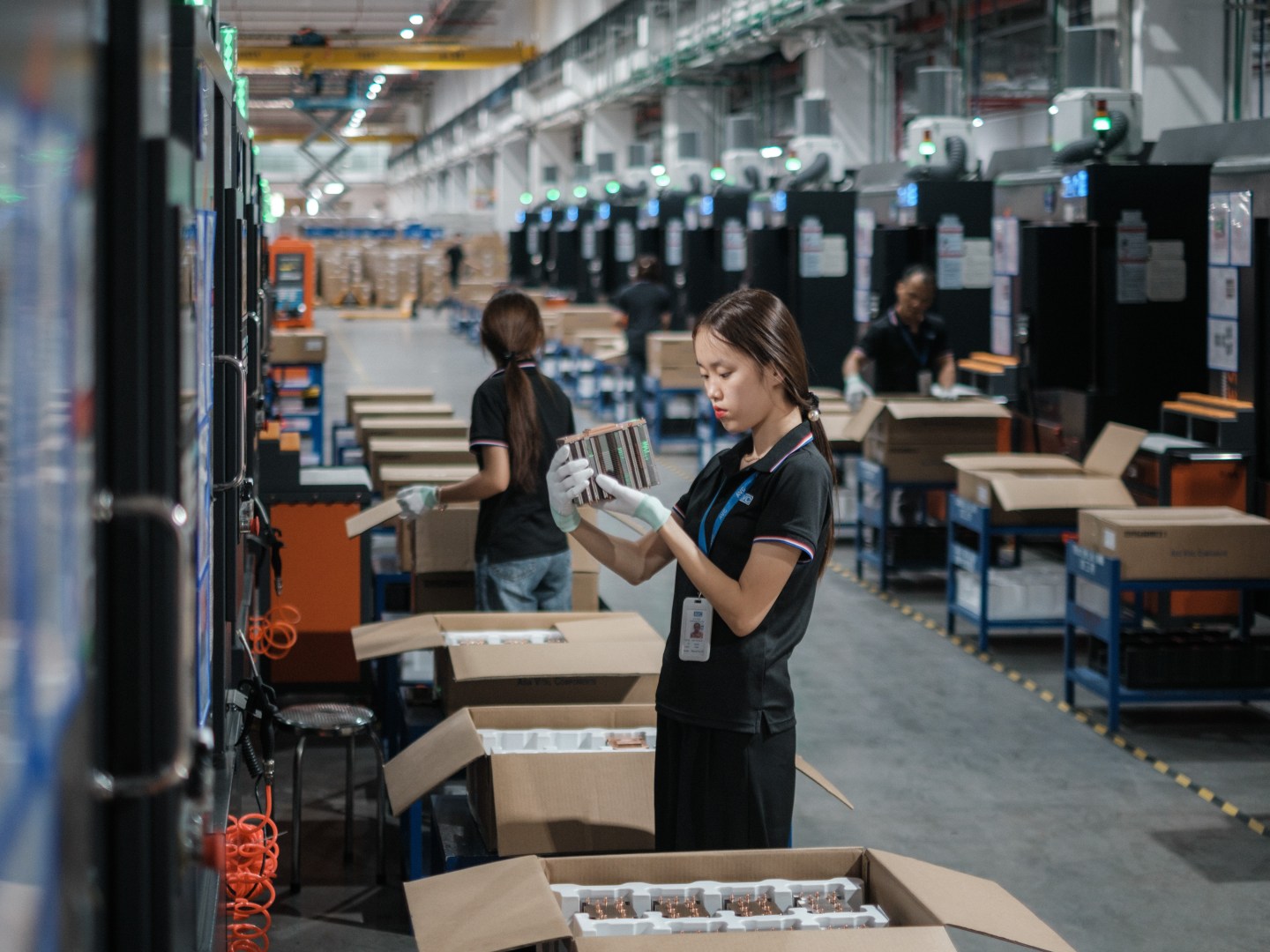
The latest export data show that AI-related hardware is fuelling a sharp upswing in growth across the continent. Taiwan is on track for its first double-digit GDP increase since 2010, driven by soaring demand for AI chips. Japan, Malaysia, Singapore and mainland China all reported more than 20% growth in July exports, while South Korea saw a surge of over 60% thanks to its chip giants SK Hynix and Samsung.
What the numbers reveal
Quarter-two GDP figures also beat forecasts in economies such as Singapore, Hong Kong and Taiwan, largely on the back of electronics shipments. Equity markets have mirrored the trend: newly listed chipmaker ChangXin Memory Technologies and robot maker Unitree each jumped more than 450% on their debut days. Japan's Nikkei 225 and Thailand's SET index are up roughly 25% year-to-date, and South Korea's KOSPI is nearly 60% higher.
Why the boom may be uneven
Despite the headline-grabbing gains, economists warn that the benefits are unlikely to be evenly distributed.
"The sugar rush economic boom that Southeast Asia is experiencing is from providing the supporting, not leading-edge, semiconductors, and the power and resources to drive data centres," says Danny Quah, economist at Singapore's Lee Kuan Yew School of Public Policy.
Quah adds that these activities are commodifiable and offer no lasting comparative advantage. The region's position at the lower end of the AI value chain means it may reap only a short-term lift.
Southeast Asia's current gains
For the moment, countries such as Singapore are revising growth forecasts upward, citing AI-related sectors. Singapore's communications minister highlighted the city-state's deep pool of semiconductor talent, which attracts global developers and cloud providers.
Malaysia is leveraging its established role in chip assembly, testing and packaging, while Thailand and Vietnam are courting data-centre and cloud-computing investments. Kuala Lumpur has launched a National AI plan aimed at moving local firms up the AI supply chain. In an April Facebook post, communications minister Fahmi Fadzil wrote that Malaysia must build its own capabilities and compete globally.
Structural constraints
Experts point to several headwinds. The region's reliance on cheap, low-skill labour may lock it into lower-value activities, a situation that could worsen as populations age and skilled workers migrate abroad. Malaysia, for example, is projected to become an "aged nation" by 2048, with 14% of citizens over 65.
"Malaysia has largely consolidated its pre-existing niches in the back-end phase of semiconductor manufacturing," notes Guanie Lim, associate professor at Japan's National Graduate Institute for Policy Studies. "The country's perennial inability to escape the middle-income trap is partly a function of its hosting of industries where competitive advantage lies primarily through low-cost labour."
Energy and water shortages also limit data-centre expansion. The region imports much of its oil and gas from the Middle East and has felt the impact of supply disruptions linked to the United States' conflict with Iran.
"Energy is a key constraint, especially where grids are congested, and Southeast Asia may add data-centre capacity faster than its electricity networks and expertise can expand," says Ramkishen Rajan, professor at the Lee Kuan Yew School of Public Policy.
What happens next?
Given these constraints, policymakers are urged to temper ambition. Quah argues that only China and the United States can produce frontier AI models, positioning the region as a consumer rather than a producer.
Geopolitical rivalry adds another layer of uncertainty. The United States is reportedly urging countries to choose between its Pax Silica framework and China's WAICO initiative. A draft U.S. State Department letter warned that membership in both could create conflicting obligations.
Such pressure could force smaller economies to pick sides, undermining ASEAN's traditional strategy of hedging between the two superpowers. Denis Hew, senior research fellow at the Lee Kuan Yew School, notes that "competing frameworks could increasingly link access to technology, investments and markets to participation in one ecosystem or the other."
One possible buffer is the ASEAN Digital Economy Framework Agreement (DEFA), slated for signing in November.
"Geopolitical fragmentation makes DEFA considerably more important because ASEAN needs a mechanism for maintaining economic interoperability," explains Tan Kong Yam, emeritus professor of economics at Nanyang Technological University.
In the short term, AI-driven export growth will continue to buoy several Asian economies. Over the longer horizon, Southeast Asian nations will need to address labour, energy and skill gaps, and navigate a geopolitical landscape where aligning with one superpower could limit their strategic flexibility.