
Record early harvest in the heart of Champagne
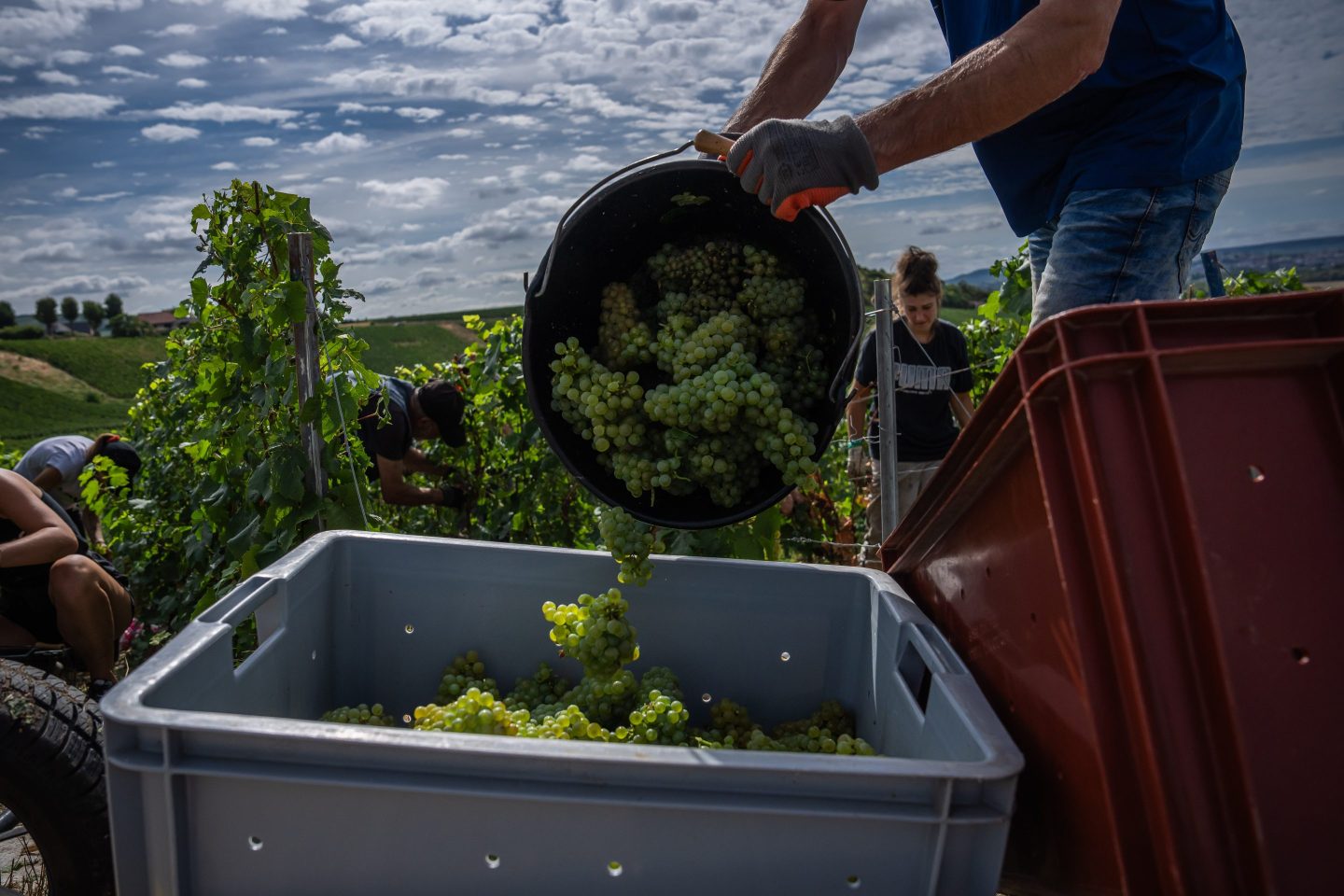
For the first time in living memory, the vineyards of Champagne are being picked in mid-August. Alexandre Gobillard, production director at the family-run Gobillard & Fils house, says the official harvest opened between 12 and 17 August, roughly a month earlier than the traditional window.
Workers arrived at the UNESCO-listed slopes of Hautvillers at 6:30 a.m., moving among rows of vines that have been celebrated for their heritage since 2015. Gobillard, now in his 30s and representing the fourth generation of his family, recalls that when he started his career his father would tell him to take a holiday on 15 August. "Today it is 18 August and we are in full harvest," he told reporters. "We have never seen anything like it."
Climate pressure on yields
A late-March frost damaged buds after an unusually warm spring prompted early budburst. The damage was followed by four successive heat waves, some of the hottest ever recorded in the region. Sun-scorched grapes turned partially brown, a sight Gobillard says he rarely sees.
"We lost 43% of the potential production to the spring frosts, and the drought has clearly made the problem of lower yields even worse," said David Chatillon, president of the Union of Champagne Houses.
Chatillon added that climate change has been a strategic focus for the industry for the past 25 years, prompting research into disease-resistant and later-ripening grape varieties.
Implications for Champagne tradition
Gobillard notes that his grandfather's generation needed about 100 days from flowering to harvest, his father's 90 days, and now the period has shrunk to roughly 80 days. Record temperatures of up to 40 °C in June accelerated sugar accumulation, forcing a faster ripening cycle.
"The vine needs water to live," Gobillard explained. "The water was drawn out of the grapes to keep the vine alive, and as a result we had a much higher concentration of sugar. That is why it happened so much faster."
Harvesting by hand, a long-standing hallmark of Champagne production, now faces logistical hurdles. Many seasonal workers are still on summer holiday, and transport delays complicate the mobilisation of the 120-strong workforce Gobillard has recruited from across France and Poland.
His brother, Geoffrey Bonnet-Gobillard, commercial director, warns that the pressure may eventually push producers toward mechanisation, a shift that would alter the region's cultural landscape.
Economic stakes for a global industry
The Comité Champagne reports that 266.1 million bottles were shipped last year, generating €5.7 billion in sales, with exports accounting for 56.5 % of shipments. The sector supports around 30 000 permanent jobs and relies on roughly 100 000 seasonal workers each harvest.
Despite the challenges, Gobillard remains cautiously optimistic about the current crop. "I am very happy with what I am seeing," he said after sampling the first juice. "We were worried that the drought would leave us with very light bunches, but in these plots we are really pleased. The quantity should be sufficient and the quality will be there."
With the harvest window now compressed to about nine days, the family house aims to finish picking quickly, hoping to preserve the delicate balance that defines Champagne's signature style.
What lies ahead?
Producers across the region are watching the outcome closely. If the early harvest proves successful, it may set a new benchmark for how the industry adapts to a warming climate. Ongoing research into resilient grape varieties and potential adjustments to harvesting practices will likely shape the future of Champagne, balancing tradition with the realities of a changing environment.