
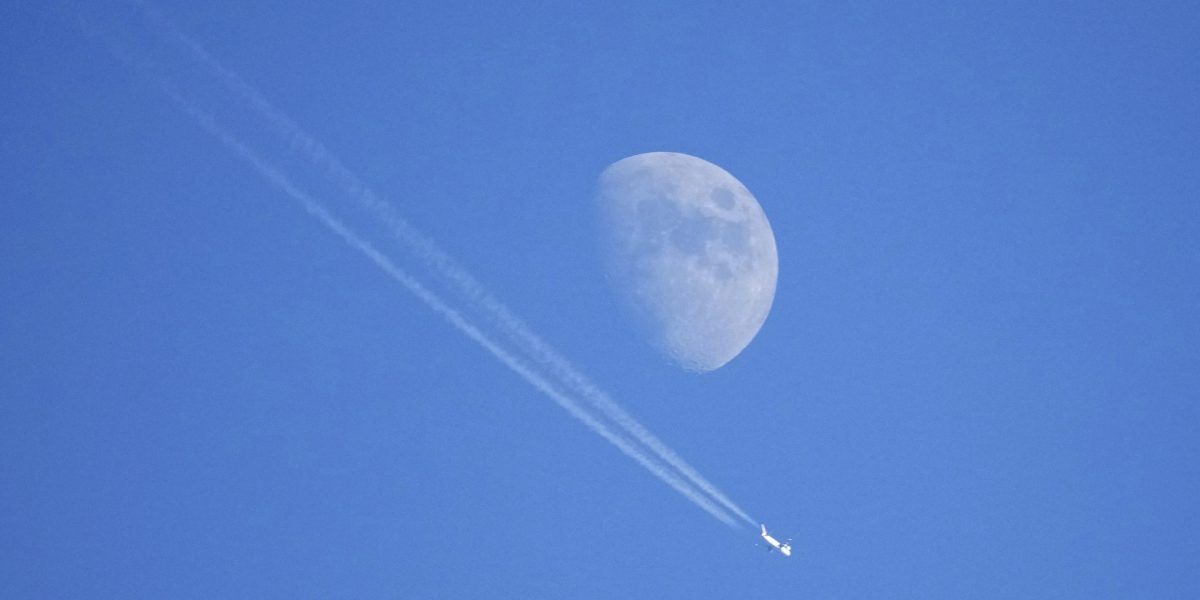
Keir Mather, the UK minister responsible for aviation, announced a partnership with Google UK to launch a two-year trial that will ask selected commercial flights to alter their altitude over the North Atlantic. The experiment, called Operation Blue Skies, seeks to demonstrate that modest altitude adjustments can cut the formation of contrails, the thin ice-crystal clouds that trap heat and contribute to climate change.
What the trial involves
During the winter months of the next two years, air traffic controllers in the Shanwick Oceanic Control Area will instruct between 20 and 40 flights per winter to climb or descend up to 2,000 feet (610 metres) to avoid regions where contrails are likely to develop. The Shanwick corridor, a key gateway between Europe and North America, handles roughly 10,000 flights in the testing period, and the trial expects a few hundred of those to deviate. According to Paul Hodgson, Google's technical lead for the project, a shift affecting just one to five percent of flights should be enough to show a statistically significant reduction in contrail formation across the airspace.
Why contrails matter
When aircraft fly through cold, humid air, soot particles from the engines act as nuclei for ice crystals, creating contrails that behave like thin cirrus clouds. Research by the nonprofit Contrails.org estimates that contrails contribute between one and two percent of the planet's warming, and modelling suggests the Shanwick sector accounts for about five percent of that total, especially in winter. Earlier studies, such as a 2020 analysis by Imperial College London, indicated that small changes to flight paths could reduce this impact, but no large-scale field test had been conducted until now.
Next steps and wider implications
The trial is funded by the British government, which is covering more than half of the £5 million budget, and involves a consortium that includes the Met Office, the UK's air navigation service provider NATS, Imperial College London, the University of Cambridge and Contrails.org. If the results confirm a measurable drop in contrail formation, the methodology could be rolled out to other busy corridors, providing a blueprint for coordinated, airspace-scale climate mitigation.
Google has described contrails as one of the most urgent yet solvable climate challenges for aviation. Success in the Shanwick trial could encourage airlines and regulators worldwide to adopt similar altitude-adjustment strategies, turning a modest operational tweak into a practical tool for reducing aviation's climate footprint.