
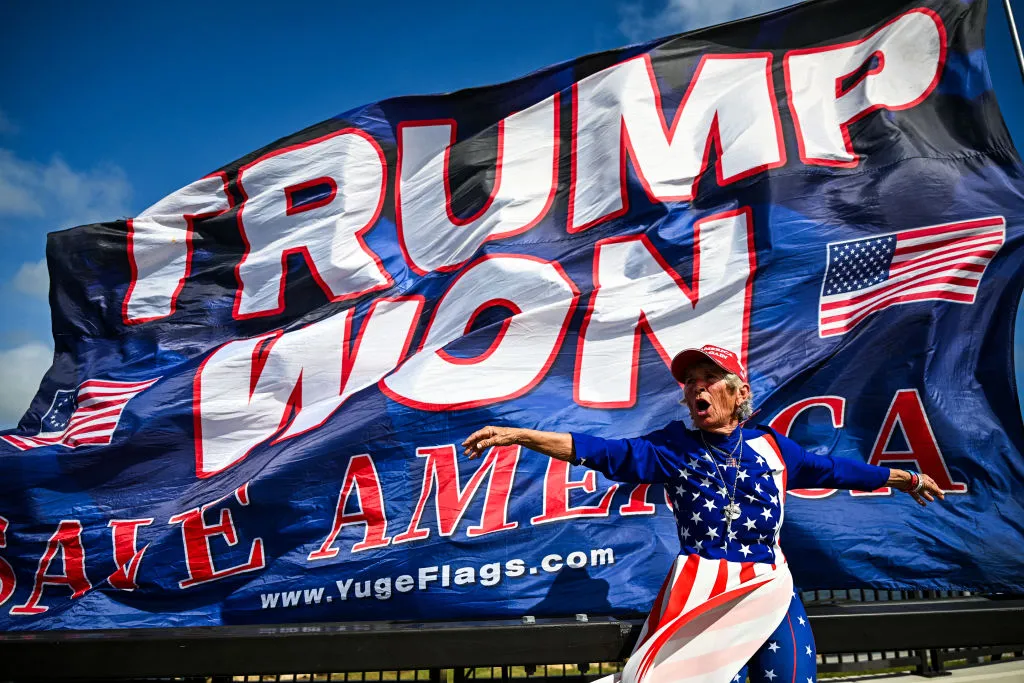
A new billboard campaign stretching from the Pacific Northwest to Florida asks passing drivers a simple question: "Having doubts? You are not alone." The signs, which echo the language of religious outreach, are the work of Rich Logis, a former Trump supporter who founded the non-profit Leaving MAGA. His organisation reports a record number of inquiries from people questioning their allegiance to the movement.
Approval ratings hit record low
The campaign arrives as Donald Trump faces his weakest polling numbers. Just 15 per cent of Americans now say they "strongly approve" of the president, a decline driven by dismay over the Iran war, the Epstein Files and a sluggish economy. Yet a solid majority of Republicans, and an even larger share of self-identified MAGA Republicans, remain loyal. For those who do leave, the social rupture can be severe.
From naval cook to political outcast
Steven Francisci, a former naval cook from Chesapeake, Virginia, voted for Trump twice. Last November he placed an "Abigail Spanberger for Governor" sign on his front lawn. Spanberger, a Democrat, won the Virginia gubernatorial race, but within 24 hours Francisci noticed a change. Neighbours who once asked after his children grew distant. Conversations became stilted.
Before I chatted with my friends and neighbours the whole time. But after that election, it was silent. I felt ashamed.
Francisci's journey to that point was gradual. Born in New York, he was drawn to Trump's confrontational style and embraced birther conspiracies about Barack Obama. After his marriage broke down and a motorbike accident left him on disability benefits, the MAGA movement became his primary community.
I felt like I was now part of something bigger than myself. I was part of a movement that was trying to make America better. There was a strong sense of belonging, shared language and community.
At his evangelical church, politics and religion merged. Congregants discussed whether Trump was divinely chosen. Francisci came to believe the president was a saviour figure who would "drain the swamp". By 2024, however, Trump's claims of a stolen election and his conduct on January 6 began to erode that certainty.
Identity collapse and the cost of exit
Carter Brown, a Georgia native who once supported QAnon, describes a similar rupture. The day after she broke with Trump she felt she was living in The Truman Show. She struggled to leave bed, fearing for her marriage and relationships. Though her marriage survived, she lost several friends to online harassment and blocking.
I was experiencing a complete identity collapse. I didn't know what was going to happen to my marriage. I didn't know what was going to happen to the relationship with my friends, with my family.
These cases reflect a wider truth: MAGA functions as a worldview, a belief system and a community wrapped into one. At a 2024 rally in Schnecksville, Pennsylvania, the camaraderie was palpable. Bikers played pool with bricklayers. Locals bought drinks for strangers. A baseline of trust existed before introductions.
The bunker mentality
John, a former supporter in Orlando, Florida who spoke on condition of anonymity, recalls the appeal of the movement's counter-cultural stance during the early 2020s. "We had this bunker mentality where it was us against everyone else," he said. He believed Trump would disrupt a uniparty consensus in which both sides pursued war and served special interests.
John later concluded Trump was no different, but he valued the fellowship. When his boss caught him watching a Stephen Crowder podcast at work, he feared reprimand. Instead, the boss revealed he was also a fan. "From that point on, we always, under wraps, had each other's back."
Polarisation raises the price of switching sides
In 1996, changing political allegiance was as inconsequential as switching supermarkets. Today, with millions of Americans viewing their political opponents as immoral rather than merely wrong, the social cost of leaving one's tribe has steepened. That cost is especially acute on the right, where Republicans have rallied around a single figure for over a decade, their loyalty hardened by Russiagate, two impeachments, multiple criminal indictments and two assassination attempts.
Cult comparisons and internal dissent
Critics on the left frequently describe MAGA as a cult, a comparison reinforced by the erection of literal gold statues of the leader. Yet support is not monolithic. Influential right-leaning voices including Tucker Carlson, Megyn Kelly and Shawn Ryan have voiced growing criticism. Carlson recently floated a "new path forward", claiming MAGA had been "betrayed". He appeared alongside Marjorie Taylor Greene, Joe Kent and Thomas Massie, all seen as potential successors.
A movement built on one man
The primary defeats of Massie, Bill Cassidy and John Cornyn demonstrate that the Republican Party still belongs to Trump. He does not tolerate dissent. Challengers are swatted away by the base. But if MAGA's fate is so closely entwined with one man, it has little chance of outliving him. Trump himself acknowledged this earlier this year: "MAGA loves what I'm doing. MAGA loves everything I do. MAGA is me."
It is difficult to imagine a President Vance or President Carlson commanding the same loyalty. If JD Vance said, as Trump did, that he did not think "even a little bit" about Americans' financial situation on the eve of the midterms, the reaction would likely differ. Trump is a sui generis figure. Imitators risk looking like pale copies.
What happens next for both parties
This dynamic could benefit Republicans long-term. The next generation of leaders may be forced to articulate a coherent vision rooted in MAGA's original principles: avoiding foreign wars, draining the swamp and reviving industrial heartlands. The party may also need to build a broader coalition held together by ideas rather than loyalty to a single man.
Democrats face their own challenges. Formerly core constituencies, working-class voters, African Americans, Hispanics, have drifted right. The botched release of the DNC's 2024 election report revealed a party still riven by internal divisions, evident in divisive primaries in Maine and Michigan. Until it finds a candidate who can appeal to a broader cross-section in 2028, it will continue to flounder.
Life after MAGA
Back in Chesapeake, Francisci has rebuilt. He left his church, made new friends and reconnected with family. He now supports others considering leaving the movement, but refuses to proselytise. "I walked away from Trump and I walked away from Christianity," he says. "No more conversions for me."