
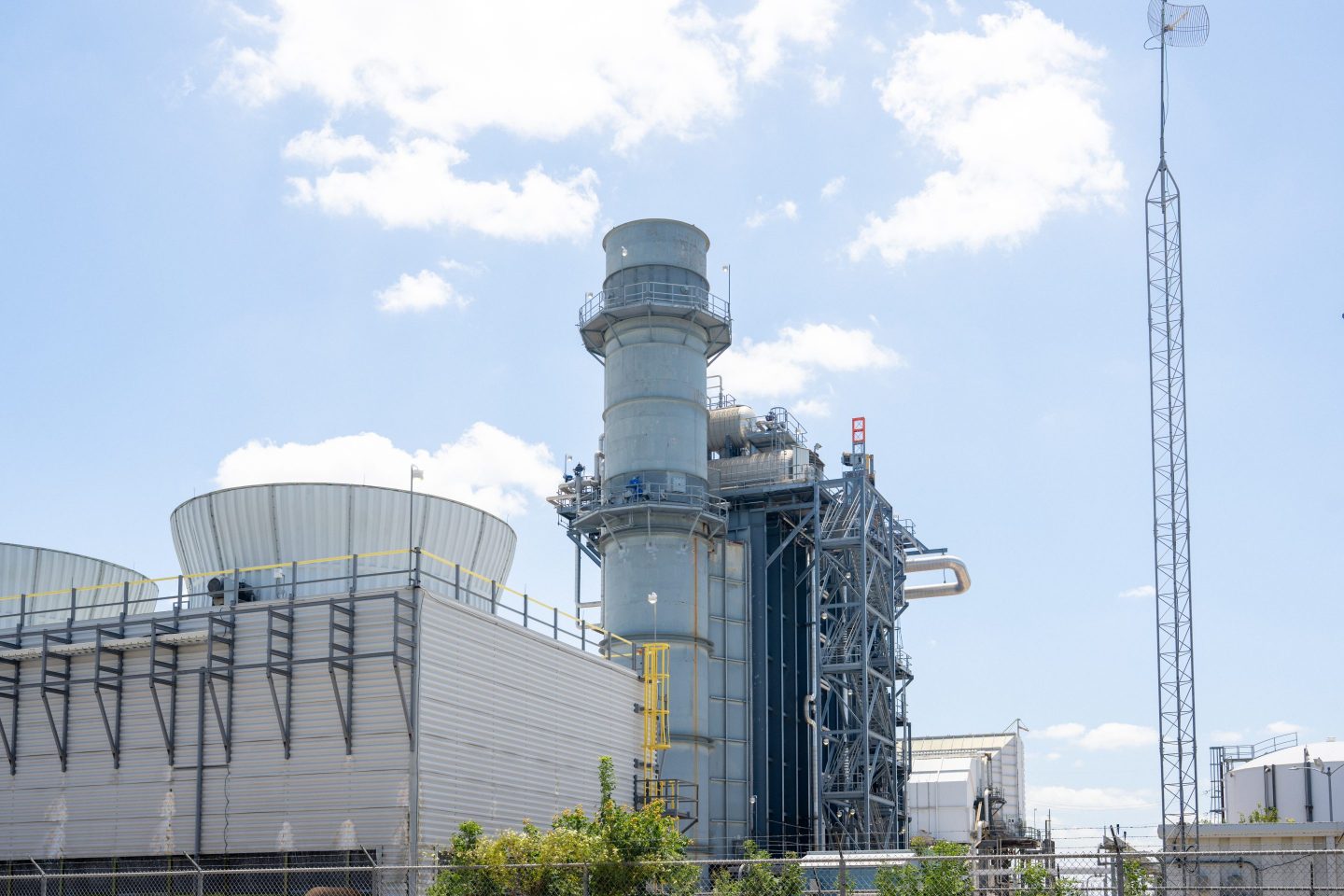
BloombergNEF has identified 99 planned natural-gas power plants that data-centre developers intend to build across the United States. If operated at typical industry capacity, the facilities would emit roughly 318 million metric tonnes of carbon dioxide each year, about 20% of the total emissions from the US electric power sector last year, according to the Energy Information Administration.
What the proposed plants entail
The projects, totalling 126 gigawatts of on-site gas generation capacity, are being pursued as developers struggle to secure grid connections for their rapidly expanding facilities. By locating power generation directly at the data-centre site, a so-called behind-the-meter approach, companies can avoid lengthy utility approvals.
Most of the plants are single-cycle gas generators, which are cheaper and quicker to install than the more efficient combined-cycle units that developers prefer but cannot obtain because of a long backlog for turbine supply.
Potential climate impact
Running at 60% to 100% utilisation, the plants could add between one-fifth and one-third to national power-sector emissions. The analysis notes that not every proposal will be built, but the sheer scale, with more than a third of the sites slated for Texas, raises concerns.
Backed by major AI labs such as OpenAI and Anthropic, as well as cloud giants Amazon.com Inc. and Microsoft Corp., the projects illustrate the tension between soaring demand for AI-driven computing power and corporate climate commitments.
"There is immense, immense pressure on the whole sector to get power, and get it fast," said David Pomerantz, executive director of the Energy and Policy Institute. "They're sort of agnostic if it is clean or dirty."
Industry response and next steps
Both Amazon and Microsoft have publicly pledged to reach net-zero emissions, yet the new fossil-fuel infrastructure threatens to outpace those goals. Amazon is reportedly evaluating solar and battery options for its West Texas site, while Microsoft is working with Chevron on a gas plant for a 2,000-acre complex.
Regulators in Texas, where the regulatory climate has traditionally favoured rapid development, have recently paused new data-centre approvals, signalling potential hurdles for the proposed plants.
"It has been a remarkable shift in the last three years," said Drew Wilkinson, a former Microsoft employee who led internal sustainability advocacy. "The companies who set the bar for corporate climate action are now bringing net new fossil infrastructure online at a breakneck pace. Few of us saw it coming."
Analysts expect that the combination of grid-capacity constraints, heightened public scrutiny and the companies' own renewable-energy programmes will shape whether these gas plants proceed, are delayed, or are replaced by cleaner alternatives.