
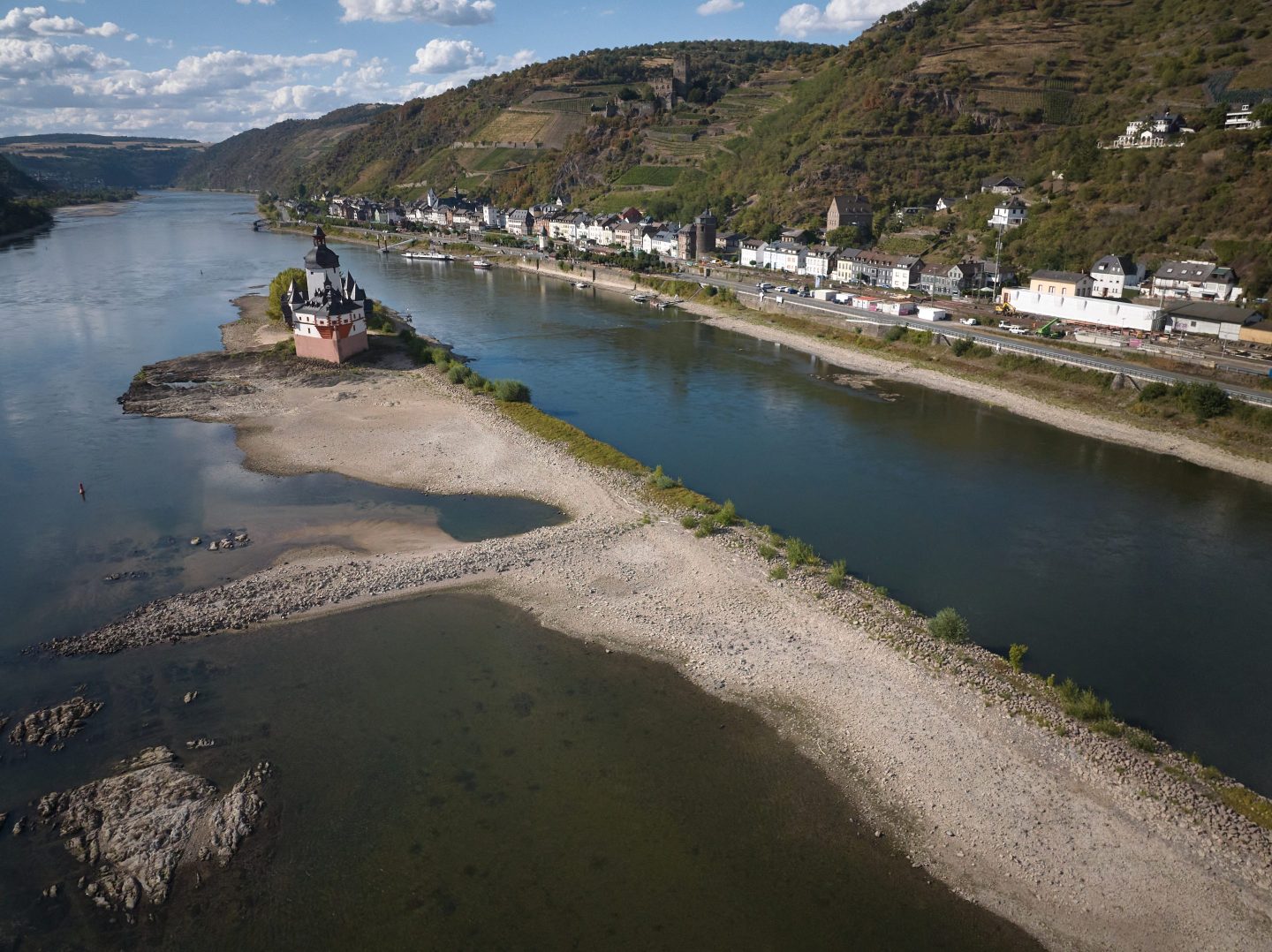
Steffen Bilger, who joined Chancellor Friedrich Merz's cabinet on 29 July, said on Tuesday that a fuel rebate similar to the one introduced in April in response to the war in Iran is no longer possible and no longer affordable. The comment came as the Rhine at Kaub, a critical chokepoint for barge traffic to southern Germany and Switzerland, dropped to 14 centimetres on Tuesday after hitting 24 centimetres a week earlier, the lowest level since records began in 1880.
Rhine levels hit historic lows
The Federal Waterways and Shipping Administration forecasts the level could fall to nine centimetres by Saturday. The shallow water restricts barge loads, raising transport costs and triggering regional price spikes for fuel and other goods. Bilger, speaking in the northern port city of Kiel, said there is not yet a supply crisis and supply chains are functioning, but price spikes are appearing in some regions.
"That is of course another effect in certain regions, where prices have risen because of the supply problems," Bilger said. "We do not yet have a supply crisis, the supply chains are functioning, but there are price spikes in some regions."
Europe is contending with another heat wave this week. Soaring temperatures raise the risk of wildfires, threaten crops and dry the watersheds that feed the region's waterways, including the Rhine, Danube and Po. River navigation and power production have already been disrupted.
Government response and coalition talks
Bilger called a crisis meeting last week to take immediate action. The measures include lifting state driving restrictions on public holidays to keep supply chains open and suspending construction work to ensure the movement of goods. Coalition partners are in discussion as the effect of critically low river levels reverberates. Bilger plans to hold another meeting on Wednesday.
"The situation remains worrying, which is why it was good that we acted at short notice," Bilger said.
Climate context deepens concern
Climate change is increasing the frequency and intensity of extreme heat in Europe, the world's fastest-warming continent. The trend strains power grids, saps water supplies and curbs farm output. The current episode on the Rhine illustrates how quickly hydrological stress can translate into economic pressure for Europe's largest economy.