
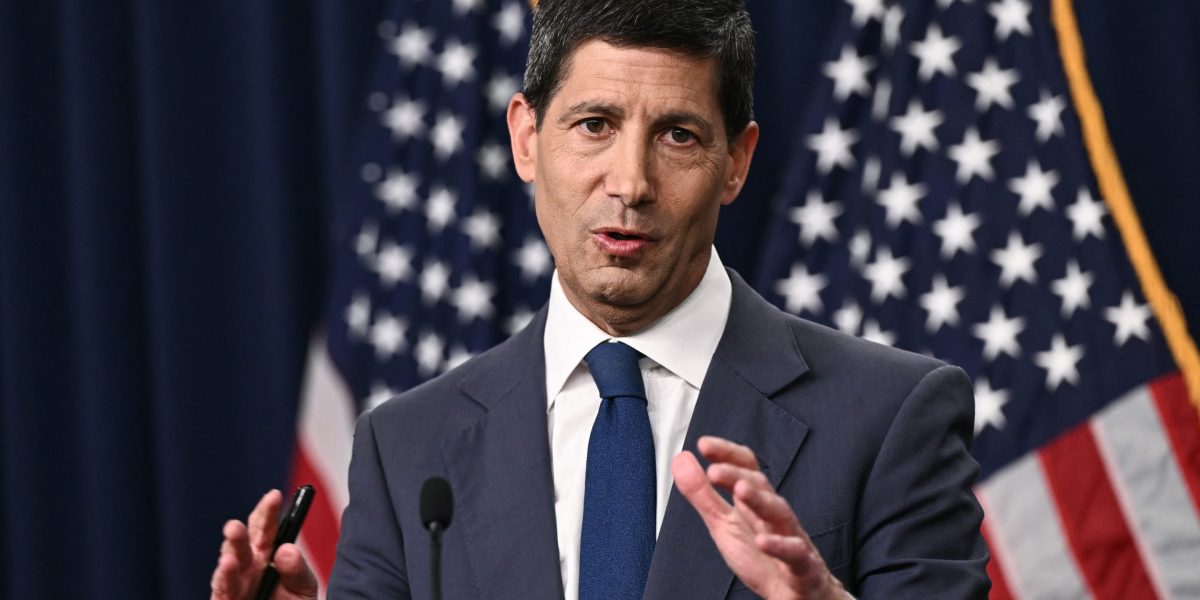
Kevin Warsh warned at the Jackson Hole Economic Symposium that the Federal Reserve may be basing decisions on outdated inflation signals, risking a mismatch between policy and the current economy.
Fed's inflation gauges lag behind reality
The headline Consumer Price Index (CPI) for July was 3.4% year-over-year, only slightly below June's 3.5% and well above the Fed's 2% target. The figure is calculated over the previous twelve months, a period that can mask rapid changes in price dynamics.
At the most recent Federal Open Market Committee meeting, three regional Fed presidents voted for an immediate rate increase. Beth Hammack of the Cleveland Fed said, "The longer that high inflation persists, the more challenging and costly it can be to bring it back down. Pricing pressures are broadening rather than fading, and consumers are expressing despair over persistently higher prices." Neel Kashkari of Minneapolis warned that "high inflation could become entrenched" and suggested multiple further hikes. Lorie Logan of Dallas also expressed a pessimistic outlook.
Short-term measures show cooling
Analysts point out that the three-month annualised CPI average since May is only 0.49%, a stark contrast to the 3.4% YoY rate. The Producer Price Index (PPI) also fell sharply after peaking, with a three-month annualised rate of 1.6%.
Inflation expectations have moved lower as well. Market-based breakeven inflation for five-year Treasury Inflation-Protected Securities and the Cleveland Fed's one-year inflation model both forecast around 2.3%.
These shorter-term signals have already influenced markets. The S&P 500 reached a new record the day after the CPI release, and the probability of a September rate hike fell from 80% to about 67%.
Policy implications and next steps
Economists such as Nobel laureate Paul Krugman and former Obama adviser Jason Furman have argued that a three- to six-month window provides a more timely view of inflation trends. The Cleveland Fed's "inflation nowcast" currently puts the annualised CPI at 1.05%.
"Yesterday's news has a way of getting mistaken for what is happening right now," Warsh said. "The challenge is to know the difference. In other words, we must interrogate reality to make sure we are not setting forward-looking policy based on stale or inaccurate data."
Warsh has launched task forces to reassess how the Fed interprets inflation drivers and to improve the timeliness of economic signals. While these reforms will take time, the immediate recommendation is for the Fed to give greater weight to short-term data that suggest a possible regime change in inflation.
If the central bank continues to rely primarily on year-over-year figures, it risks either tightening too late, as it did during the 2021-2023 inflation surge, or tightening unnecessarily, potentially choking a still-fragile recovery. The next Federal Open Market Committee meeting will test whether policymakers adjust their approach in light of the emerging short-term trends.