
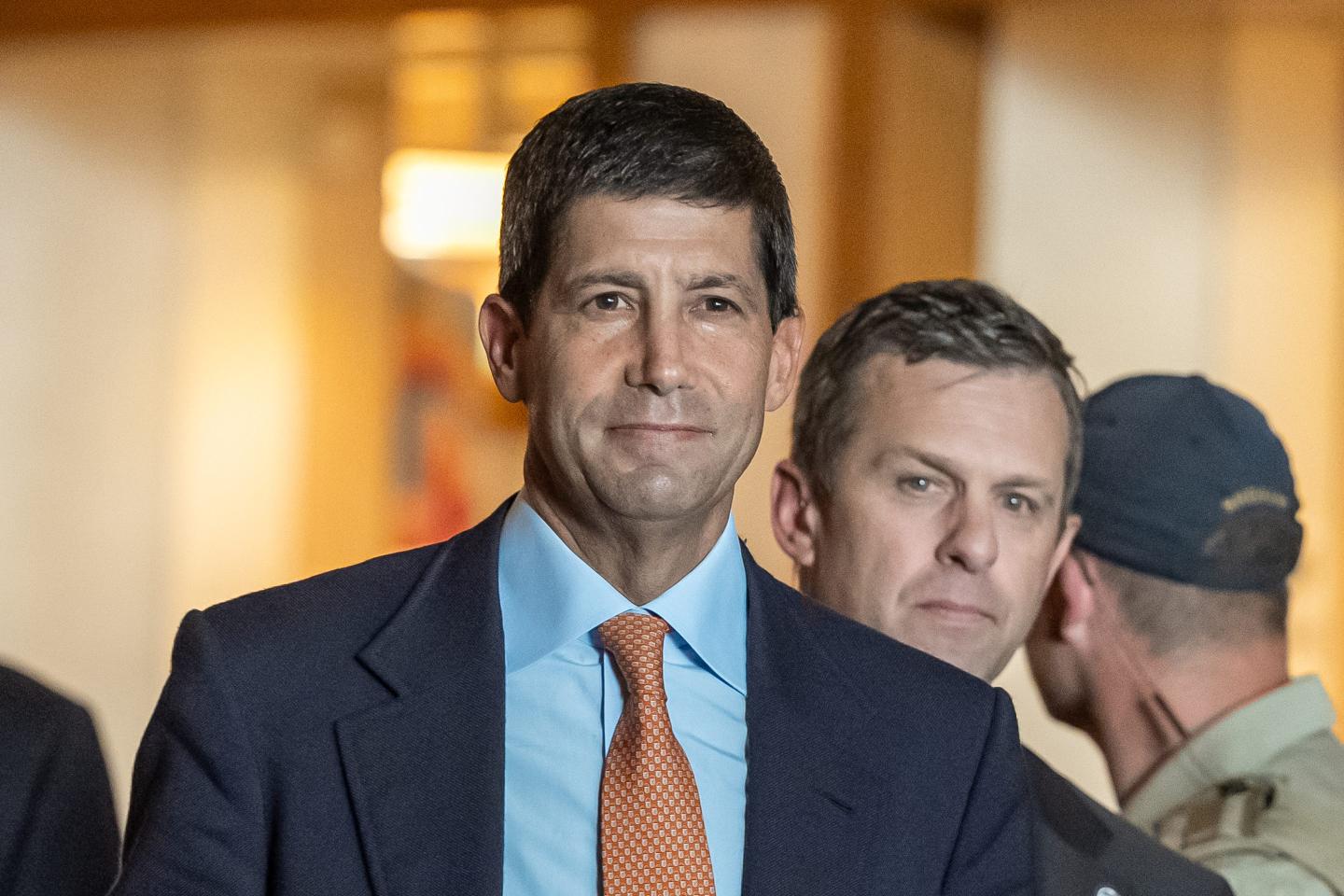
Kevin Warsh took the podium at the Federal Reserve's annual Jackson Hole symposium and delivered a stark assessment of the United States' inflation trajectory. He warned that a run of 65 months of elevated price growth is a signal that cannot be ignored, and he used the occasion to revisit the central bank's practice of forward guidance.
Key points from the Jackson Hole address
Warsh opened his keynote by reiterating his long-standing discomfort with early pronouncements about future policy. He said:
"You might know about my longtime discomfort with early pronouncements of future policy decisions … Forward guidance as a regular practice was adopted by my colleagues, and me, during the global financial crisis. It was essential at the time, and we introduced it with much fanfare. But as with other legacies of crises past, I believe the practice has outstayed its welcome. In normal times, the role of forward guidance should be limited and circumscribed; otherwise, it risks creating ambiguity in the name of clarity. Oversharing policy deliberations and overcommitting to future decisions can lead markets, businesses, and households astray, and I believe when policymakers make quasi-commitments on interest rates throughout the cycle, we inhibit our own freedom to make the right calls when it's time to decide."
He added that the market should not look to the Fed for every trading cue, urging participants to focus on broader economic fundamentals.
Inflation and employment outlook
Turning to the dual mandate, Warsh said price stability now dominates the Fed's concerns. The central bank's preferred inflation gauge, the 12-month change in the Personal Consumption Expenditures (PCE) price index, sits at 3.7 percent, while the six-month change is 4.1 percent. Both figures sit well above the 2 percent target.
On the labour side, Warsh described the market as broadly consistent with full employment, citing a resilient consumer base and a post-pandemic "rematching" of workers and firms. He stressed that while the employment picture is solid, the inflation numbers are more troubling.
AI and productivity considerations
Analysts expected the speech to touch on artificial intelligence, and Warsh did. He framed AI as a potential new factor of production that could reshape productivity and, by extension, monetary policy. He asked whether AI would generate a sustained rise in productivity and what impact that might have on capital returns.
"We recognise that AI is a new variable, potentially a new factor of production, that will have consequences for both the economy and the conduct of monetary policy. It opens some major lines of inquiry: Will the application of AI cause a significant, sustained rise in productivity across the economy? And if so, when? Among the other yet-unknowns is the resulting market structure. It's not obvious where the returns on capital will land or on what timescale."
Warsh noted that a task force on productivity and jobs is already examining these questions.
Market reaction and next steps
Following the speech, safe-haven assets such as gold fell about one percent and the VIX volatility index also slipped. Longer-dated Treasury yields moved lower, and the CME FedWatch index indicated a 57 percent probability that the Fed will raise rates by 0.25 percentage points at the September meeting, taking the target to 3.75 percent.
Analysts such as Eric Winograd of AllianceBernstein interpreted the remarks as a subtle shift back to a more hawkish tone, noting the reaffirmation that PCE remains the benchmark inflation measure and that interest rates are the primary policy tool.
Looking ahead, the Fed is likely to keep a close watch on inflation data while allowing the labour market to run its course. Warsh's emphasis on the 65-month inflation signal suggests that any future easing will be approached with caution, and the central bank's stance on forward guidance may evolve as it seeks to balance clarity with flexibility.