
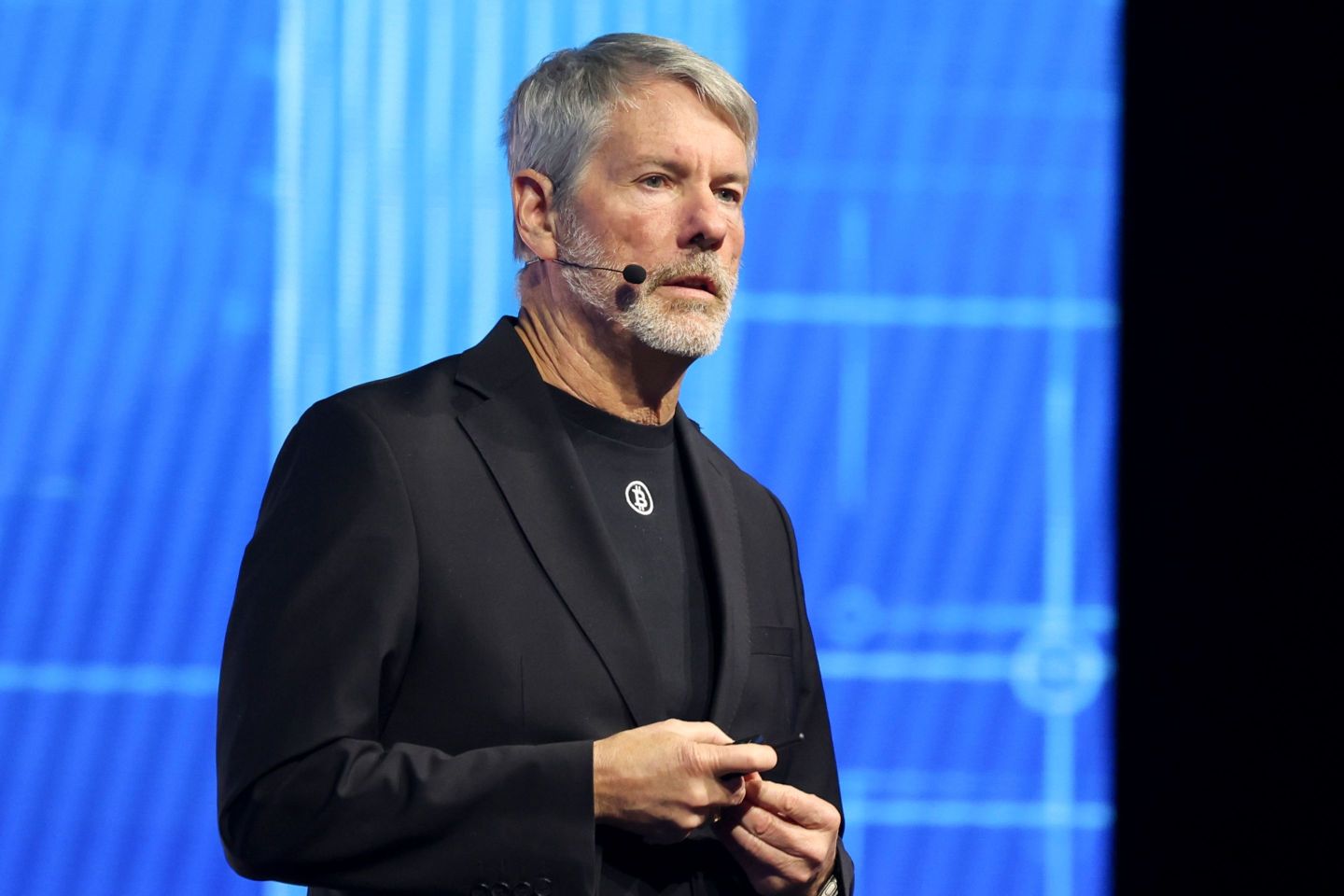
Michael Saylor pushes back on Elon Musk's AI utopia
Michael Saylor, founder of the software firm Strategy and a prominent Bitcoin advocate, told host Steven Bartlett in a recent "Diary of a CEO" interview that the idea of money becoming obsolete under artificial intelligence is unrealistic. While Elon Musk has suggested that AI could usher in a "universal high income" where work is optional and currency loses its purpose, Saylor warned that people will always pursue status symbols that remain scarce.
Why Saylor doubts a money-free future
During the interview Saylor said:
Everybody doesn't get a Hampton's house. Everybody doesn't get their own private jet. They don't get their own private yacht.
He acknowledged that AI could dramatically lower the cost of essential goods, perhaps even making some of them free, but argued that the desire for luxury would simply shift to items that are harder to obtain. "If I give you universal healthcare, people want private healthcare. If I give everybody a house, someone's going to want a house twice as big," he explained, describing humans as "status-oriented animals".
Historical perspective on abundance and luxury
Saylor pointed to history as evidence. Technological progress has turned many once-luxurious necessities into everyday comforts, clean water, modern medicine and low infant mortality are now common in most developed nations. He noted that even monarchs such as Henry VII lacked dental crowns or X-rays, yet today those services are routine.
According to Saylor, each wave of affluence raises the baseline for what counts as luxury. "Everybody gets a car, but how many people get a Porsche?" he asked, suggesting that new tiers of prestige will always emerge.
Other tech leaders share the optimism, but differ on impact
Despite their disagreement, Saylor and Musk are not alone in seeing AI as a catalyst for abundance. Dennis Hassabis, chairman of Google DeepMind, has spoken of a forthcoming "golden era of discovery" driven by AI breakthroughs in medicine and energy, eventually enabling humanity to explore the galaxy.
Venture capitalist Vinod Khosla also predicts a bountiful future, but cautions that the economic benefits will hinge on policy responses to job displacement. He has suggested that universal basic income could help ensure that rising average incomes translate into higher median earnings.
What this debate means for Europe
The clash of views highlights a key question for European policymakers: how to harness AI-driven productivity while managing the social implications of wealth concentration. If Saylor's view holds, demand for premium goods and services could sustain markets for high-end manufacturers and luxury brands across the continent.
Conversely, if Musk's more radical scenario materialises, traditional fiscal structures might need to adapt to a world where basic consumption is largely automated.
Looking ahead
Both perspectives suggest that AI will reshape the economic landscape, but the timeline and depth of change remain uncertain. Saylor's argument implies that wealth inequality could persist, prompting calls for targeted policy tools such as progressive taxation or social safety nets. Musk's vision, meanwhile, fuels discussions about universal basic income and the future of work.
As AI continues to evolve, European governments, businesses and citizens will watch closely to see whether the technology delivers a new era of shared prosperity or simply redefines the symbols of status.