
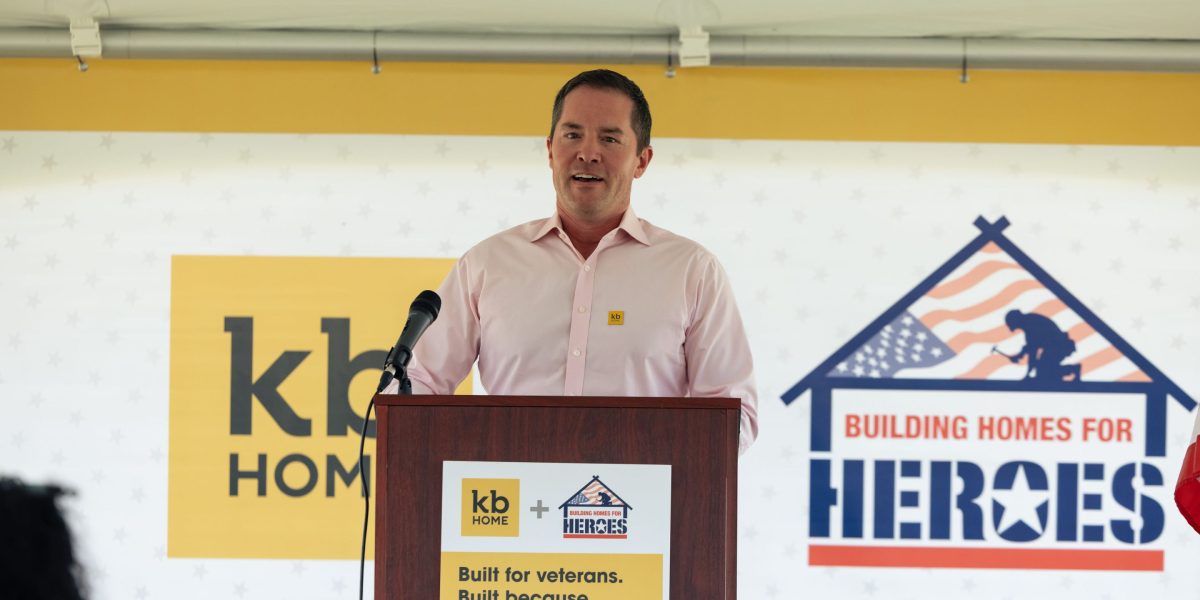
When Rob McGibney took the helm of US homebuilder KB Home on 1 March, the company was already feeling the strain of a volatile market. In the first earnings call under his leadership, revenue fell 23% year-on-year to $1.08 billion and net income slumped 70% to $33.4 million. The second quarter showed a further revenue dip of 27% to $1.1 billion and earnings down 75% to $27.3 million. With the stock sliding, borrowing costs high and consumer confidence weak, McGibney is focusing on the levers he can control.
Built-to-order homes become the core offering
KB Home has shifted its product mix toward built-to-order homes, which now represent 73% of net orders in the second quarter, up from 57% a year earlier. These homes command higher prices and are less prone to cancellations or discount demands, though they also entail longer build times and exposure to higher mortgage rates.
"We're not forcing that buyer to pay for things that they don't value, allowing them to put the things in the home that they really do value and care about," McGibney said.
By letting buyers choose fit, finish, function and features within their budget, the company hopes to reduce the risk of buyer regret and improve profitability.
Targeting first-time buyers with higher incomes
McGibney is also keen to attract first-time buyers, whose average age has risen to 40. The median age of US homebuyers has climbed from 39 to 59 over the past 15 years, reflecting later marriage and child-bearing. Today's first-time purchasers often earn around $140,000 a year, hold a 740 FICO credit score and can afford a $70,000 down payment, a stark contrast to a decade ago.
He argues that these buyers, having saved more, possess greater wealth-generation potential over time, even if the broader market remains unaffordable for many younger households.
Why personalisation matters to a new generation
McGibney notes that Gen Z grew up with customisable products, from personalised sneakers to made-to-order meals, and expects the same flexibility when buying a home, the largest purchase of their lives. While the company cannot change macro-economic constraints, it aims to move down the "K-shaped" economy curve by offering better affordability through personalisation.
Looking ahead
KB Home's strategy hinges on sustaining the built-to-order momentum and convincing higher-income first-time buyers that a personalised home is worth the wait. If successful, the approach could stabilise revenue and improve margins despite lingering inflationary pressures and elevated construction costs. The next earnings report will reveal whether the focus on customisation translates into stronger order books and a steadier share price.