
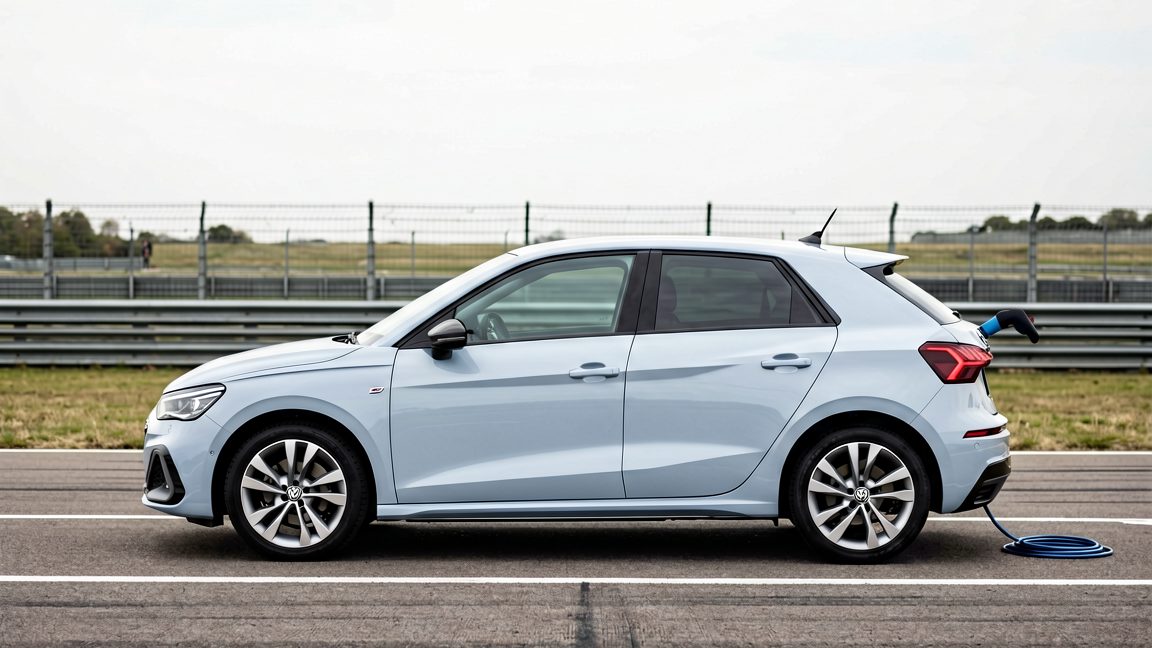
Audi's upcoming A2 e-tron will consume 12.8 kWh per 100 km in WLTP testing scheduled for 2026, roughly 9 % less than the VW ID.3 Neo's 14.0 kWh per 100 km figure from the 2024-2025 WLTP cycle. The Heise report confirms the numbers and declares the A2 e-tron the most efficient compact electric car slated for European production.
Efficiency claims and technical basis
The efficiency advantage stems from a combination of aerodynamic and power-train choices. Audi equips the A2 e-tron with a permanent-magnet synchronous motor rated at 140 kW and a 58 kWh net lithium-iron-phosphate (LFP) battery that delivers a WLTP-rated range of up to 500 km. An optional efficiency package lowers the drag coefficient to cₚ = 0.24, according to the Heise article.
Both the consumption figure of 12.8 kWh/100 km and the technical specifications are sourced from Heise's coverage of the model's world premiere (Heise, 7 September 2026).
| Model | WLTP consumption (kWh/100 km) | Test period | % difference in consumption (A2 e-tron vs ID.3 Neo) |
|---|---|---|---|
| Audi A2 e-tron | 12.8 | WLTP test 2026 | -8.6 |
| VW ID.3 Neo | 14.0 | WLTP test 2024-2025 | 0.0 |
The table shows a consumption gap of 1.2 kWh per 100 km, which translates to an 8.6 % lower energy use for the A2 e-tron. The percentage is calculated on the ID.3 Neo's consumption base and rounded to one decimal place, matching the "about 9 %" wording used by Audi.
Cost-of-ownership implications
Lower energy consumption directly reduces electricity costs for owners. Assuming a European average electricity price of €0.30 per kWh, the A2 e-tron would need roughly €3.84 to travel 100 km, compared with €4.20 for the ID.3 Neo, a saving of €0.36 per 100 km, or about €1,300 over a typical 3 500 km annual mileage.
Beyond fuel, the model's LFP battery promises a longer cycle life and lower degradation risk than nickel-cobalt chemistries, potentially lowering replacement costs after the warranty period. The 500 km WLTP range also positions the A2 e-tron favourably for long-distance commuters, reducing the need for frequent charging stops and associated time costs.
Competitive pressure on Volkswagen
Volkswagen's ID.3 Neo has been the benchmark for compact EV efficiency in Europe since its 2022 launch. Audi's new figure forces VW to reassess its pricing and feature strategy for the ID.3 family. If Audi can price the A2 e-tron competitively while offering a longer range, the ID.3 Neo may lose market share in Germany, France and the Benelux, where compact EVs dominate city fleets.
Analysts note that the A2 e-tron's platform is derived from the ID.3 Neo, meaning the efficiency gain is largely a result of aerodynamic optimisation and power-train tuning rather than a completely new architecture. This could pressure Volkswagen to introduce its own efficiency upgrades across the ID.3 range to protect its volume sales.
Relevance for EU emissions objectives
Europe's fleet-average CO₂ targets require manufacturers to lower the emissions intensity of new cars. While the EU regulation does not prescribe a specific kWh/100 km figure, a model that consumes 12.8 kWh per 100 km contributes a lower indirect CO₂ intensity than a 14.0 kWh counterpart, assuming the same electricity mix.
By delivering the most efficient compact EV in its segment, Audi provides a tool for fleet operators and private buyers who need to meet corporate sustainability goals. The model's launch in autumn 2026 aligns with the period when many European car-makers will be reporting their 2026 fleet-average emissions, potentially improving Audi's compliance position.
Strategic signal ahead of the 2026 launch
Announcing the consumption figure now, ahead of the planned production start at Audi's Ingolstadt plant in autumn 2026, sends a clear message to the market: efficiency is a core pillar of Audi's electric strategy. The company describes the A2 e-tron as "its most efficient electric vehicle ever", a claim that underlines a shift from premium performance to value-driven electrification.
The timing also coincides with a broader European push for cheaper, lower-emission mobility solutions. By positioning the A2 e-tron as a cost-effective alternative to the ID.3 Neo, Audi may attract price-sensitive buyers who previously considered the ID.3 the most affordable option.
What comes next
Consumers will first see the A2 e-tron on European roads when production begins at the Ingolstadt plant in autumn 2026. The next steps for the market will be pricing announcements and the rollout of the optional efficiency package that delivers the cₚ = 0.24 drag coefficient. Observers will watch how Volkswagen responds, whether with a refreshed ID.3 Neo, a new efficiency-focused model, or a price adjustment.
In the months ahead, the efficiency race is likely to intensify as other manufacturers unveil compact EVs targeting sub-13 kWh/100 km consumption. Audi's early lead may set the benchmark for the next wave of European electric cars, shaping both consumer expectations and regulatory compliance strategies.