
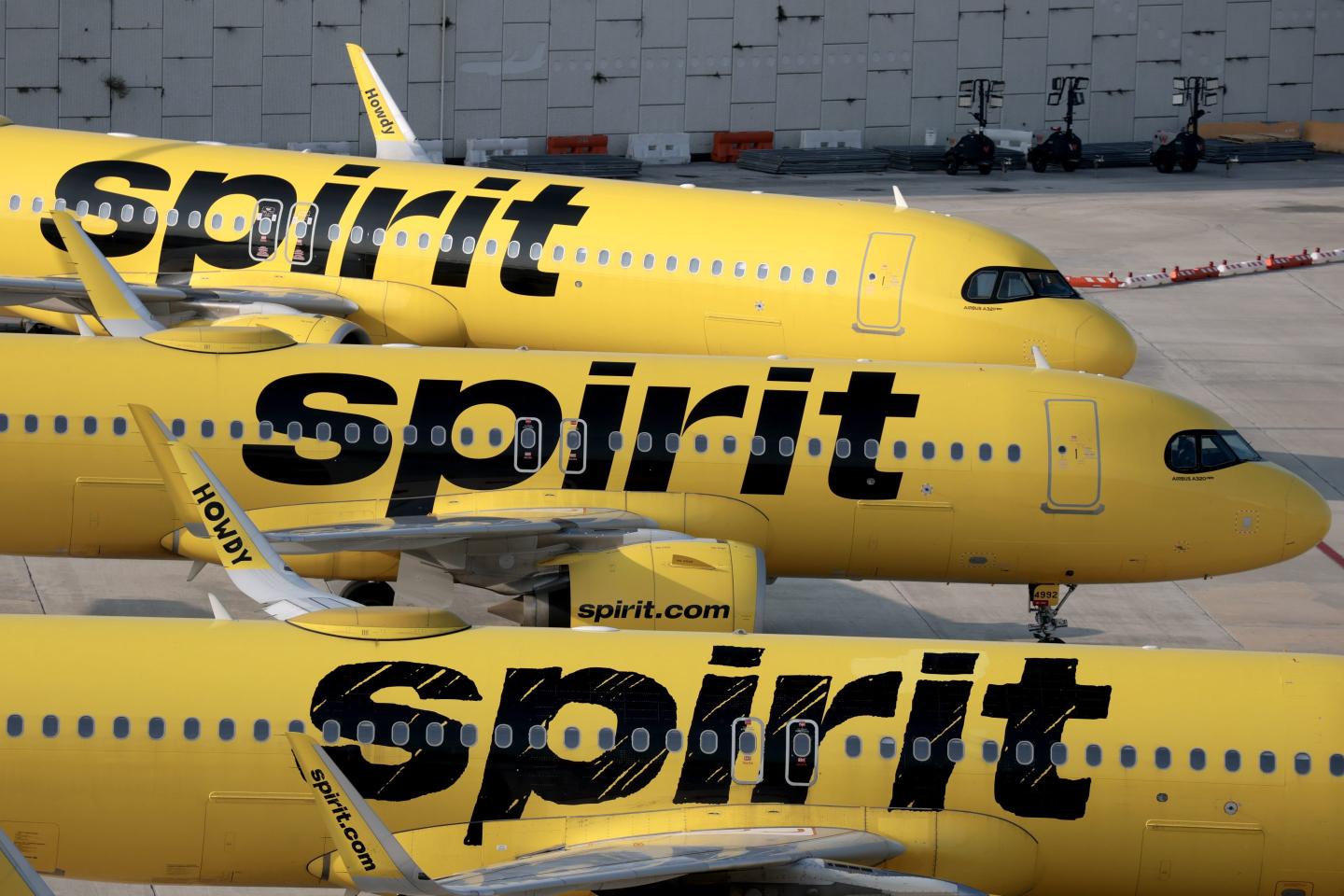
Ali Ansari's startup Micro1 has lodged a $12.5 million bid to acquire the archive of the now-bankrupt Spirit Airlines. The offer eclipses the $10 million proposal from Google and the earlier $7.5 million bid from data-supplier Mercor.
The competing bids
Micro1, founded in 2022 and based in Palo Alto, argues that its cash-on-hand offer, together with a 25 percent premium over Google's price, makes it the most attractive buyer. Google had previously outbid Mercor, which supplies data to AI developers, but the new proposal from Micro1 raises the stakes in a market where corporate records are becoming a prized commodity for training artificial-intelligence models.
Privacy objections
Unions representing former flight-attendants and consumer-privacy advocates have filed legal objections, warning that the data set contains personal information about former employees and passengers that may not be adequately redacted. A court-appointed privacy watchdog, led by Lucy Thomson, has asked for more time to examine Micro1's proposal should the bankruptcy court name the startup as the buyer.
In a report filed on 8 September, Thomson noted that Google had offered to narrow the personal data included in the sale while negotiations on safeguards continue. Google's lawyers told the watchdog that any de-identified data would be used solely for training AI models.
Who is Micro1?
Micro1 began as a recruitment platform for engineering talent. While studying computer science and mathematics at UC Berkeley, Ali Ansari founded the company in 2022. Early products included an AI-driven interview tool and a marketplace for technical workers. In early 2025 the firm pivoted to supplying human-generated training data and evaluating AI models.
AI's future is a bet on "the messiness of the real world and the brilliance of the humans working inside it.", Ali Ansari
Micro1 claims it can organise and de-identify corporate records for use in model training. The startup was valued at $500 million after a $35 million Series A round in September 2025, and by August 2026 its annualised run-rate had reportedly reached the same level.
Valuing corporate data
There is no widely accepted market price for the data of a failed company. Public examples range from tens of thousands of dollars for codebases to several hundred thousand dollars for years of internal communications. Micro1's own website advertises payments from $100 000 to more than $2 million for approved data packages.
Spirit's archive is unusually large, listing roughly 100 million emails, 500 million Microsoft Teams items, code and operational records. Customer profiles are excluded, but passenger-related fields remain and must be de-identified.
The road ahead
The bankruptcy court has not yet approved any sale. A hearing is set for 16 September, at which the judge will consider the competing offers and the privacy objections raised by unions and the watchdog. If Micro1 is selected, it has pledged to store the records in the United States, destroy raw employment data after processing and allow an independent reviewer to inspect a 1 percent sample before any further transfer.
Regardless of the outcome, the case highlights the growing scramble among AI firms for fresh, real-world data as public text sources are projected to become exhausted before 2030. The decision will also test how privacy safeguards are applied when large-scale corporate archives are repurposed for training next-generation AI agents.