
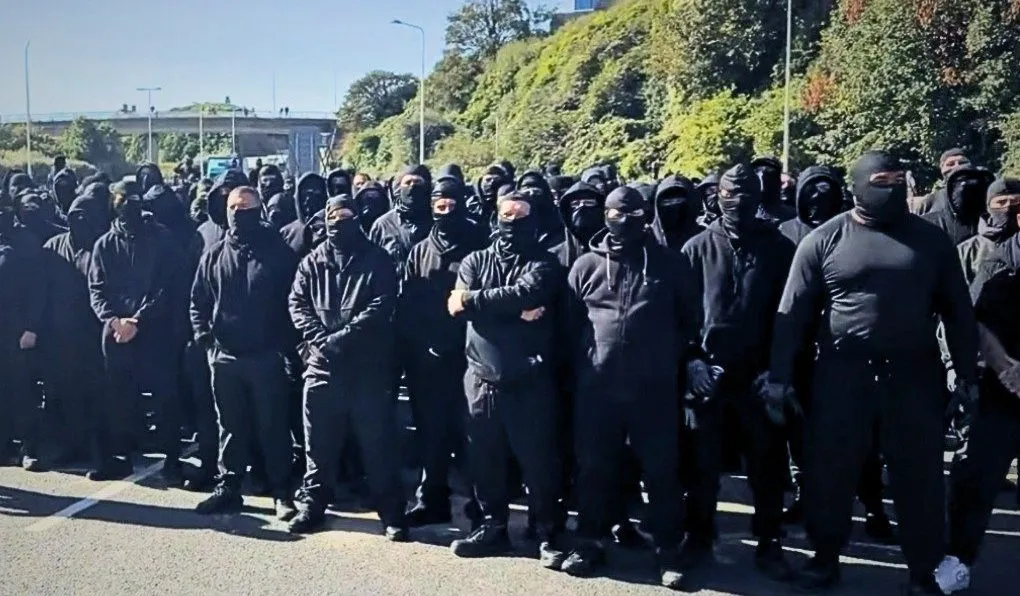
Danny Thomas appeared at the centre of two high-profile anti migration demonstrations on the south coast of England, where hundreds of men in black clothing and masks marched through Dover on Saturday and later clashed with police in Portsmouth on Sunday.
What happened?
The Dover protest was staged to block a major port without the usual police escort, creating a visual of order and discipline. Protesters chanted slogans such as "send them back" while remaining largely unarmed. In Portsmouth, a second group, including local residents, attempted to stop a boat carrying migrants from being moved inland, leading to night-time skirmishes with riot police. Both actions ended without escalation as the demonstrators withdrew.
Why does it matter?
Thomas, who describes his group as the Patriot Platform, claims it is a "Christian patriotic army" with tens of thousands of supporters. He has a varied background that includes a stint as a tank driver in the Royal Hussars, a two-year prison term for a kidnapping attempt, and past association with far-right activist Tommy Robinson. By presenting a uniformed, quasi-military image, Thomas aims to give anti migration protests a legitimacy that previous, more chaotic demonstrations lacked.
"we have working-class men… who build the houses that you live in, they build the roads that you drive on"
Speaking to Reform UK journalist Zia Yusuf, Thomas said the movement seeks to create a voting bloc that will back "the most suitable candidate, and to the most suitable party that is able to bring this country back into order."
The emergence of a structured protest group challenges the government's usual response, which relies on social stigma and post-event policing. If the movement can sustain its disciplined image, it may exert greater pressure on mainstream right-wing parties.
What happens next?
Political leaders have already reacted. Andy Burnham condemned the events as "the politics of poison", while Nigel Farage called for a ban on all face-coverings in public, arguing that "in a civilised society, people should be identifiable in public". Rupert Lowe, leader of the Restore Britain party, has praised the protests as "perfectly reasonable", positioning his party to attract supporters disillusioned with more moderate right-wing options.
The trajectory of Thomas's movement will depend on whether it can maintain a non-violent, legally savvy approach. If it does, it could become a decisive factor in upcoming elections, potentially reshaping the British right-wing landscape. If it slides into criminality, it may be isolated and lose public support.
For now, the masked protests have highlighted a shift from spontaneous street actions to a more organised, image-driven strategy that could redefine how anti migration sentiment is expressed in the United Kingdom.