
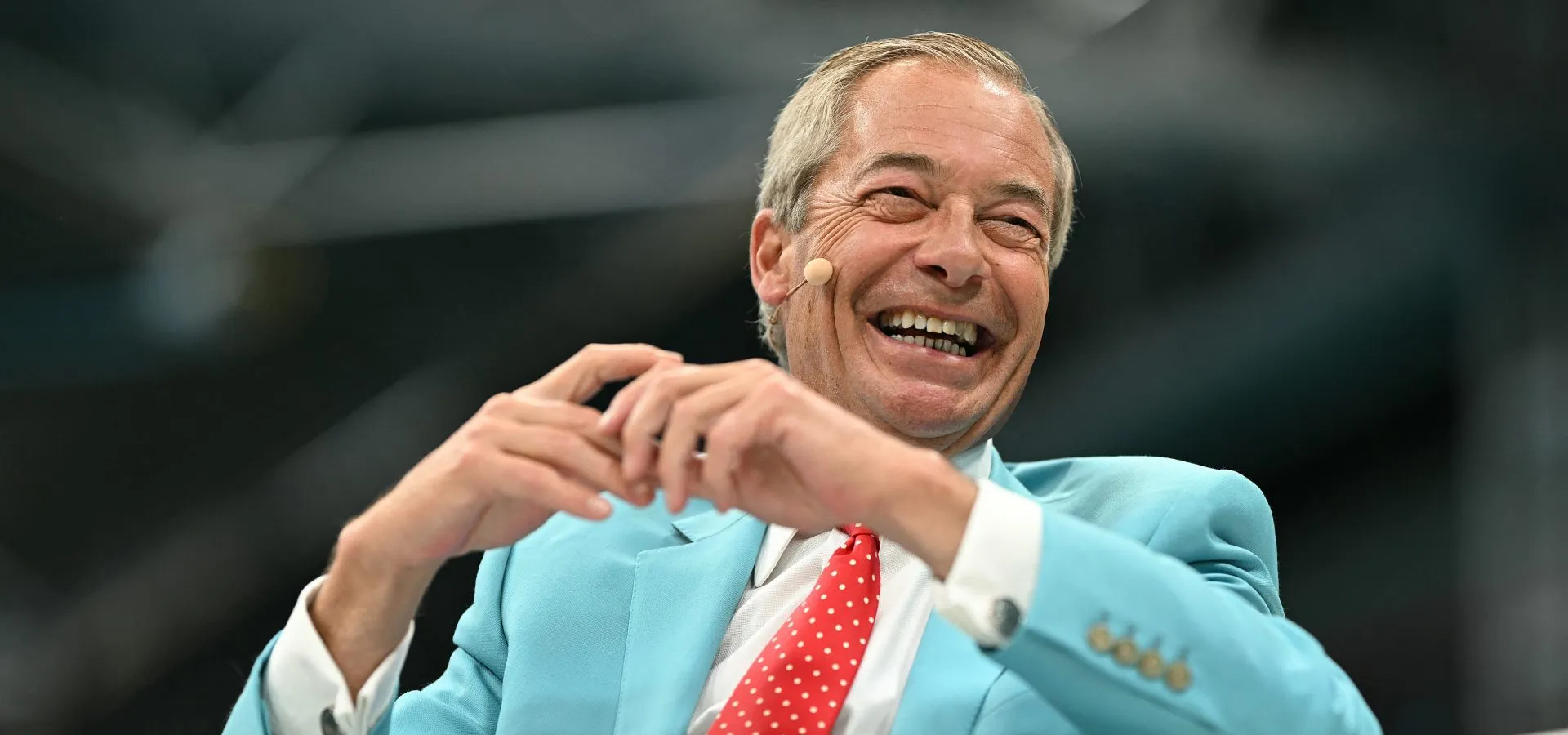
Nigel Farage arrived at the Reform UK conference in Birmingham dressed in a turquoise suit, flanked by security, as the party tried to project readiness for power. The event, billed as a showcase of policy and organisation, was quickly eclipsed by a Channel 4 sting that alleged illegal funding practices involving senior aides.
What happened at the conference
The three-day gathering, held on the outskirts of the city, featured a colourful décor, promotional merchandise and a live broadcast by talk-show host Jeremy Kyle. Delegates could sample roast pork, try a helicopter simulator and sign a book of condolences for former MP Ann Widdecombe. Yet the festive atmosphere was shattered when Channel 4 released footage of James Orr and Dan Jukes discussing a legally dubious funding operation in detail.
"I am not a compliance officer," Farage told Laura Kuenssberg when asked about the allegations.
In the same interview he added that he had been busy canvassing in the Clacton by-election and had not been paying attention to the issue. The party's own press officer later described the situation as "sub-optimal" and said external pressure would be needed to tighten internal controls.
Why the scandal matters
Reform UK, formerly the UK Independence Party, has positioned itself as the main right-wing alternative to the Conservatives. A poll released days before the conference placed the party third, behind the Conservatives, marking its lowest rating in 18 months. The funding allegations, coupled with internal disagreements over policy and business sponsorship, threaten to erode the credibility the party has been trying to rebuild after a series of by-election setbacks.
Business leaders such as NatWest and Serco attended a dinner sponsored by Heathrow, hoping to engage with a party that claims to represent "normal people". However, rumours circulated that Farage mocked NatWest for "debanking" him and criticised Serco for profiting from the asylum system. Such tensions illustrate the difficulty for established firms in aligning with a party that has been linked to a Guardian exposé on racist language and now faces a police investigation initiated by Labour and the Liberal Democrats.
What happens next for Reform UK
Party insiders say the fallout will force a reassessment of fundraising practices and internal governance. The conference's policy sessions, which included talks by Danny Kruger on civil-service reform and constitutional change, were largely ignored by delegates preoccupied with the scandal. Kruger called for an "institutional intifada" and suggested abolishing the Prison and Probation Service, ideas that would require extensive legislative work.
Analysts note that without a clear plan to address the funding controversy, Reform UK may struggle to convert its modest support into a realistic challenge for the Conservatives. The party's leadership, including Farage, will need to demonstrate compliance and transparency before the next general election, scheduled for 2029, or any snap election that could be called by Prime Minister Rishi Sunak.
In the meantime, the party's grassroots remain loyal. Long-time member Peter Faultless told reporters that Farage is "back to his best" and that the movement cannot succeed without him. Whether that confidence translates into broader public support remains to be seen.