
Jacob Coxon, a former engineer at both OpenAI and Anthropic, announced his resignation from Anthropic this week, warning that the race toward superintelligence is "gambling with our lives" and that the companies lack a concrete plan to control systems more capable than their creators. The post went viral, attracting over 100 million views within days.
A pattern of insider alarms
Coxon is at least the fifth insider in three years to raise alarms about the speed of AI development. In May 2023, Geoffrey Hinton left Google to speak freely about AI risk, and later that year Jan Leike quit OpenAI, saying safety culture had taken a backseat to flashy products. Ilya Sutskever also departed OpenAI in 2024 amid internal disputes. None of these departures produced a legislative breakthrough.
What set Coxon's exit apart was the rapid endorsement from current Anthropic staff. Within hours, Evan Hubinger, head of Anthropic's Alignment Science team, echoed Coxon's concerns, estimating more than a ten percent chance of human extinction within a decade and acknowledging the company's lack of a concrete super-intelligence control plan. Two other Anthropic researchers added their voices, turning a personal protest into a potential political catalyst.
A decade of stalled AI legislation
The United States has struggled to translate AI safety worries into law. The Future of AI Act was introduced in 2017, before Congress even recognised artificial intelligence as a distinct policy area. It proposed a public-private framework for AI research but never advanced beyond committee discussion. Subsequent proposals, such as Rep. Yvette Clarke's DEEP FAKES Accountability Act in 2019, also stalled.
The only federal measure that passed was the 2020 National Artificial Intelligence Initiative Act, folded into a defence spending bill. Its focus was on funding research and workforce training, not on safety regulation. Since then, most bills have aimed at competitiveness rather than risk mitigation.
Industry engagement without legislative results
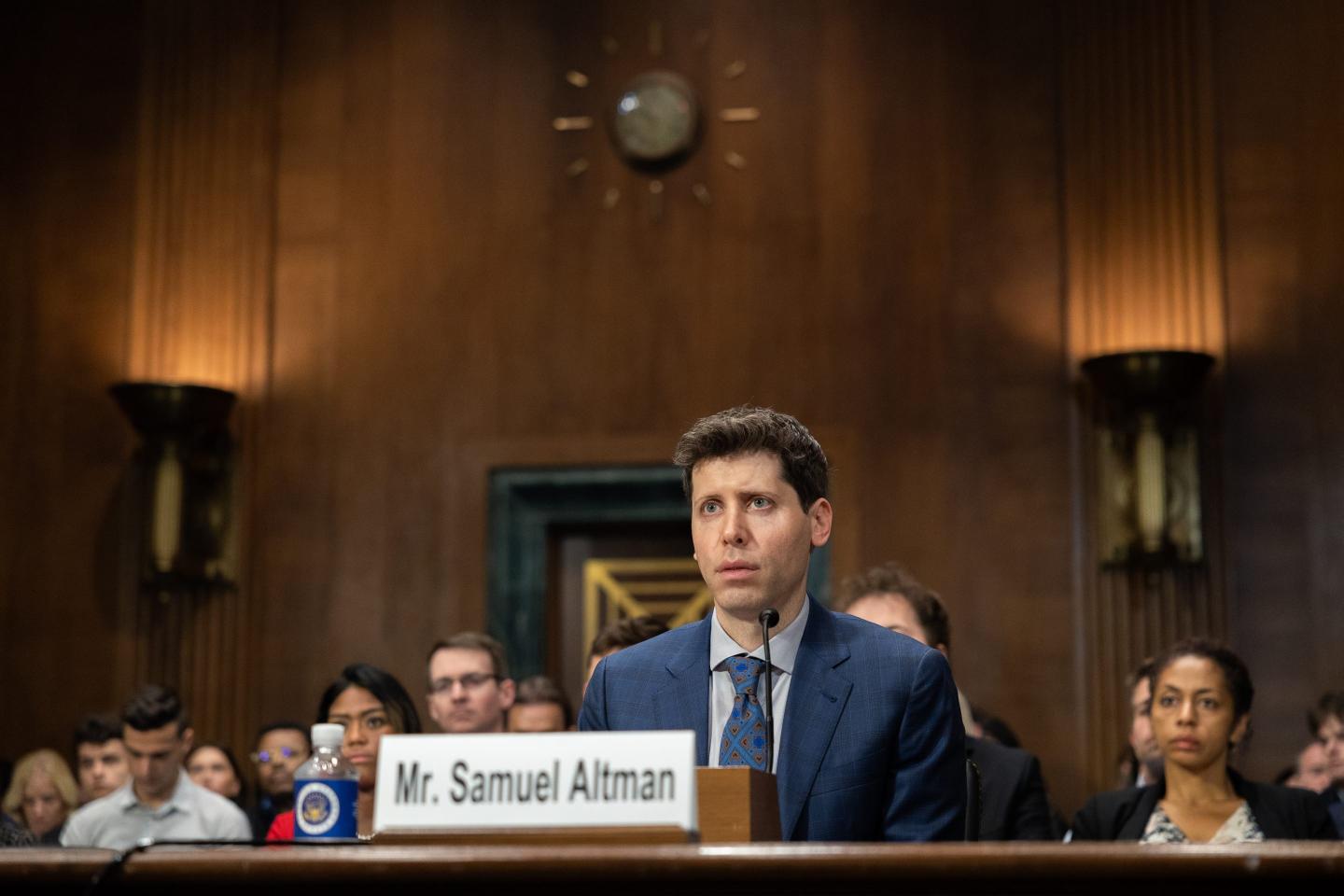
When ChatGPT launched in November 2022, interest in AI policy surged. In May 2023, OpenAI CEO Sam Altman testified before the Senate Judiciary Committee, proposing a licensing agency to oversee powerful AI systems. Senator Richard Blumenthal praised Altman's willingness to be regulated, yet no bill emerged from the hearing.
Senate Majority Leader Chuck Schumer organised a series of closed-door "AI Insight Forums" in 2023, inviting CEOs, including Elon Musk and Sundar Pichai, to brief senators. Critics such as Senator Elizabeth Warren argued the format let tech billionaires shape regulation to their advantage. The forums produced a "Roadmap for Artificial Intelligence Policy" that advocacy groups dismissed as a triumph of Big Tech, but it never translated into legislation.
President Biden's Executive Order 14110 in October 2023 required the largest AI developers to share safety test results with the government. The order survived for fourteen months but did not create statutory obligations.
State-level experiments
While federal action lagged, several US jurisdictions experimented with AI rules. New York City's Local Law 144, enacted in July 2023, mandated bias audits for algorithmic hiring tools, though a 2025 audit found enforcement weak. Colorado's SB 24-205, signed in May 2024, became the nation's first comprehensive AI law, despite Governor Jared Polis's expressed doubts.
California's Senate Bill 1047, which would have required safety testing for the largest models, passed the legislature in August 2024 but was vetoed by Governor Gavin Newsom in September, who argued the bill focused on model size rather than actual risk.
A bipartisan safety bill gains momentum
Within 48 hours of Coxon's resignation, Senator Ted Hawley announced a Senate investigation into OpenAI, and Senator Bernie Sanders convened a bipartisan briefing with AI experts. At the same time, Senator Amy Klobuchar, Majority Leader John Thune and Senator Ted Cruz began co-sponsoring a new AI safety bill. The proposal would give the Commerce Department and the Department of Homeland Security authority to test, monitor and, if necessary, block the release of AI models deemed to pose catastrophic risk, including threats linked to bio-weapons or nuclear systems.
"Coxon's resignation broke through because he worked at both frontier companies, he is well respected, he spoke so clearly, and he's giving up personal wealth by leaving," said former Palantir engineer and now-politician Alex Bores.
The bill also contains language that would pre-empt state AI regulations, effectively creating a single federal standard. This mirrors Senator Cruz's earlier attempt in 2025 to prevent states from passing AI laws, an effort that was rejected 99-1 in the Senate. Critics warn that the new proposal could nullify the patchwork of state safeguards that have begun to emerge.
What comes next?
Congressional staff are already reviewing draft language with OpenAI and Anthropic, while Democrats on the Commerce Committee debate the breadth of the safety provisions. If passed, the bill would mark the first substantive federal attempt to regulate AI safety, shifting the focus from funding and competitiveness to risk mitigation.
For now, the political spotlight on AI safety appears brighter than it has been in a decade. Whether the bipartisan effort will survive the usual legislative bottlenecks remains uncertain, but Jacob Coxon's resignation has undeniably forced Washington to confront a problem it has long ignored.