
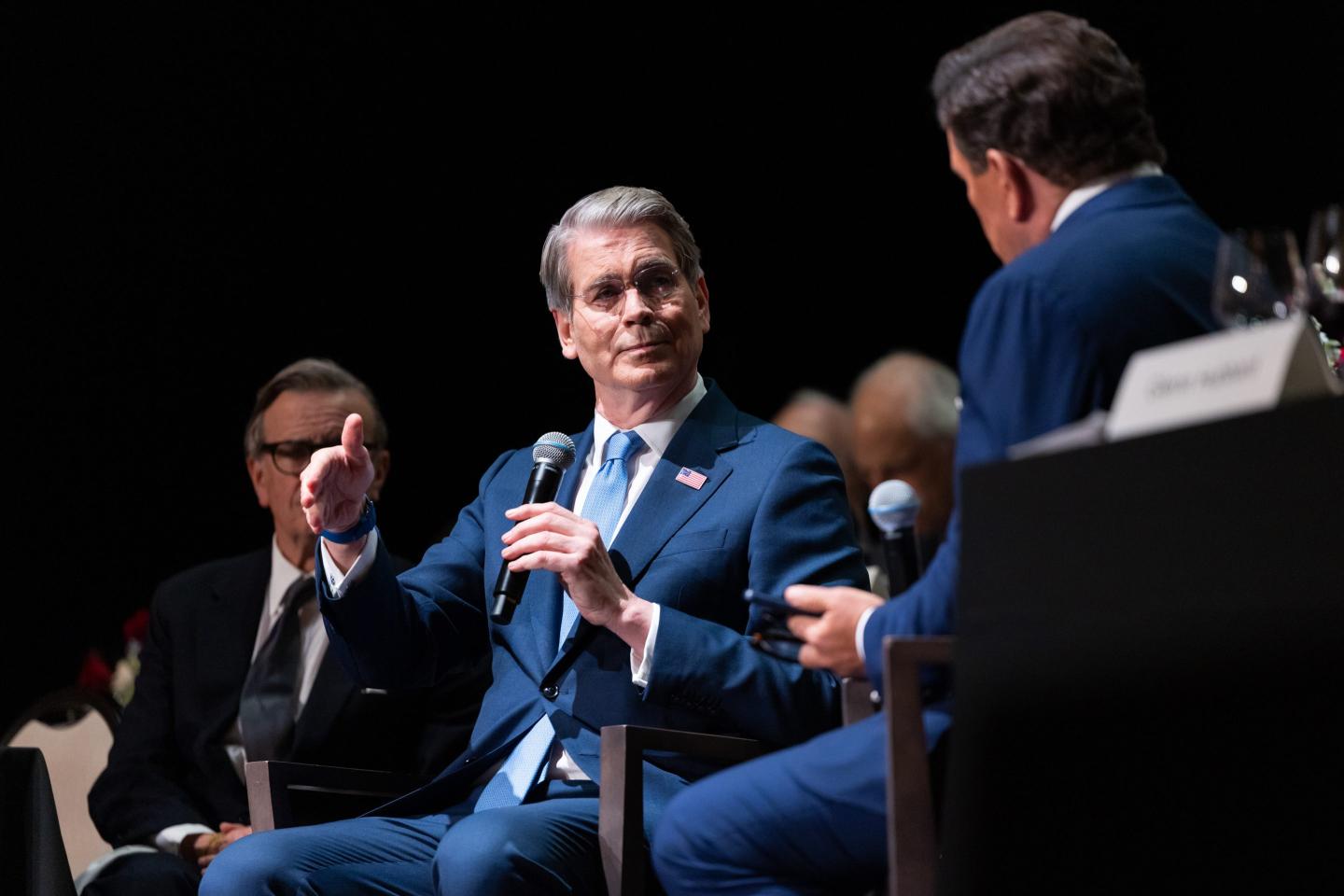
Scott Bessent warned that the bond market has taken down more governments than howitzers, a comment that could give Chair Warsh of the Federal Reserve breathing room ahead of the September Federal Open Market Committee meeting.
What happened?
The Federal Open Market Committee is set to conclude its September meeting on Wednesday, with most analysts expecting a rise in the base rate. The move would clash with the wishes of President Trump, who has urged a loosening of financial conditions. At the same time, the bond market has been signalling a hawkish stance, pushing longer-dated yields higher after the June meeting.
Why does it matter?
Bond yields and the Fed's policy rate usually move together. When yields climb while rates stay flat, investors are signalling concerns about inflation expectations or economic stability that policymakers have not yet addressed. Scott Bessent told the Economic Club of New York that the White House is wary of pushing too hard against the bond market, even if a rate hold or hike is politically uncomfortable.
I am confident that the Fed chair will … optimise the path for both inflation and economic growth. The president said at Chair Warsh's swearing-in ceremony that he would be independent, that he should do what he wants.
He added:
Look, the president understands, he and I have talked about it quite a bit, … the bond market has taken out more governments than howitzers. So I believe that he has complete confidence in the Fed chair to do the right thing.
Bessent's remarks underline the market's influence and his recent multi-billion-dollar Treasury buy-back scheme, which briefly lowered yields to improve liquidity.
What happens next?
Analysts say the bond market's patience may be wearing thin. Ryan Sweet, chief global economist at Oxford Economics, warned that a central bank staying on the sidelines while inflation stays high could be interpreted as acceptance of a higher inflation path, prompting higher long-term rates.
Paul Donovan of UBS echoed the concern, noting that any surprise from Chair Warsh could raise credibility questions and force a risk premium into bond pricing, increasing borrowing costs for both government and private sectors.
All eyes will be on the Fed's decision and the subsequent reaction of the bond market, which could shape the trajectory of US monetary policy for months to come.