
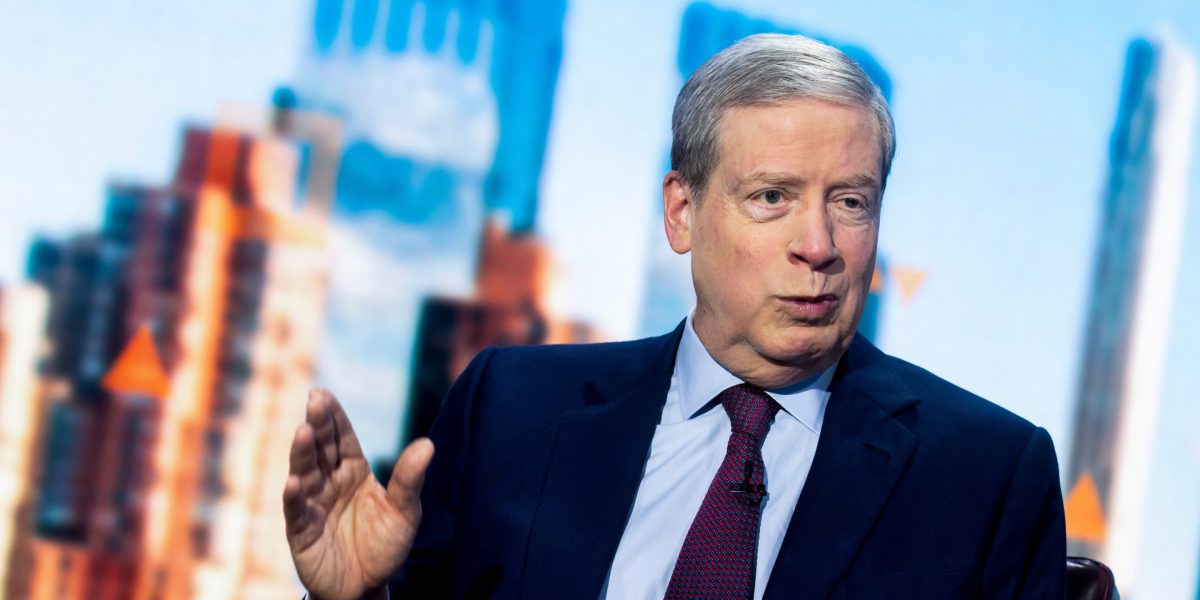
Stanley Druckenmiller sparked fresh controversy after his Wall Street Journal op-ed on Treasury policy was found to have been drafted with the help of artificial intelligence. The piece, which criticised Scott Bessent's decision to increase long-term Treasury purchases, was flagged by the AI detection tool Pangram as likely machine-generated. While some readers called for a retraction, both Druckenmiller and the newspaper's opinion editor defended the work, arguing that the ideas were his even if the wording was not.
The op ed and the AI accusation
The op-ed appeared in the Wall Street Journal's opinion section and quickly attracted scrutiny after users ran the text through Pangram, a tool that scores the probability of AI involvement. The resulting score confirmed suspicions, prompting a wave of criticism that labelled the piece "Claudeslop" and questioned whether the billionaire had written any of it himself.
In response, Druckenmiller said he was not embarrassed by using AI, and the editor reiterated that the substance of the argument remained his own. The episode mirrors a series of recent incidents where writers in the United States and Europe have been exposed for undisclosed AI assistance, ranging from book reviews in major newspapers to manuscript submissions that were later withdrawn.
Why the controversy matters
Public figures have long employed speechwriters and researchers, but the rise of AI blurs the line between assistance and authorship. For a billionaire investor the stakes are different from those of a novelist or a graduate student, yet the inconsistency in public reaction raises questions about fairness and transparency. European readers are increasingly aware of AI's role in media, and regulators are watching how publishers disclose the use of such tools.
Recent disclosures by platforms such as Steam, which now requires developers to detail AI-generated content, show a growing appetite for clear labelling. In Europe, the European Commission is considering guidelines that would make AI assistance visible in news articles and academic work, aiming to protect consumer trust while fostering innovation.
Calls for uniform disclosure
Commentators argue that the solution lies in a standardised bibliography that records not only sources but also the extent of AI involvement. Such a "proof of sweat" would let readers judge a piece on its merits while knowing how much of it was machine-generated. The approach would apply equally to a Wall Street Journal op-ed, a novel manuscript, or a university essay.
Industry voices, including the AI research firm Anthropic, have experimented with invisible watermarks to signal AI-generated text, though critics fear this could create a new form of suspicion. The debate is not limited to the United States; European publishers are already drafting policies that balance transparency with the practicalities of modern content creation.
Until a consistent framework emerges, the responsibility falls on individual creators and outlets. If the trend continues, we can expect more publications to adopt explicit AI disclosure statements, and regulators may soon codify these practices across the EU.
For now, the episode involving Stanley Druckenmiller serves as a reminder that the tools used to craft words are changing, and the rules governing their use must evolve in step.