
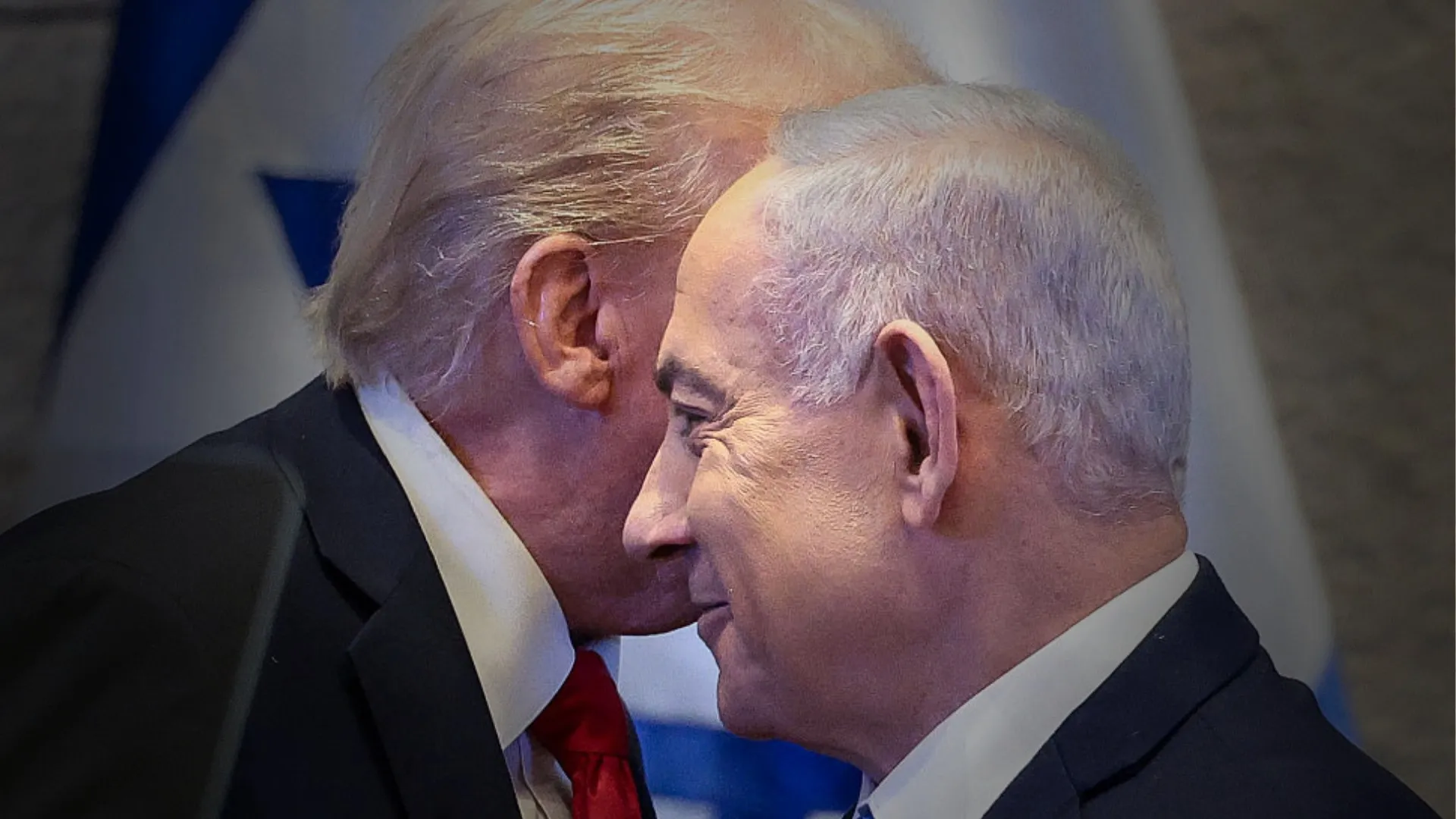
Benjamin Netanyahu has spent recent months reading Jews vs. Rome: Two Centuries of Rebellion Against the World's Mightiest Empire by Professor Barry Strauss. When a reporter asked what he took from the book, the prime minister replied: "Well, we lost that one. I think we have to win the next one." The comment offers a rare window into how Netanyahu sees the current confrontation with Iran and his partnership with Donald Trump.
"Well, we lost that one. I think we have to win the next one."
The Herodian precedent
The book traces how Jewish sovereignty in the ancient world collapsed after a century of client-king rule under Rome. At the centre of the story stands King Herod, a ruler who mastered Roman politics but founded a dynasty that vanished within four generations. Netanyahu, who styles himself as Israel's indispensable intermediary with Washington, may see a flattering reflection. The historical record suggests a darker reading.
Herod rose to power in 40 BC when the Roman Senate made him king of Judea. He secured his throne by backing Mark Antony, then switched allegiance to Augustus after Antony's defeat. Herod Romanised his court, named his grandson after Augustus's general Agrippa, built the port city of Caesarea and even served as president of the Olympic Games. His grandson Herod Agrippa I later helped install Claudius as emperor.
Yet the dynasty's reliance on imperial favour proved fatal. When the Julio-Claudian line gave way to the Flavians and later the Nerva-Antonines, the Herodians had no independent base of support in the Roman Senate or among the Jewish people. By 70 AD the Temple lay in ruins. By 135 AD, after three revolts, the population of Judea had fallen by as much as two thirds. The surviving Herodian princes ruled as pagans in Armenia and Anatolia.
Playing politics in Washington
Netanyahu's career mirrors the Herodian strategy. Fluent in American politics and media, he has cultivated Republican leaders and conservative media with the same intensity Herod lavished on Roman patrons. He named a settlement after Trump, offered him Israel's highest honours and bypassed domestic media to speak directly to Fox News audiences. This bilingual, Israeli-American identity is the source of his power, just as Herod's Romanisation was the source of his.
But dynasties fall. The Herodians bet everything on the House of Augustus. When that line ended, they had no friends left in Rome. Netanyahu's bet on the House of Trump carries the same structural risk. A future Democratic administration, or a Republican one less beholden to him, would leave Israel with diminished influence across the American political spectrum.
The zealots within
The Herodian collapse was not only external. Successive rulers became hated for their Hellenised foreignness. They could neither control nor channel the religious passions of their subjects. The Great Revolt of 66 AD erupted because the priestly elite had lost legitimacy and zealots filled the vacuum.
Netanyahu has spent three decades empowering religious nationalists and ultra-Orthodox parties as political auxiliaries. Figures such as Bezalel Smotrich and Itamar Ben Gvir now sit in government. The prime minister calculates he can manage them. The Talmud calls the resulting climate "baseless hatred" and identifies it as the cause of the Temple's destruction. When Ben Gvir celebrates a death penalty applied only to Palestinians while Netanyahu smiles, the historical echo is unmistakable.
What happens next
Strauss argues that disunity doomed the ancient Jews. Factionalised between zealots and accommodationists, they never stood a chance against the legions. Today Israel faces a similar fracture. Netanyahu's judicial overhaul, his reliance on draft exemptions for Haredim, his concessions to settlement expansion, each deepens the divide.
The scholar Gershom Scholem warned that returning to the ancestral land would conjure messianic impulses that the new state would need to withstand. Netanyahu's pessimism about the Jewish people, his belief that they can only be ruled with zealots at his flank, may become a self-fulfilling prophecy. Herod at least channelled Jewish passion into rebuilding the Temple. Netanyahu channels it into settlements and judicial battles that weaken the state's cohesion.
Two millennia after the Herodians vanished, the same variables are in play: a client-king dependent on a great-power patron, a population inflamed by religious nationalism, and a leader who believes he can control forces he has spent a career unleashing. The history does not repeat exactly. But it rhymes.