
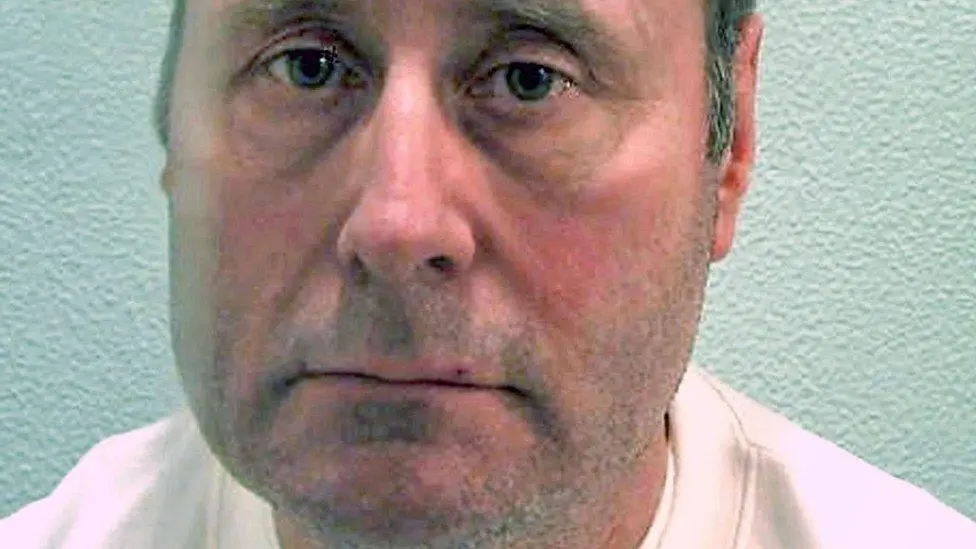
A new ITV drama titled Believe Me has brought the John Worboys case back into public view, laying bare the catastrophic failures of the Metropolitan Police to stop a serial rapist who may have attacked as many as 100 women. The series centres on two survivors, identified as Layla and Sarah, and traces not only Worboys' crimes but the indifference of the officers meant to investigate them.
The crimes and the missed chances
Worboys, a black-cab driver, ended his known spree in 2008 when he was charged with drugging and raping several women over a six-month period. Evidence suggests he may have been targeting women since the early 2000s, including Carrie Johnson, the wife of the former prime minister. His method was calculated: he carried a "rape kit" containing drugs, alcohol, plastic cups and a vibrator, picked up women leaving central London bars, and lured them with claims of a lottery win and champagne laced with sedatives.
Despite multiple reports, the Met failed to link cases, mishandled toxicology evidence, and neglected to take proper victim statements. In 2007 a 19-year-old student reported being picked up by a cabbie, offered a drink, and waking up bruised with her underwear missing. Officers arrested Worboys but accepted his claim that the woman had made drunken advances. He was released.
Police culture and the myth of the trustworthy cabbie
The drama reveals attitudes that survivors say compounded their trauma. Layla was asked whether she was the "kind of girl" to wear red nail varnish. Officers questioning Sarah focused on the small amount of cocaine she had taken. The author, speaking to other survivors, recorded an officer saying: "What sort of idiot would accept a drink from a cabbie?"
What sort of idiot would accept a drink from a cabbie?
Such attitudes have deep roots. In 2003, after Parliament barred defence lawyers from introducing a complainant's sexual history, the author observed officers outside court joking about victims' underwear and remarking that "good looking" defendants "didn't need to rape". The cultural reverence for the London black-cab driver as an archetypal gentleman reinforced the blindness. In 2005 Ken Livingstone, then mayor of London, launched a campaign urging women to avoid unlicensed minicabs and take black cabs instead, a message that, in retrospect, steered victims toward Worboys.
The breakthrough and the legal precedent
The net finally closed in February 2008 when a search of Worboys' taxi and home uncovered his rape kit and a notebook of potential alibis. A public appeal brought forward dozens more women. By the time of his trial in early 2009 police had received allegations from 83 women, though the Crown Prosecution Service proceeded on charges relating to 14. In April 2009 Worboys received an open-ended sentence with a minimum term of eight years.
Justice, however, remained incomplete. Harriet Wistrich, director of the Centre for Women's Justice (CWJ), and barrister Philippa Kaufman advised Layla and Sarah in a landmark challenge. In February 2018 they argued before the Supreme Court that under Article 3 of the Human Rights Act the police had a positive duty to investigate rape and other serious crimes. Later that year the court ruled in the victims' favour, establishing a binding precedent that forces must take such allegations seriously.
Reforms on paper, gaps in practice
The ruling opened the door for civil claims against forces that botch investigations. In 2021 the National Police Chiefs' Council launched Operation Soteria, a programme backed by academic experts that shifts investigative focus from the victim's credibility to the suspect's behaviour. Yet Wistrich warns the rollout is uneven. "It is not uniformly rolled out in terms of training and resourcing with appropriately qualified police officers," she says, "so we still see poor investigations."
It is not uniformly rolled out in terms of training and resourcing with appropriately qualified police officers, so we still see poor investigations.
Casey Report and the scale of the problem
Independent scrutiny has only hardened the picture. The 2023 Casey Report, commissioned after the murder of Sarah Everard by a serving Met officer, found the force institutionally racist, misogynistic and homophobic, describing a culture of denial, "blindness, arrogance, and prejudice" and concluding the organisation was "broken". Similar failures have surfaced in inquiries linked to Al Fayed and Epstein.
The writer behind Believe Me is now preparing a project on the Everard case, signalling that the pattern of abuse by those entrusted with protection remains a live story.
What happens next
Wistrich says she has "no confidence" that a repeat of the Worboys failures is impossible. The numbers bear her out. Of all rapes reported to police, likely a fraction of the true total, just under 3 per cent result in a conviction. Unless 97 per cent of complainants are lying, a vast number of rapists remain at large. The Supreme Court judgment gave victims a legal tool, but the deeper task is cultural: ensuring that the first response to a report of sexual violence is belief, not scepticism.