
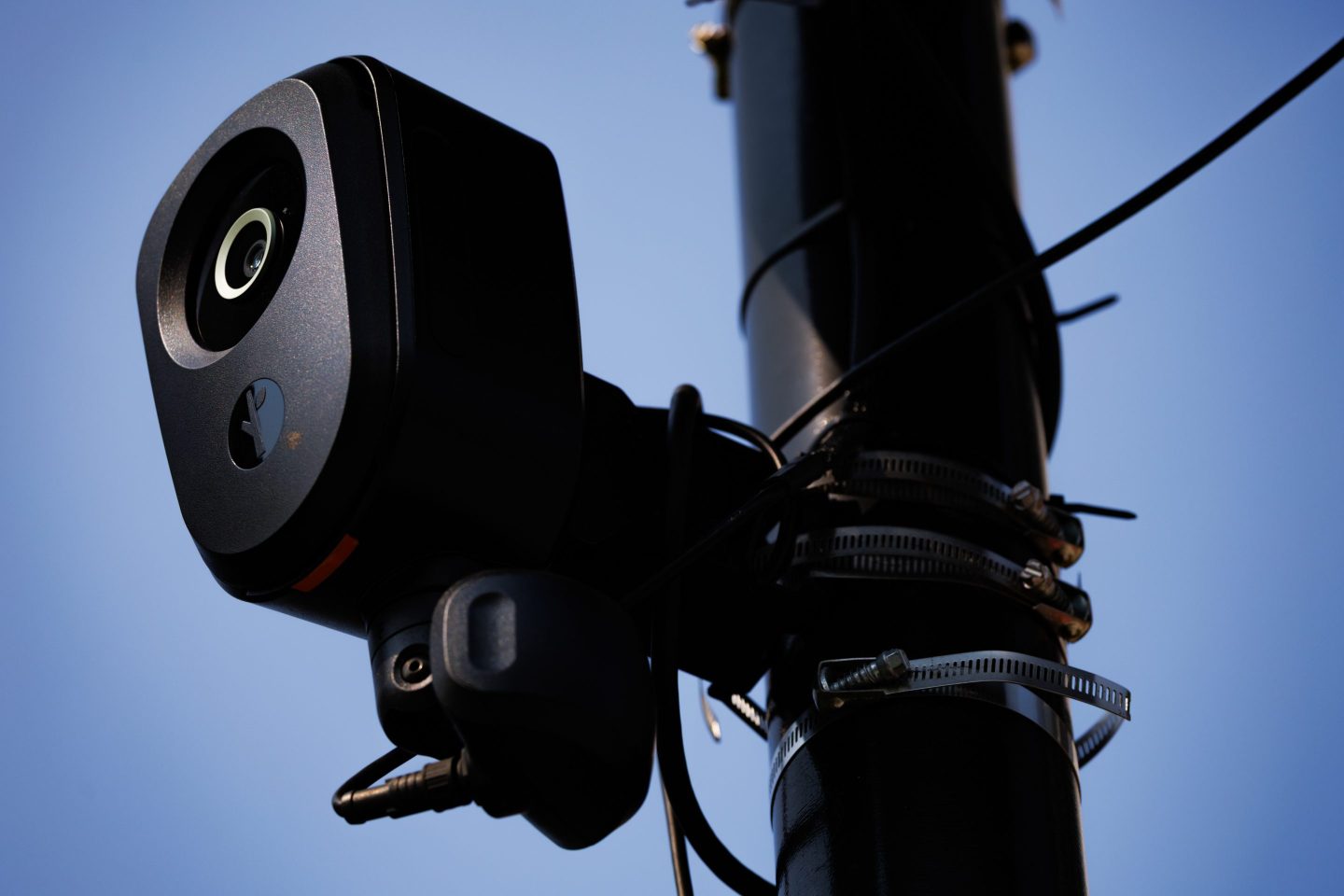
Garrett Langley, chief executive of Flock Safety, built a network of solar-powered cameras that records licence plates, make, model and colour of every vehicle in more than 5,000 communities across 49 states. The system has been praised for solving crimes, yet it is also attracting fierce criticism for its potential to erode privacy.
How Flock cameras aided a campus investigation
On 13 December 2023, a Brown University student noticed a man in black clothing near a bathroom. Hours later the same individual opened fire on campus, killing two people and injuring eight. Providence police, lacking a name or licence-plate number, received a tip about a grey Nissan with Florida plates. By querying the Flock database, which stores thirty days of historic footage, investigators identified the vehicle, learned it was a rental and located the suspect's storage unit in New Hampshire within a week.
Police misuse and a high-profile arrest
In a separate case, Christopher Goodson, a police officer in Florida, accessed Flock data more than 700 times between September 2024 and June 2026 to monitor his estranged wife's vehicle. He was arrested last week for unauthorised use of the system.
The scale of the surveillance network
Flock's cameras capture licence-plate data and additional vehicle details, allowing law-enforcement agencies to search across thousands of jurisdictions using natural-language queries such as colour or bumper stickers. The company says data is normally deleted after thirty days, but a Los Angeles Police Department audit revealed at least one contract permits the firm to retain data for five years and to use it for any purpose at its discretion.
Public backlash and contract terminations
Vandalism of cameras has been reported in 36 states, and 82 municipal contracts have been terminated since 2021. City councils from Boston to Santa Clara have debated the technology, with privacy attorney Anne Toomey McKenna warning that the Fourth Amendment was not written for pervasive surveillance. She described the situation as a "Catch 22" where courts require a warrant for location data, yet police can simply purchase the data.
Legal and regulatory questions
Legal scholars point to the 2024 United States v. Chatrie decision, which held that precise location history is a search requiring a warrant. Tom Bowman, policy counsel at the Center for Democracy and Technology, argues that buying ALPR data circumvents the Fourth Amendment. A proposed "Fourth Amendment Not For Sale Act" has been introduced in multiple Congresses but has yet to pass.
Company response and future steps
"Every day, Flock helps solve crimes that would otherwise go unsolved. From finding missing children to solving murders, violent crime and recovering stolen vehicles, Flock gives investigators leads they didn't have before," Langley told EuroHerald.
Langley says the firm is introducing privacy enhancements, including a default seven-day retention period and an "Evidence Mode" that lets detectives preserve data for active cases. He stresses that local communities set sharing rules, filters and retention windows, and that the company's role is to provide tools that reflect community values.
Despite the controversy, Flock has raised $500 million at an $8.3 billion valuation and reported $500 million in annual recurring revenue in the first half of 2026. The business has expanded into video analytics, gunshot detection, drones and AI-powered search, with more than half of new revenue now coming from services beyond licence-plate reading.
The next phase will likely involve tighter contractual language, as the Los Angeles Police Department has drafted clauses barring vendors from using city data to train AI. Advocacy groups such as Access Now warn that cross-jurisdictional data sharing could create a searchable national database of movements, a risk that remains largely unregulated.
As municipalities weigh public safety against civil liberties, the debate over Flock's technology illustrates a broader clash between innovative policing tools and the right to move without constant surveillance.