
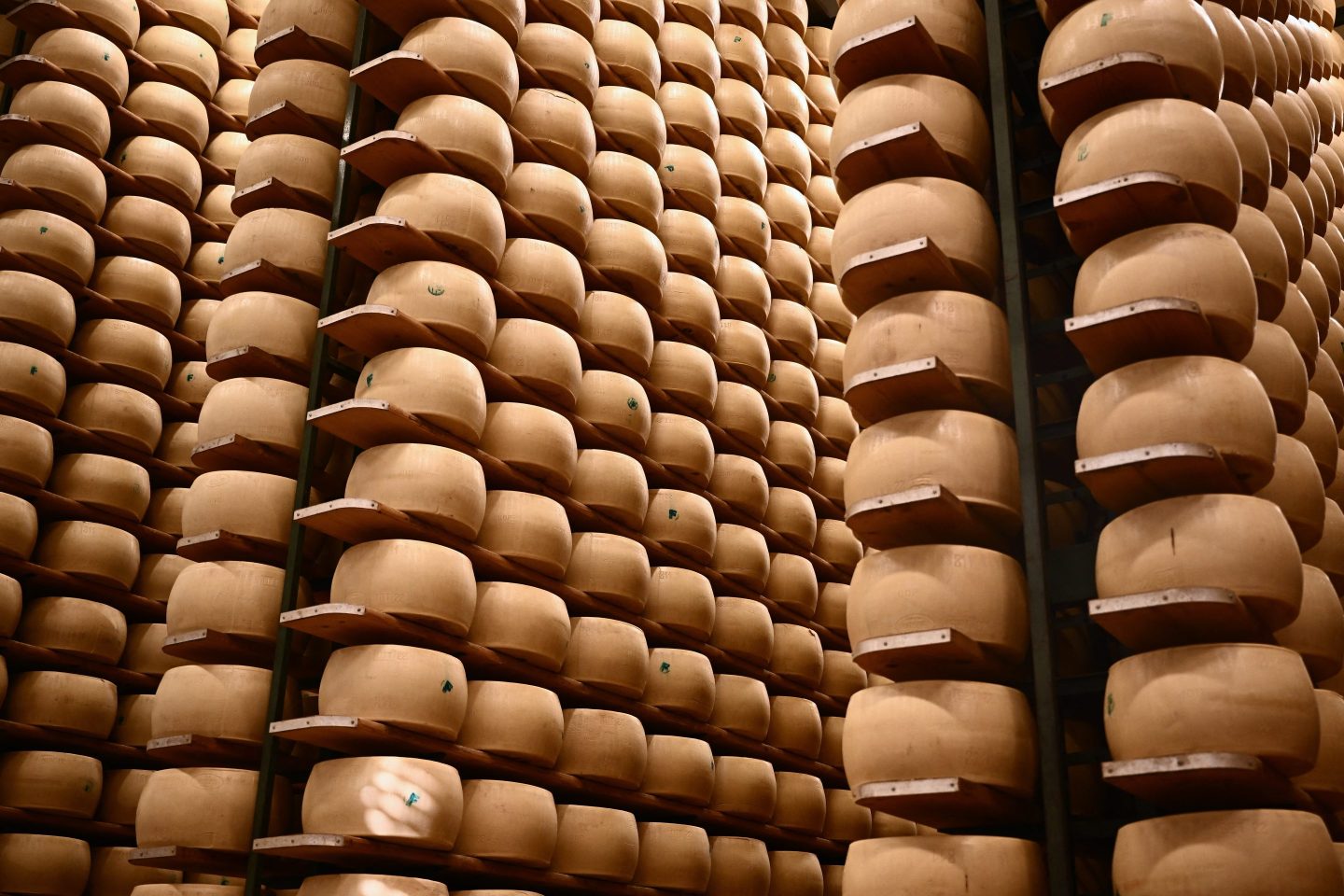
Extreme summer temperatures are testing the resilience of Italy's agricultural finance system. In a vaulted cellar in Emilia‐Romagna, more than half a million wheels of Parmigiano Reggiano sit as loan collateral for the regional bank Credito Emiliano, but soaring energy use to keep them cool is straining the bank's balance sheet.
Cheese as collateral
Since 1953, Credito Emiliano, known as Credem, has accepted young wheels of Parmigiano Reggiano from dairy farms as security for loans. A subsidiary, Magazzini Generali delle Tagliate, stores the wheels in two warehouses in Reggio Emilia and Modena while they mature for twelve to thirty‐six months. Farmers typically receive between sixty and eighty percent of a wheel's value up front, giving them cash flow while the cheese ages.
Technology has modernised the practice. Blockchain records now let producers pledge wheels that remain on their own premises, effectively doubling Credem's lending capacity. The bank handles around 2.3 million wheels a year, while the national cheese banks hold roughly 500,000 wheels, according to Giancarlo Ravanetti, head of the cheese warehouse business.
Heat drives up cooling costs
Italy's four‐billion euro Parmigiano industry is feeling the impact of this year's record heat wave. Daily electricity consumption for refrigeration rose by about thirty percent, prompting Credem to upgrade cooling systems, add insulation and expand renewable power sources. The added expense threatens the profitability of the loan scheme.
Ripple effects on dairy, wine and olives
Higher temperatures also reduce milk yields, with cows eating less and resting more, cutting output by up to ten percent annually. The same climate pressure is evident in Lombardy's Franciacorta sparkling‑wine region, where the 2026 harvest began on July 30, the earliest on record, and in Sicily, where growers now face a hundred‑day picking season to stay ahead of the heat.
The national farmers' union Coldiretti warns that early harvests are compromising grape quality, especially for late‑ripening varieties such as Nebbiolo. Some vineyards are experimenting with shade netting, a technique originally used to protect vines from hail.
Olive production has suffered the sharpest decline. In Puglia and Calabria, the two largest olive‑oil regions, the 2025/26 season is expected to yield between 270,000 and 300,000 tonnes, well below the historic average of over 350,000 tonnes.
Economic research links heat to lost output
Labour economist R. Jisung Park of the University of Pennsylvania's Wharton School notes that the pattern across cheese, wine and olive sectors mirrors broader research on heat‑related economic loss. A working paper from the European Central Bank found that extreme heat reduces GDP less in Italy and Spain than in Germany, because the former are more accustomed to high temperatures. Park argues that the headline figures hide deeper supply‑chain disruptions.
Supply‑chain spillovers due to heat upstream actually lead to measurable downstream firm valuation impacts,
he told EuroHerald. The delayed effects mean that a heat shock to dairy cows can become a cost problem for a bank months later, while a hot, dry spring can trigger an olive‑oil production collapse far from the affected farms.
What lies ahead?
Credem is investing in energy‑efficient cooling and renewable power to protect its cheese vaults, but the broader agricultural sector faces a longer‑term challenge. Farmers may need to adopt heat‑resilient breeds, adjust planting schedules and explore new irrigation methods. Policymakers are likely to scrutinise climate‑adaptation funding for the agri‑food chain as the frequency of extreme heat events rises.
Without coordinated action, Italy's iconic cheese, wine and olive industries could see profitability erode, with knock‑on effects for rural credit markets and the national economy.