
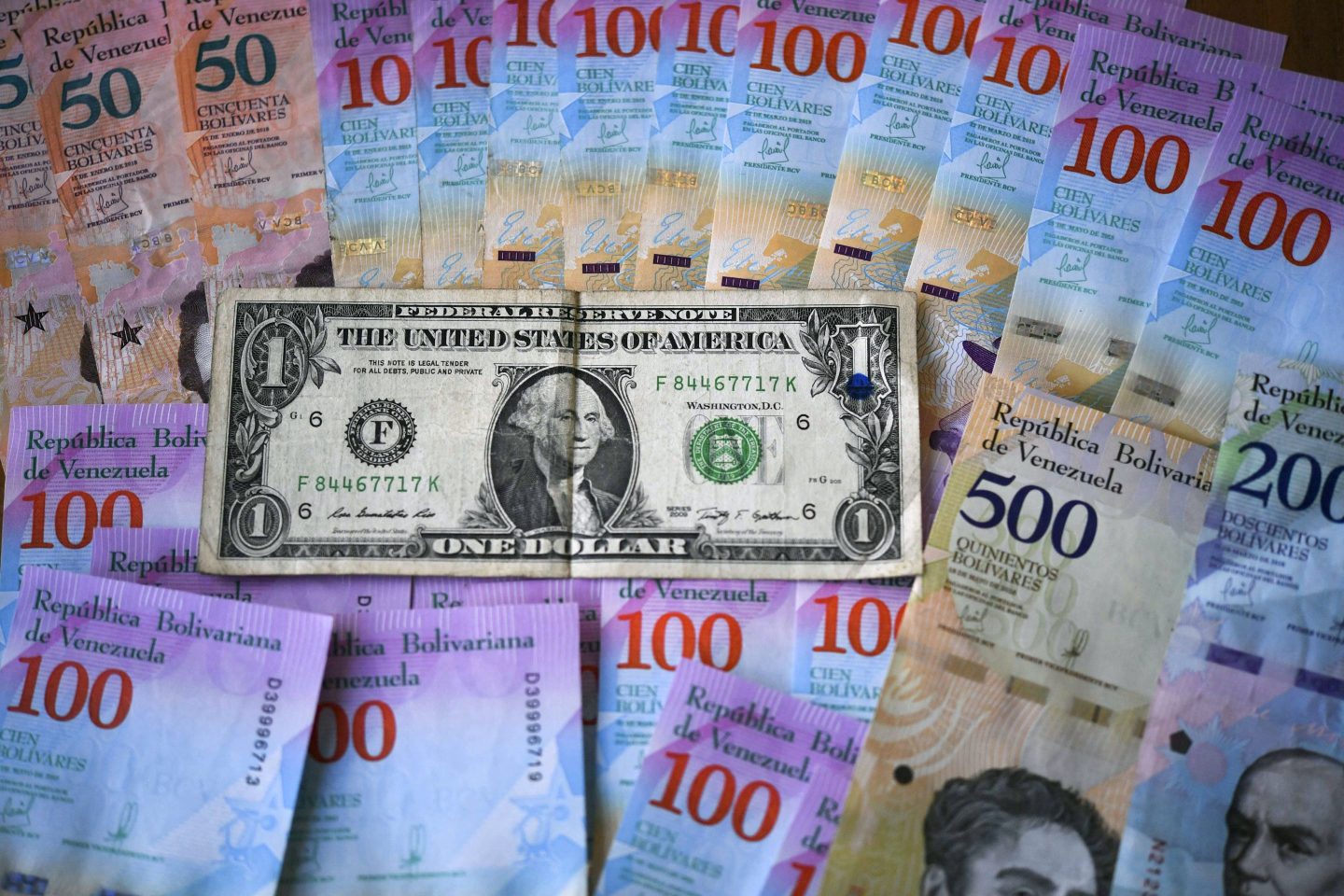
Hanke's proposal for Venezuela
Steve Hanke, a professor of applied economics at Johns Hopkins University, has been appointed special adviser to the Venezuelan National Assembly. He tells reporters that the only realistic way to halt the country's 400% inflation is to adopt the U.S. dollar outright, discarding the bolivar and the central bank's ability to print money.
"Taming inflation is the key to restoring stability in Venezuela, and all the other progress flows from that," Hanke explained. "Stability isn't everything, but without stability, which means stable prices, you have nothing. And there's no better case study showing that's true than Venezuela."
The proposal would make Venezuela the first Latin American nation to fully dollarise since the euro's introduction in 1999, according to Hanke.
Why dollar adoption matters
Venezuela's bolivar has lost 78% of its value against the greenback in the past year, forcing most private-sector transactions to be conducted in dollars. Hanke argues that formalising this "spontaneous dollarisation" would remove the risk of a government-run central bank financing deficits, a practice that fuels price spirals.
He points to his past work in Montenegro, where he helped replace the Yugoslav dinar with the Deutschemark in 1999, and in Ecuador, where the sucre was swapped for the U.S. dollar in 2000. In both cases, inflation fell sharply. A similar outcome, he says, could unlock foreign investment in Venezuela's oil sector, which remains the backbone of the economy.
Venezuela also carries roughly $250 billion of debt, about 150% of GDP, a burden that could be eased if higher oil revenues were converted into dollars to meet principal and interest payments.
Challenges and next steps
Adopting the dollar would mean surrendering monetary policy to the Federal Reserve and losing a lender of last resort. Critics warn that this could limit the government's ability to respond to future shocks.
Hanke estimates a 50-80% chance that the National Assembly will approve the switch. If approved, he predicts the country could move from negative growth this year to positive growth next year, as lower inflation would reduce interest rates, stimulate borrowing, and revive the housing market.
While the plan is ambitious, the dollar already circulates widely in everyday transactions, suggesting a formal switch may be politically feasible. The coming weeks will reveal whether Venezuelan lawmakers will endorse Hanke's dollarisation blueprint.