
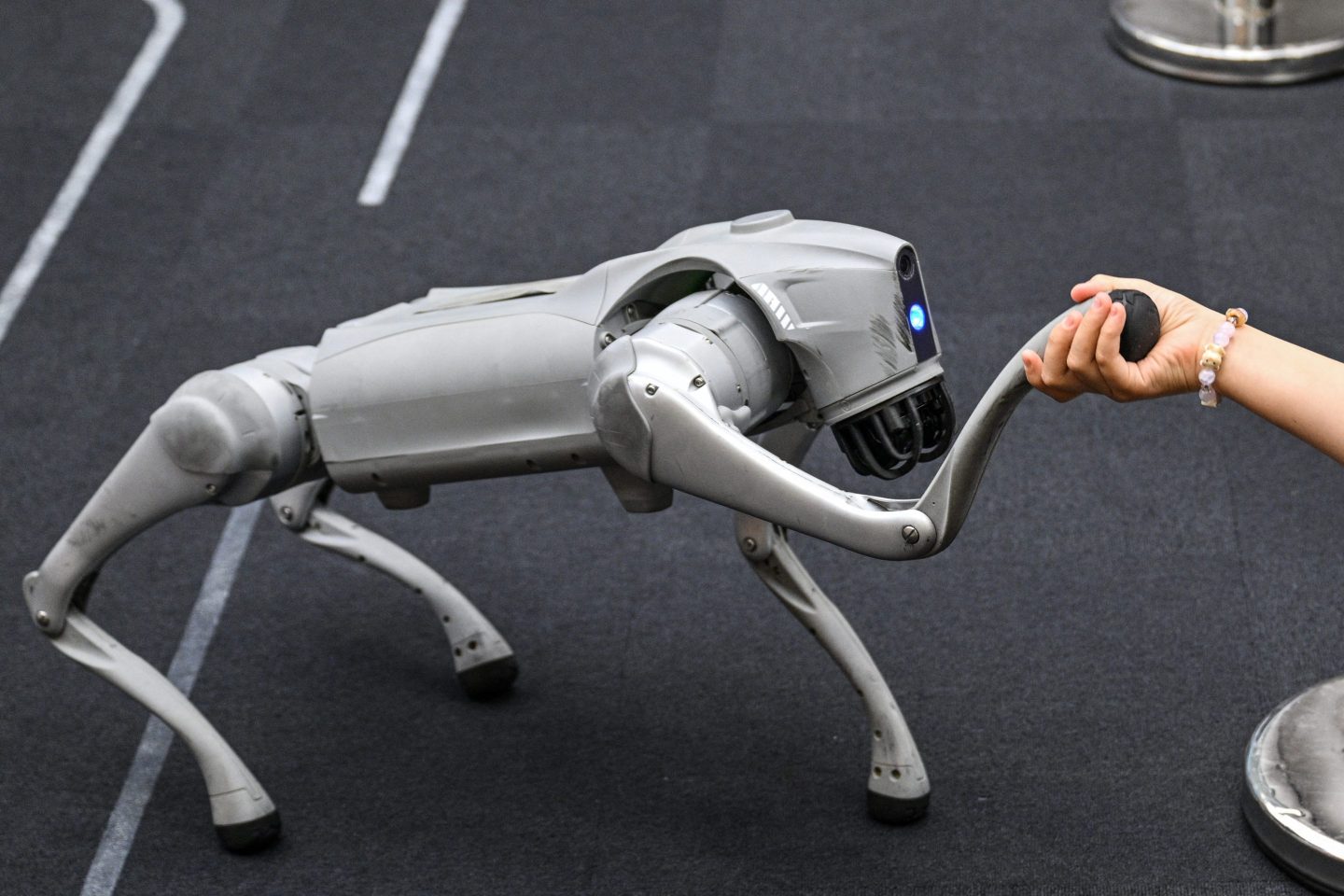
Unitree and Shein are set to debut on public markets this August, but the two listings could not be more different. The robotics start-up will float on the Shanghai STAR Market later this week, while the fast-fashion platform plans a Hong Kong debut as early as 28 August, according to Reuters.
Why investors are watching Unitree
Founded in 2016 by Wang Xingxing, Unitree has become a household name in China after its humanoid robots performed at the CCTV Spring Festival Gala. The company is seeking to raise 6.1 billion yuan (about $904 million) at a valuation near $9 billion. Its prospectus says the retail tranche was more than 8,000 times oversubscribed.
Last year the firm reported revenue of 1.7 billion yuan ($252 million), a four-fold increase from the previous year, with overseas sales accounting for roughly 45 percent. Unlike many peers, Unitree posted a net profit of 600 million yuan ($89 million) in 2025.
Over 70 percent of the company's humanoid units are sold to academic and research institutions, while state-owned enterprises and large manufacturers are beginning to experiment with its technology. The broader Chinese robotics sector dominates global shipments, a Californian study found Chinese firms supplied 97 percent of humanoid robots in the first half of the year.
Shein's larger but more cautious listing
The fast-fashion giant aims to raise up to $3 billion, roughly three times the amount sought by Unitree, and is targeting a post-IPO valuation between $25 billion and $30 billion. That would represent a steep discount from the $64 billion valuation it achieved in 2024 and the $100 billion peak in 2022.
According to its prospectus, Shein generated $41.2 billion in revenue last year, up from $38.8 billion in 2024, and earned about $2 billion in profit. Europe now accounts for 35.4 percent of its sales, overtaking the United States.
Recent changes to customs rules, the removal of "de minimis" exemptions in the United States and Europe, have increased costs for the company. Shein also faced scrutiny over alleged forced-labour practices and data-privacy concerns, prompting it to relocate its headquarters to Singapore in an effort to facilitate a U.S. listing, a plan that ultimately stalled.
Regulatory backdrop and market sentiment
Investor enthusiasm appears to be shifting from e-commerce to AI and hardware. The U.S. Federal Communications Commission recently banned imports of foreign-made humanoid and quadruped robots, warning that "These devices could create supply chain vulnerabilities that could disrupt U.S. economic and national security," in a statement released in late July.
These devices could create supply chain vulnerabilities that could disrupt U.S. economic and national security.
Other AI-focused firms are also eyeing public markets. Last month, chipmaker ChangXin Memory Technologies raised $8.6 billion on the STAR Market, its shares soaring more than 500 percent on day one. Developers such as DeepSeek, Moonshot AI and Yangtze Memory Technologies are reportedly preparing their own listings.
What lies ahead
Market participants will watch the pricing and subscription levels of both IPOs closely. A strong oversubscription of Unitree could reinforce the narrative that investors favour AI-driven hardware over traditional e-commerce models. Conversely, Shein's ability to secure a high valuation despite regulatory headwinds will test the resilience of the fast-fashion sector.
In the coming months, the performance of these listings may influence the pipeline of Chinese AI and robotics companies seeking capital, while policymakers on both sides of the Pacific continue to assess the strategic implications of advanced robotics imports.