
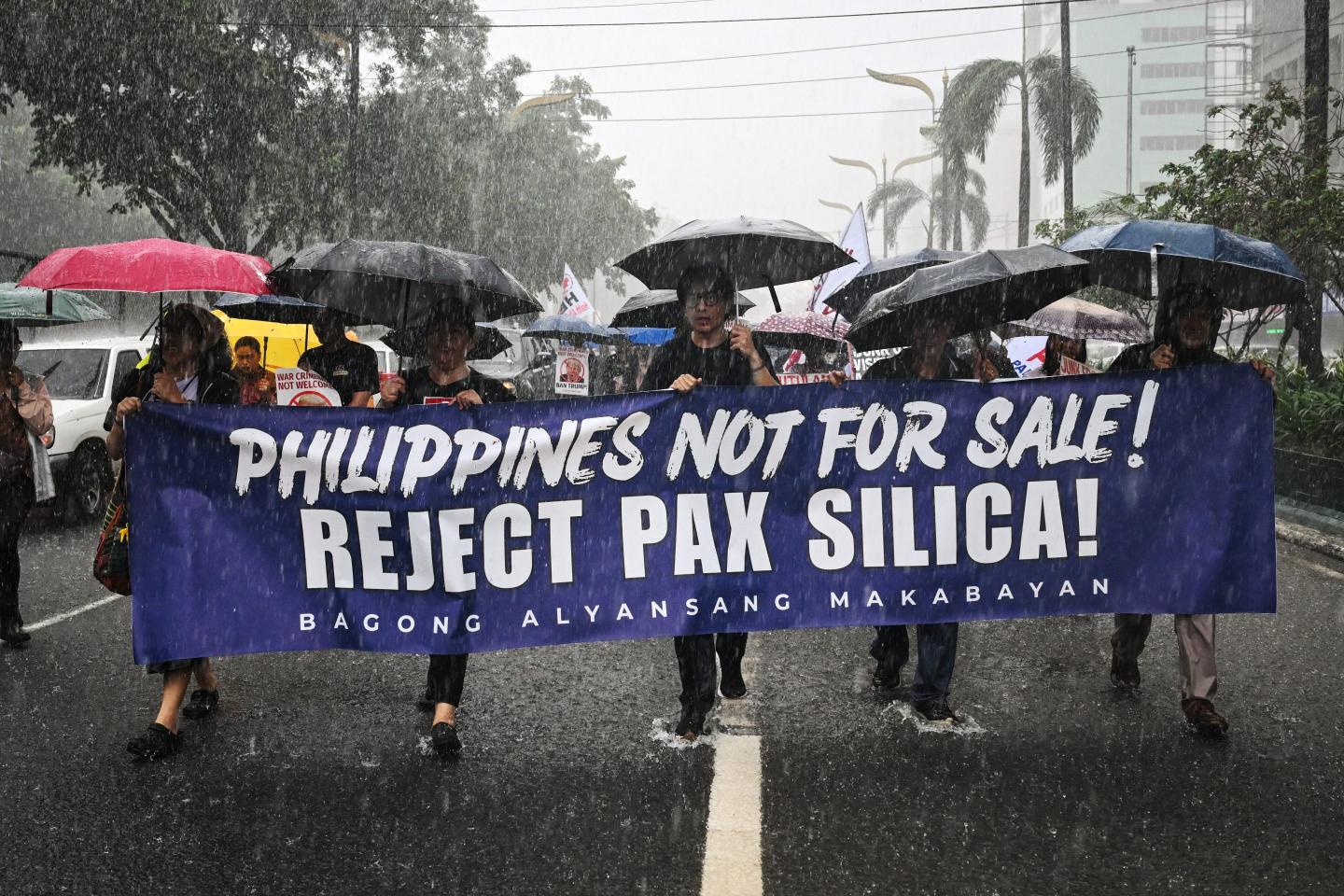
ASEAN finds itself at the centre of a growing split in the global artificial intelligence arena. The United States launched the Pax Silica initiative in December 2025 to protect supply chains for semiconductors, AI tools and rare-earth minerals, while China introduced the World Artificial Intelligence Cooperation Organization (WAICO) in Shanghai in July 2026 with 29 founding members. Both blocs present competing visions of how AI infrastructure should be governed.
US-led Pax Silica and China's WAICO
The US describes Pax Silica as a cooperative framework rather than a policy enforcement tool, yet internal drafts seen by Reuters suggest Washington may pressure members to abandon any ties with China. At a Hudson Institute event in January, the architect of Pax Silica, Under Secretary of State Jacob Helberg, warned against a "purity test".
"If you held everyone to that standard, you would quickly run out of friends," Helberg said.
Washington's State Department declined to comment on the draft letter that reportedly tells partners that "to be part of everything is to be part of nothing".
ASEAN's existing advantages
The eleven-nation bloc enjoys several strengths: data-centre operating costs below the global average, a mature manufacturing base and rapid adoption of digital AI applications and clean-energy technologies. Singapore and the Philippines have already signed up to Pax Silica, while other members remain outside both initiatives.
Neutrality and market choices
Countries such as Malaysia have declared a policy of neutrality, seeking chips from both NVIDIA and Huawei. Malaysia accounts for 13% of global outsourced semiconductor assembly, testing and packaging, and its electrical and electronics sector makes up 44.3% of total exports. Indonesia is positioning its abundant land and power for cloud and AI providers, with a 360 MW Batam campus slated to run 170,000 Nvidia accelerators from the first quarter of 2027, a project led by Australian firm Firmus Technologies and Singapore-based DayOne.
Singapore leverages its limited space to become a benchmark for responsible digital infrastructure, while Thailand hosts a mature electronics and electric-vehicle sector with significant Chinese involvement.
Talent and energy bottlenecks
Talent flight remains a major obstacle. Malaysia needs 50,000 engineers but graduates only 5,000 each year. Smaller economies such as Cambodia and Laos face even steeper challenges in attracting AI specialists.
Energy security is another concern. Coal and gas supply roughly 70% of electricity in the six largest ASEAN data-centre markets. Indonesia's mid-2026 blackouts, triggered partly by Middle-East events, highlighted the fragility of the region's power grid. Renewable-energy projects and possible civil-nuclear pathways in Vietnam, the Philippines, Malaysia, Indonesia, Thailand and Singapore will be decisive for future AI-related infrastructure.
Five ASEAN states are actively pursuing nuclear energy. Singapore is studying the feasibility of small modular reactors, while Hanoi signed an intergovernmental agreement with Rosatom in March 2026 for two VVER-1200 reactors at the Ninh Thuan 1 plant.
Looking ahead
The US hardening stance serves as a wake-up call, but it does not force ASEAN to pick a side. To turn hedging into a substantive strategy, members with strong human-capital and infrastructure bases must accelerate domestic AI development, secure reliable energy supplies and retain skilled engineers. Only then can the region truly leverage both Western and Chinese ecosystems while preserving its strategic autonomy.