
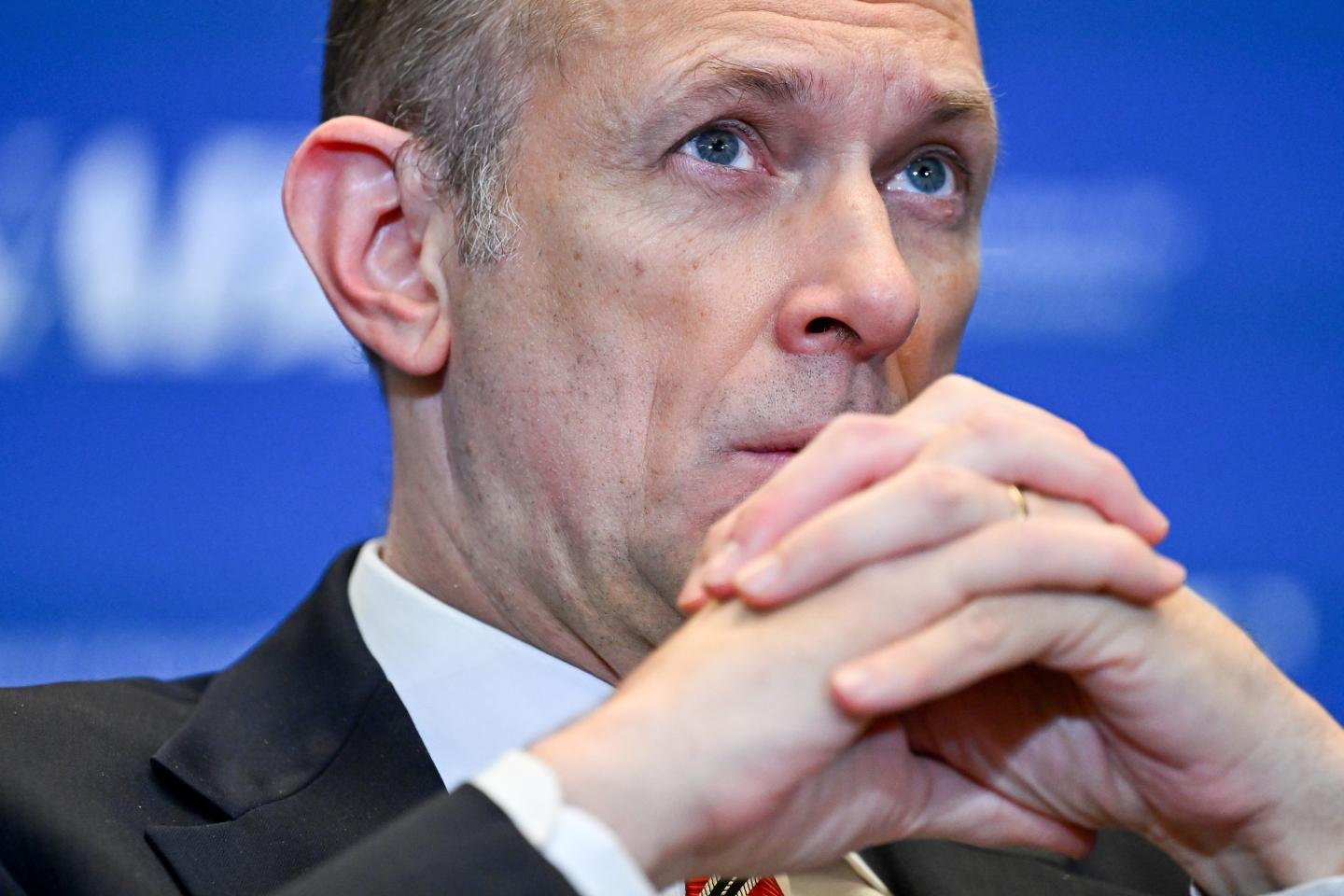
Austan Goolsbee, president of the Federal Reserve Bank of Chicago, said the central bank is returning to "old-school" economics, focusing on ordinary Americans and treating AI hype with caution.
What Goolsbee said at the Jackson Hole event
Speaking after new Fed chair Kevin Warsh highlighted inflation as the Federal Open Market Committee's (FOMC) sharpest focus, Goolsbee agreed that price pressures remain well above the 2% target. He noted that recent consumer-price-index data showed a 0.4% drop in June and a flat 0.1% reading in July, giving the committee reason to pause rate hikes.
"On the real side, we've been stable, now inching toward dangers of overheat, and on the inflation side, after a couple of years of strong progress, it stalled out and started getting worse," Goolsbee told reporters.
Why consumer spending matters more than AI hype
Goolsbee argued that the labour side of the Fed's mandate looks solid, with unemployment, vacancy and hiring rates holding steady. He attributed the stability to broad-based consumer spending rather than the expansion of AI data centres, which he described as "very hot" and diverting resources from other sectors.
"When I'm touring the Seventh District, people say they have to scale back plans because construction workers are too expensive or HVAC is scarce," he said, warning that a sectoral squeeze could turn into aggregate overheating.
What could happen next
The Fed will monitor whether AI-driven productivity gains materialise as expected. Goolsbee warned that if the hype leads to rapid capital investment and equity-driven spending before productivity improvements arrive, inflation could rise again.
He also highlighted the persistence of supply shocks stemming from geopolitics and tariffs, calling them "traaaaansitory" shocks that linger longer than textbook models anticipate.
Looking ahead, Goolsbee said the Fed's priority is to watch consumer spending. "If we hit a hiccup on consumer spending, that is the biggest risk to continued stability and growth," he concluded.
Background on the Fed's stance
The Federal Reserve, established in 1913, sets monetary policy for the United States through the FOMC, which meets eight times a year. Its dual mandate is to promote maximum employment and price stability. Recent minutes have shown a split between members who favour a more aggressive rate-cut path and those who warn that inflation remains entrenched.
For further details on the Fed's policy framework, see the official Monetary Policy page on the Federal Reserve website.